Simulators and Training


BREAKING NEWS
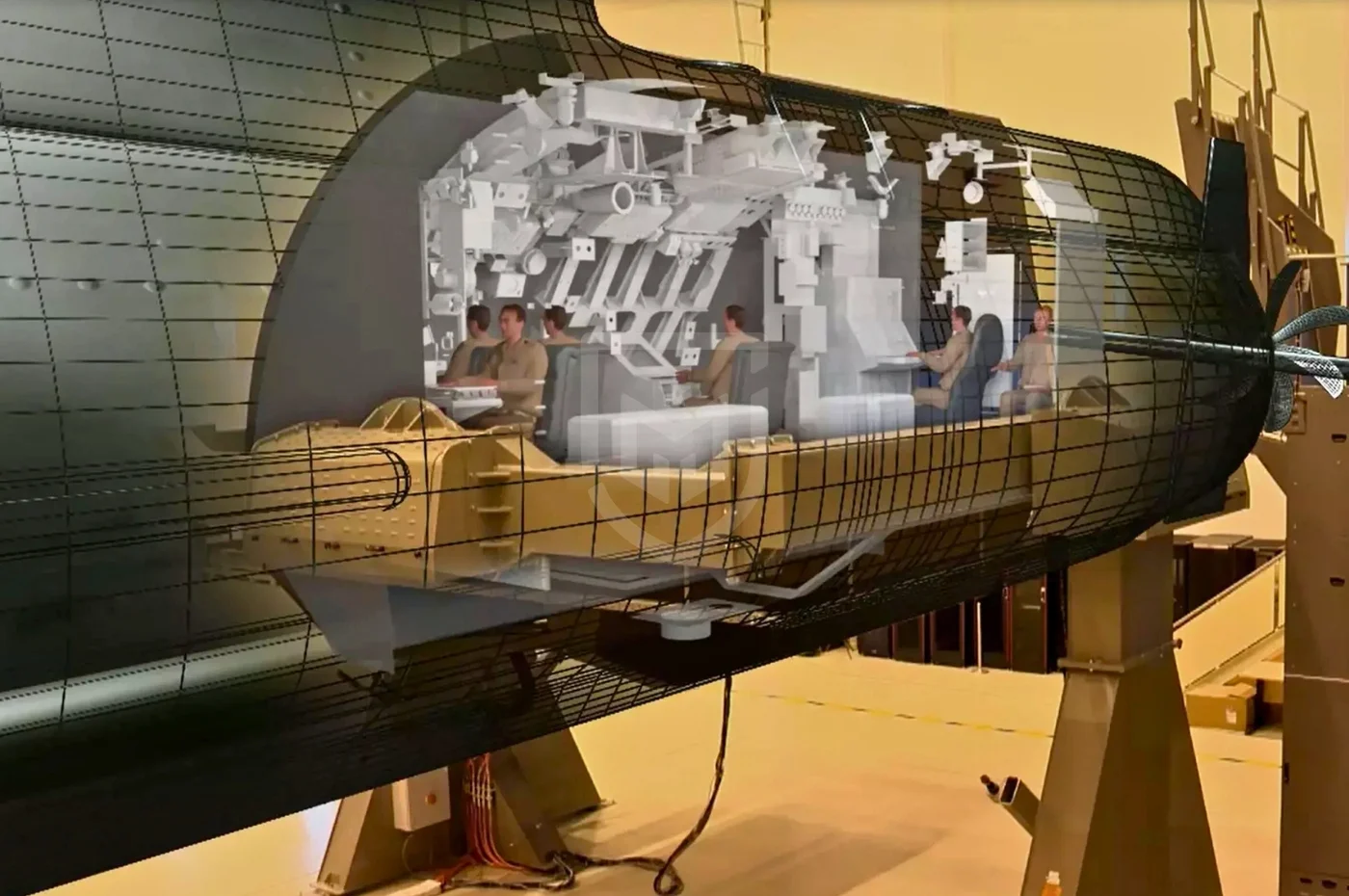
DEDAS is a high-fidelity submarine maneuvering and diving simulator designed to replicate the hydrodynamic behavior, control systems, and human-machine interaction environment of U209 PREVEZE/GÜR-class submarines. The system provides a safe and controlled environment in which submarine crews can develop operational proficiency, procedural discipline, and crisis response capabilities.
Operational Purpose and Role
Submarine operations—especially diving, surfacing, and depth control—require precise coordination and strict procedural compliance. DEDAS supports:
By enabling repetitive and risk-free execution of critical procedures, DEDAS reduces the need for high-risk real-platform training.
Doctrine and Concept of Use
U209 PREVEZE/GÜR-class submarines are core assets in Türkiye’s undersea deterrence doctrine. Their missions include:
DEDAS focuses specifically on maneuvering room operations and depth control management within this doctrine. Training is conducted in a team-based environment, replicating real operational command hierarchy and communication flow.
Platform Architecture
DEDAS consists of three primary components:
Full-Scale Maneuvering Room Replica
A one-to-one physical replica of the U209 maneuvering room, including authentic panel layouts, instrumentation, and control interfaces.
Six Degrees-of-Freedom Mathematical Model
The simulator models submarine motion across:
Hydrodynamic forces, buoyancy effects, sea state conditions, and underwater current influences are integrated into the real-time simulation. Detailed algorithm parameters are not publicly disclosed.
Motion System
The motion platform provides realistic roll and pitch effects up to 45 degrees, enhancing vestibular perception and physical realism during training.
Training Capabilities
DEDAS enables simulation of:
Survivability and Safety Contribution
Training on real submarines involves inherent risk during emergency drills or aggressive maneuvering exercises. DEDAS mitigates these risks by:
As a result, operational safety margins increase during real missions.
Integrated Ecosystem
DEDAS is part of HAVELSAN’s broader naval simulation ecosystem. It can be integrated with tactical command-and-control simulators and other naval training systems within a networked training center architecture. Detailed network standards and integration protocols are not publicly disclosed.
Detailed Technical Information
Mathematical Modeling
Motion System
Simulator Cabin
Instructor Consoles
Data Recording and Debriefing
Communication and Audio Simulation
Installation and Logistics
Frequently Asked Questions
What is DEDAS used for?
How realistic is the simulator?
What depth can it simulate?
Can it simulate emergency scenarios?
Is it mobile or fixed?
Does it simulate torpedo firing?
How does it improve operational safety?
What are its equivalents?
Sources



The cookies used on our website are used to provide you with a better user experience and to improve our website. You can manage your cookie preferences from the options below.