


Land Forces News
Global Developments


BREAKING NEWS
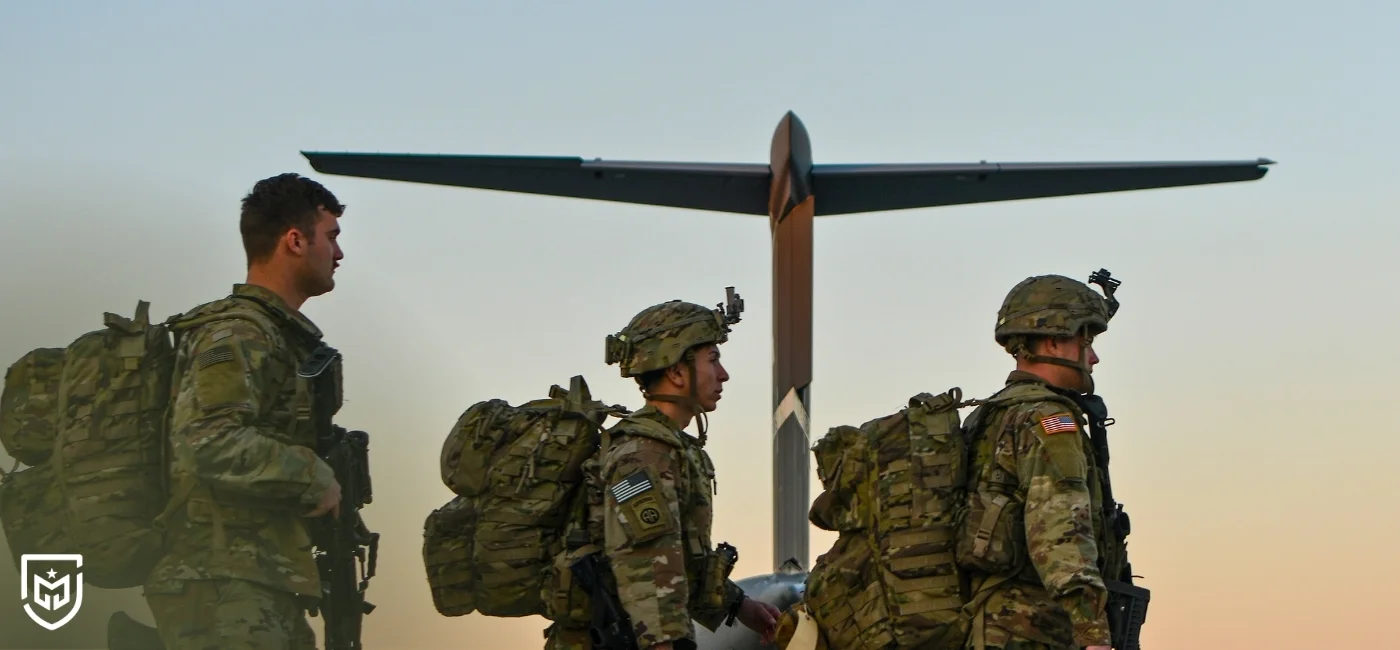
Senior US defense officials are reportedly assessing the possible deployment of a combat brigade from the 82nd Airborne Division as part of contingency planning for a potential operation involving Iran. The force, which consists of roughly 3,000 troops, could be used in a mission centered on Kharg Island, widely recognized as Iran’s primary oil export terminal. Officials have emphasized that these discussions remain within the scope of precautionary military planning and that neither the Pentagon nor US Central Command has issued a formal deployment order at this stage.
At the center of the discussions is the 82nd Airborne Division’s Immediate Response Force, one of the US Army’s most rapidly deployable units, capable of moving to almost any location in the world within 18 hours. In a possible operational scenario, the unit could either support an initial assault or reinforce ground secured by US Marine Corps elements. Another option under consideration, pending approval from President Donald Trump, involves approximately 2,500 troops from the 31st Marine Expeditionary Unit, which is reportedly moving toward the region and could play a leading role in the opening phase of any operation.
According to former US commanders, the condition of the airfield on Kharg Island could heavily shape the sequence of such an operation. Because the island’s airfield is believed to have sustained damage during recent US airstrikes, Marine forces are seen as more likely to spearhead the initial phase. Their combat engineers would be able to rapidly repair runways and key infrastructure, allowing follow-on airlift missions to begin. Once the site is stabilized, the US Air Force could use C-130 transport aircraft to deliver supplies, personnel, and additional reinforcements. In this framework, the 82nd Airborne Division would likely serve as a follow-on force, supporting or replacing Marine units after the first assault phase.
However, the advantages of the 82nd Airborne Division also come with important limitations. Airborne troops offer unmatched speed and surprise, particularly in night operations and rapid insertion missions. Yet their lack of heavy armored vehicles and more substantial firepower could leave them exposed if Iranian forces launch a determined counterattack. Marine forces, on the other hand, are better suited for the initial assault and infrastructure seizure, but their capacity for prolonged occupation remains limited. For that reason, military planners appear to be considering a combined approach in which Marines and airborne troops would complement each other on the battlefield.
The division headquarters element is also expected to play a key role in any such operation. A 300-person headquarters unit had its participation in a Joint Readiness Training Center exercise in Louisiana abruptly canceled earlier in March. Army officials later explained that the decision was linked to the possibility of a Middle East deployment, with the division command element being kept at Fort Bragg, North Carolina, in a higher state of readiness. This headquarters component would likely function as a forward or supporting command post, helping coordinate mission planning and command-and-control tasks in what could become an increasingly complex combat environment.
The 82nd Airborne Division’s Immediate Response Force has been deployed on short notice several times in recent years, highlighting its importance in US rapid intervention strategy. These deployments included the Middle East following the January 2020 attack on the US Embassy in Baghdad, Afghanistan during the August 2021 evacuation mission, and Eastern Europe in 2022 in support of operations linked to the war in Ukraine. The latest Iran-related planning underscores Washington’s intent to preserve a fast and flexible military option in a region where energy infrastructure, maritime routes, and strategic deterrence remain deeply interconnected.


The cookies used on our website are used to provide you with a better user experience and to improve our website. You can manage your cookie preferences from the options below.
 Süheyla Yıldız
Post Comment
Comments
No comments yet.
Related News
SSB Sector Meeting: Focus on Supply Chain and Production Capabilities
Turkish defense industry signed 15 billion dollars in new contracts in 2026
SSB Hosts Second Supply Chain Strengthening Summit
SSB Chief: Transparent Licensing Will Strengthen Defense Cooperation
Görgün: Turkish-German defense partnership to be revitalized with new vision
Spain Plans to Purchase 15 Additional Hürjet Advanced Trainers
Turkey and Spain to Develop Joint Version of Hürjet Aircraft
Romanian Corvette Conducts Black Sea Exercises