




Electronic Systems
Global Developments


BREAKING NEWS
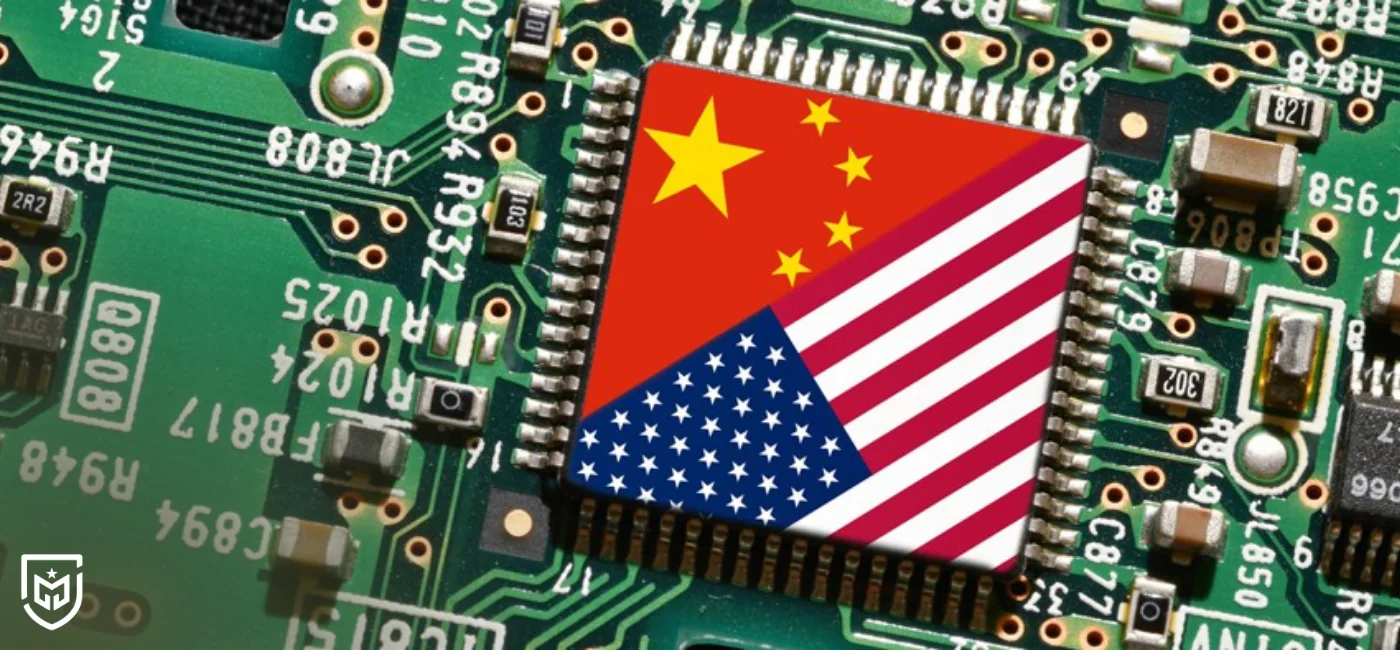
The debate over exporting advanced artificial intelligence chips to China has once again moved to the center of U.S. national security discussions. According to Defense One, after the White House warned that China was attempting to benefit from American AI systems to develop similar capabilities, some experts and policy groups called for a complete halt to exports of advanced AI chips to Beijing.
The debate focuses particularly on whether powerful AI chips such as Nvidia’s H200 could be used by Chinese companies to train, run or scale advanced artificial intelligence models. Experts argue that access to high-performance computing hardware is one of the key factors that allows rival countries to replicate or improve AI capabilities derived from U.S. systems.
Americans for Responsible Innovation, an AI policy group, sent a letter to Michael Kratsios, Director of the White House Office of Science and Technology Policy, urging restrictions on China’s access to advanced chips. The group argued that preventing adversaries from copying leading American AI models requires not only controlling model access, but also limiting access to the computing infrastructure needed to train and operate similar systems.
The White House Office of Science and Technology Policy recently warned that China and other foreign actors were attempting “industrial-scale distillation” of advanced U.S. AI systems. In the AI field, distillation refers to a process in which a powerful model is queried extensively in order to train another model with similar behavior or capabilities. For this reason, experts believe that high-performance chips capable of supporting such efforts also create a security risk.
The export status of chips such as Nvidia’s H200 remains uncertain. The Trump administration reportedly approved limited H200 sales earlier this year, but the chips had not yet reached China. U.S. Commerce Secretary Howard Lutnick also stated that Beijing had not yet allowed Chinese companies to buy the hardware. This shows that the AI competition between Washington and Beijing is shaped not only by export controls, but also by broader strategic calculations on both sides.
Advanced AI chips are considered critical hardware for training large-scale models, running them efficiently and conducting high-volume query campaigns. Limiting China’s access to these chips could slow Beijing’s ability to develop competing models using data or behavioral patterns extracted from American AI systems. However, such restrictions are not expected to stop China’s AI development entirely; rather, they would likely limit its speed, scale and computing capacity.
For defense and intelligence circles, the issue is not only commercial technology competition but a direct national security concern. Advanced AI models can be used to identify cyber vulnerabilities, generate malicious code, accelerate disinformation campaigns or support military decision-making. If rival states gain access to comparable capabilities, the risks could extend well beyond the technology sector.
The report also noted that Anthropic accused three China-based AI companies in February of running a large-scale query operation against Claude through about 24,000 fake accounts and 16 million interactions. Around the same period, OpenAI told members of the U.S. House Select Committee on China that it had seen signs suggesting DeepSeek had attempted to distill models from OpenAI and other leading U.S. labs. These claims show that AI models can become not only targets of cyber or data extraction activity, but also sources for rival model development.
The U.S. debate points to the emergence of a new security framework in the AI ecosystem. In the past, export controls focused largely on the direct military potential of advanced chips. Now, more complex risks such as model querying, data extraction, distillation and competitive model training are also becoming part of the policy discussion. This means chip exports, AI model access rules and cloud infrastructure controls may increasingly need to be evaluated together.
Calls to halt AI chip exports to China could mark a new hardening in the U.S.-China technology rivalry. Any decision by Washington would affect not only American technology companies such as Nvidia, but also global AI supply chains, defense-related technologies and allied export control policies. The White House warning about China-linked distillation efforts shows once again that artificial intelligence has become a critical factor in defense, cybersecurity and strategic competition.


The cookies used on our website are used to provide you with a better user experience and to improve our website. You can manage your cookie preferences from the options below.
 Süheyla Yıldız
Post Comment
Comments
No comments yet.
Related News
SSB Sector Meeting: Focus on Supply Chain and Production Capabilities
Turkish defense industry signed 15 billion dollars in new contracts in 2026
SSB Hosts Second Supply Chain Strengthening Summit
Skyfall II Exercise: U.S. Army Demonstrates UAV Defense Capabilities in Germany
IDA Turkey 2026 Defense and Aviation Industrial Cooperation Days Launched
SSB Chief: Transparent Licensing Will Strengthen Defense Cooperation
STM's Swarm UAV System Demonstrates Operational Success at Ateş Serbest-2026
ÇAKIR Cruise Missile Supply Contract Signed