




Missiles and Rockets
Electronic Systems


BREAKING NEWS
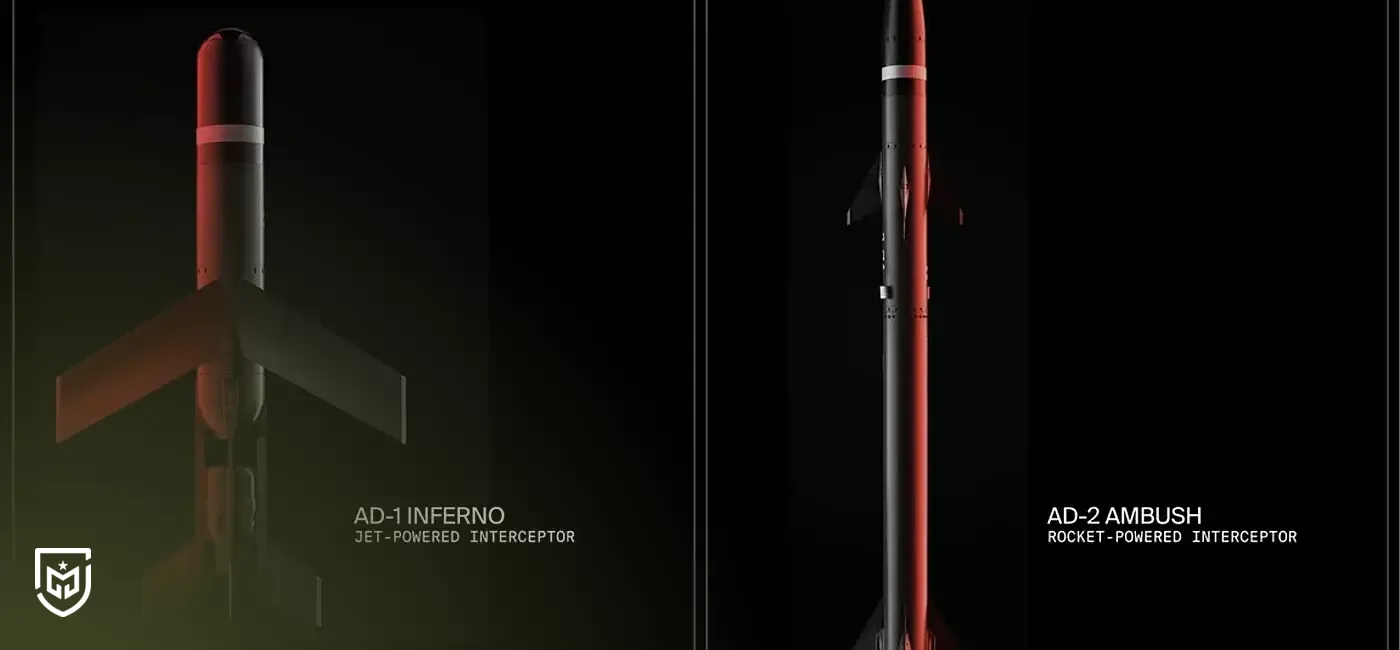
Helsing officially announced the Contra autonomous air defense platform, powered by artificial intelligence. The system is designed to counter jet-powered unmanned aerial vehicles (UAVs) and cruise missiles. The company has simultaneously developed two new interceptor missiles—the AD-1 Inferno and AD-2 Ambush. Currently undergoing testing, the system is scheduled to reach operational readiness in the second half of 2027.
Helsing, founded in Germany in 2021, specializes in developing artificial intelligence-driven defense systems. The company possesses particular expertise in autonomous systems and machine learning technologies. The Contra platform represents Helsing's technological capabilities and was developed to address Europe's growing UAV and missile threats. The company's core vision is to provide large-scale autonomous defense capabilities under human supervision.
The Contra system is engineered to detect and engage thousands of UAV and missile threats. The platform integrates sensors and interceptor assets into a unified air picture, utilizing the Altra C2 command and control software as its foundation. Full authority over decision-making and target prioritization remains with operators; the system is not fully autonomous but operates under human control. The AD-1 Inferno possesses loitering, swarm formation, and re-engagement capabilities against jet-powered threats. The AD-2 Ambush, powered by a solid-fuel rocket motor, achieves Mach 2.5 speeds and provides ranges exceeding 20 kilometers.
Russia's systematic increase in production of Geran-4 and Geran-5 jet-powered UAVs in Ukraine has created a new threat perception within Europe's defense sector. According to Ukrainian intelligence reports, monthly production of these UAVs has reached 4,000 units. In this context, Contra aims to address NATO nations and Europe's requirement for protection against scaled drone and missile attacks. The system is designed for integration with other air defense missiles, laser weapon systems, anti-UAV platforms, and network-centric systems within days.
Autonomous air defense systems are recognized globally through examples such as the U.S. JDAM and Patriot systems, and Israel's Iron Dome and David's Sling platforms. Contra, by contrast, places greater emphasis on artificial intelligence and autonomous decision-making. The objective is to maintain unit costs significantly below current interceptor missiles, targeting a reduction of approximately $100,000 per unit. This approach reflects Europe's strategy to develop cost-effective and scalable air defense solutions.


The cookies used on our website are used to provide you with a better user experience and to improve our website. You can manage your cookie preferences from the options below.
 Tolga Demirel
Post Comment
Comments
No comments yet.
Related News
ASELSAN's Backlog Orders Exceed $30 Billion
ASELSAN's Order Backlog Reaches $30.7 Billion
Canik Showcases Heavy Machine Gun Systems at BORAN VIII International Sniper Competition
Turkish Defense Sector Targets 84% Localization Rate by 2027
NATO Allies Increase Interest in Low-Cost Cruise Missile Systems
ASELSAN Achieves 151.5 Billion Lira Revenue in Nine Months
CTech's Satellite Communication Solutions Supported Unmanned Systems at TURNAs 2026
ASELSAN and SSB Sign EUR 523 Million Air Defense Contract