



Satellite and Space News
Global Developments


BREAKING NEWS
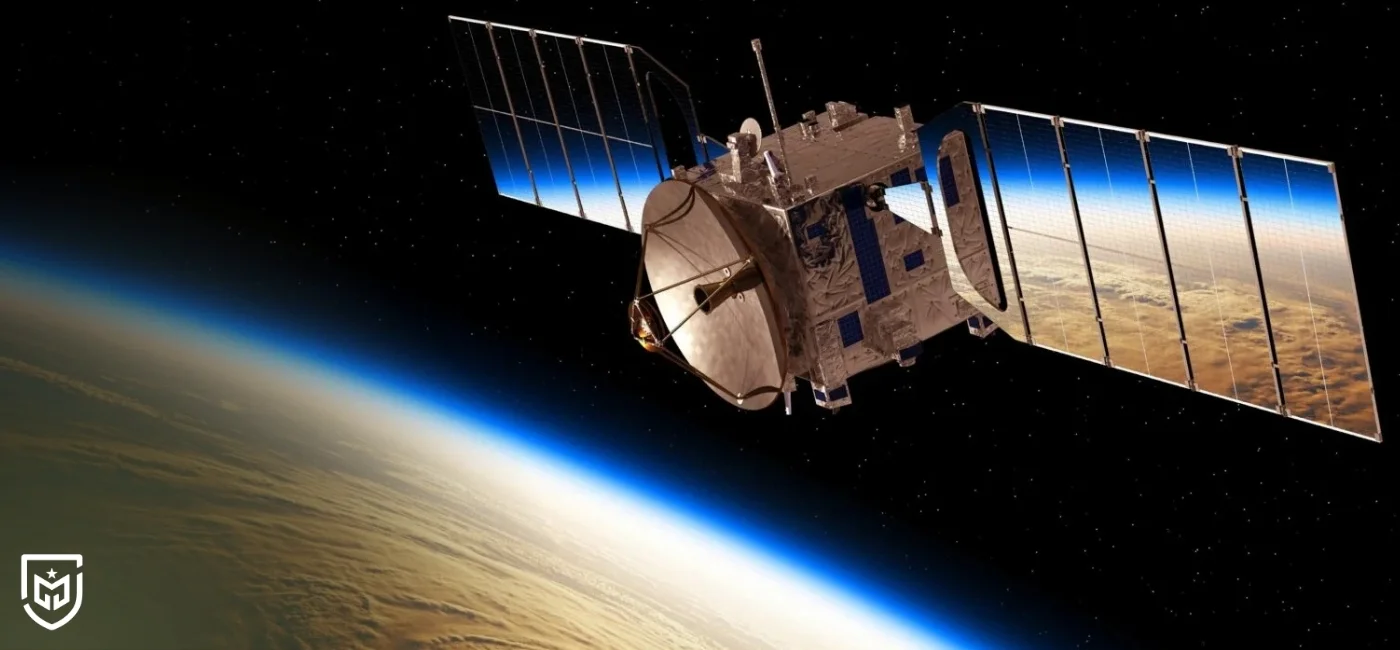
The US Department of Defense’s planned “Space Data Network” (SDN) is emerging as a central element in Washington’s next-generation missile defense concept. According to the report, the network is designed to combine military and commercial satellites within a single hybrid architecture, allowing missile warning and tracking data from sensors to be transmitted to command centers and intercept systems in a very short time. The report underlines that the success of the Golden Dome missile defense construct, which has become a key priority under the Trump administration, will depend heavily on how fast and securely data can move from sensor to shooter. For that reason, the SDN is being viewed not merely as a communications project, but as the operational backbone of Golden Dome.
According to the details shared in the report, the US Space Force has long aimed to build a multi-orbit and hybrid satellite communications architecture. In this model, secure military systems, commercial communication satellites, missile warning and tracking platforms, and GPS-like positioning capabilities would all be connected within the same ecosystem. The goal is not only to move data to ground stations, but also to deliver it quickly to combat units operating across land, air, sea, and cyber domains. However, this vision has so far faced delays due to both technical challenges and the fragmented development of multiple related programs. It is noted that the force design prepared by the Space Force Analysis Center first emerged in early 2023, that the major building blocks took clearer shape by late 2024, and that the architecture is still being refined.
The report explains that the SDN will rely on three main technical functions: backbone data transport, tactical and frontline communications, and network orchestration. The backbone layer will enable high-volume data transfer between different satellite constellations with low latency. In the article, this structure is described as working like a large routing system that connects various space-based networks. In this context, the initiative previously referred to as MILNET appears as a leading component, while the Space Development Agency’s Transport Layer may also remain part of the overall architecture. This would allow the system to support large-scale background data flow while also pushing warning and targeting information directly to fielded platforms through tactical data links such as Link 16.
The third and perhaps most critical component of the network will be the Mission Operations Center. This center is expected to create an orchestration framework that can automatically route data across military and commercial satellite networks operating in different orbits. In practice, this means data could be redirected through alternative paths during bandwidth congestion, latency issues, or electronic warfare interference. The US Air Force Research Laboratory is also reported to be supporting startups working on AI-enabled solutions in this area, while Aalyria is mentioned as one of the companies developing a network orchestration concept. Taken as a whole, the Space Data Network appears poised to become one of the most important enabling infrastructures for the future of US space-based missile defense and joint operations.


The cookies used on our website are used to provide you with a better user experience and to improve our website. You can manage your cookie preferences from the options below.
 Süheyla Yıldız
Post Comment
Comments
No comments yet.
Related News
SSB Sector Meeting: Focus on Supply Chain and Production Capabilities
Turkish defense industry signed 15 billion dollars in new contracts in 2026
SSB Hosts Second Supply Chain Strengthening Summit
SSB Chief: Transparent Licensing Will Strengthen Defense Cooperation
Görgün: Turkish-German defense partnership to be revitalized with new vision
Spain Plans to Purchase 15 Additional Hürjet Advanced Trainers
Turkey and Spain to Develop Joint Version of Hürjet Aircraft
Romanian Corvette Conducts Black Sea Exercises