


Missiles and Rockets
Electronic Systems


BREAKING NEWS
The conflict that began with joint US and Israeli strikes against Iran has rapidly expanded across the Middle East and the Gulf region, marking one of the most technologically diverse battlefields in recent years. As the first week of the war passes, attention has increasingly focused on the advanced weapons systems that both sides have deployed for the first time in an operational combat environment.
Israel has conducted deep-strike operations inside Iranian territory primarily using advanced air assets such as the F-35 fighter jet and other long-range strike platforms. However, one of the most notable developments was the operational appearance of the RA-01 unmanned aerial vehicle. Although its existence had been rumored for years, the platform had rarely been observed in active missions. Military analysts believe the RA-01 is designed for long-range intelligence, surveillance and covert strike operations, enabling Israel to gather critical battlefield data while maintaining a low radar signature.
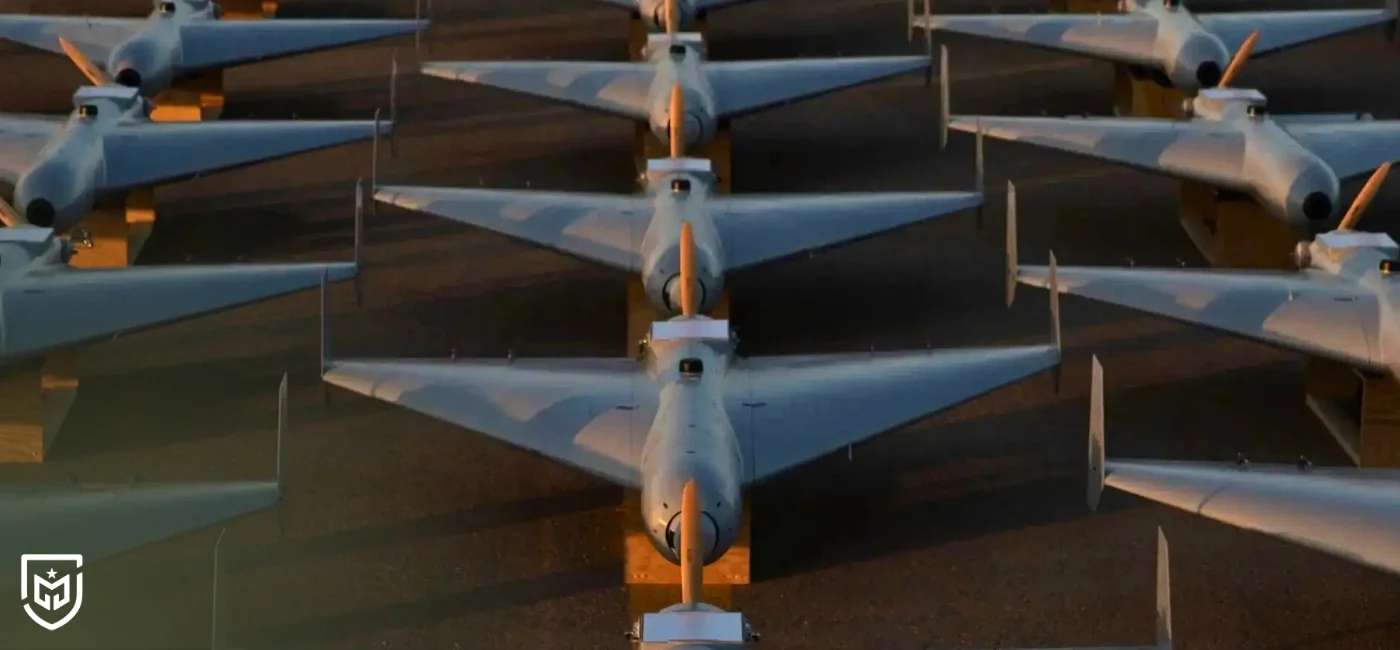
The United States also introduced a significant new capability by deploying a kamikaze drone in real combat for the first time in its military history. The system, known as LUCAS, is widely believed to be based on Iran’s Shahed-136 loitering munition, which US forces previously captured and reverse-engineered. According to American defense officials, the LUCAS drone fleet has been upgraded with artificial intelligence software developed by US tech firms, allowing large numbers of drones to operate semi-autonomously during coordinated strike missions against Iranian targets.
Another major system debuting in the conflict is the PrSM (Precision Strike Missile), a new long-range surface-to-surface missile developed to replace the widely used ATACMS system. Defense officials state that the missile significantly enhances the US Army’s deep-strike capabilities. The missile is estimated to have a range of around 500 kilometers and offers improved targeting accuracy against high-value strategic targets.
In addition, observers noticed a new version of the Tomahawk cruise missile used during the opening phase of the conflict. Unlike the traditional grey-colored variants, the newly observed missiles featured a black exterior coating. Analysts believe this new coating may include radar-absorbing materials designed to reduce detection and improve survivability during night operations and in contested air defense environments.
Iran, meanwhile, has also demonstrated several new military capabilities during the conflict. One of the most notable systems is the Khorramshahr-4 ballistic missile, which Iranian officials claim can reach hypersonic speeds. The missile reportedly carries a 1,500-kilogram warhead and has an estimated range of up to 2,000 kilometers. Iranian sources also emphasize the missile’s rapid launch preparation time of approximately 12 minutes, allowing mobile launch units to fire and relocate quickly before potential counterstrikes.
Another system making its battlefield debut is the Hadid-110 jet-powered kamikaze drone. According to statements from the Islamic Revolutionary Guard Corps, the drone is the fastest unmanned aerial vehicle currently in Iran’s arsenal, capable of reaching speeds of up to 517 kilometers per hour. The platform reportedly carries a 30-kilogram warhead and incorporates design features intended to reduce radar detection.
The maritime domain has also witnessed new developments. A Bahamas-flagged oil tanker was reportedly struck by a remotely controlled explosive boat, highlighting Iran’s ongoing efforts to develop armed unmanned surface vessels and explosive drone boats. Military experts suggest that these systems could form part of Iran’s asymmetric naval strategy, enabling Tehran to threaten shipping lanes and naval forces with relatively low-cost but high-impact platforms.


The cookies used on our website are used to provide you with a better user experience and to improve our website. You can manage your cookie preferences from the options below.
 Süheyla Yıldız
Post Comment
Comments
No comments yet.
Related News
Skyfall II Exercise: U.S. Army Demonstrates UAV Defense Capabilities in Germany
IDA Turkey 2026 Defense and Aviation Industrial Cooperation Days Launched
SSB Chief: Transparent Licensing Will Strengthen Defense Cooperation
STM's Swarm UAV System Demonstrates Operational Success at Ateş Serbest-2026
ÇAKIR Cruise Missile Supply Contract Signed
Drone Shield Showcased at Marksman Competition
Fire Free-2026 Exercise Successfully Completed
Görgün: Turkish-German defense partnership to be revitalized with new vision