

Land Forces News
Global Developments


BREAKING NEWS
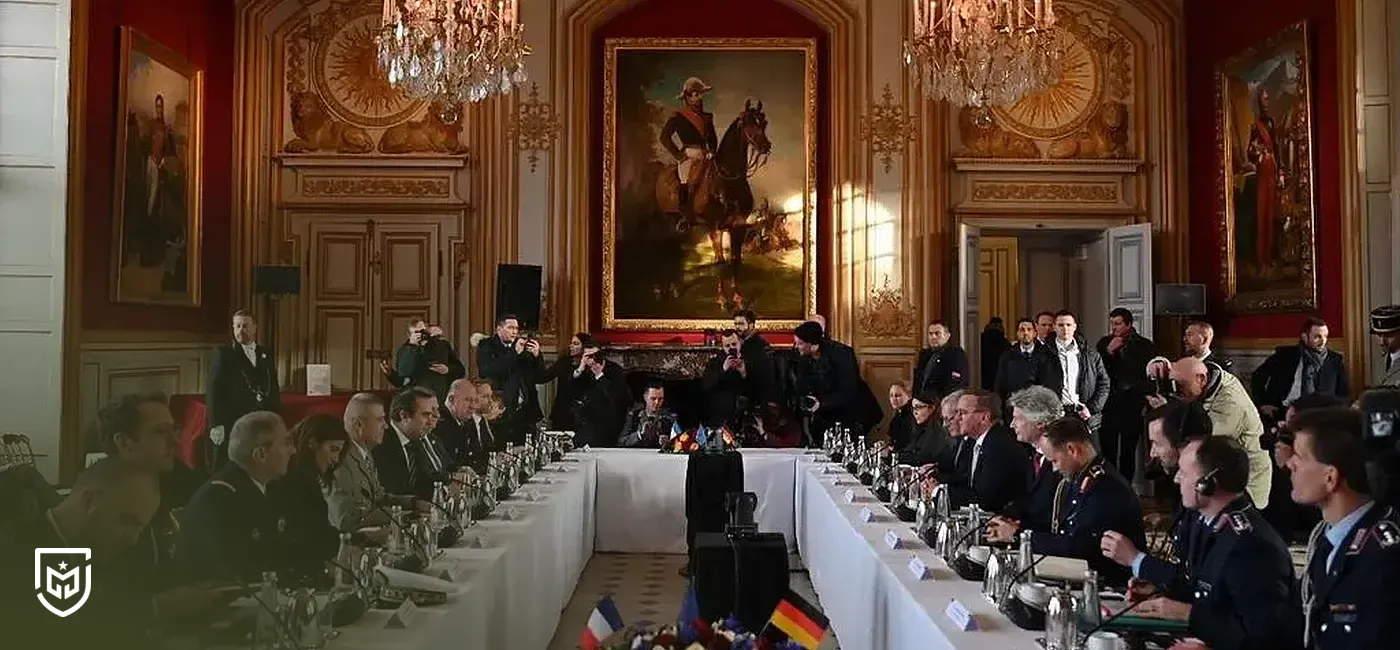
Germany's Defense Ministry spokesman categorically denied allegations by French Armed Forces Commander Fabien Mandon regarding withdrawal from the Franco-German Main Ground Combat System (MGCS) tank program. Berlin stated that work on the joint initiative continues and reaffirmed both nations' commitment to equal partnership. The spokesman noted that operational experience gained from the Ukraine conflict has been integrated into the program, demonstrating not failure but rather the project's evolution and refinement.
The MGCS program is managed through KNDS, a holding company established between France's Nexter and Germany's Krauss-Maffei-Wegmann (KMW). The initiative includes participation from Germany's Rheinmetall and France's Thales, representing one of Europe's most comprehensive defense industrial collaborations. Germany and France reached agreement in 2017 to jointly develop a next-generation combat platform to replace the German Leopard 2 and French Leclerc tanks, though the project faced delays and internal tensions.
The French Defense Ministry, through an official statement on behalf of Mandon, emphasized that work on the joint tank has not been wasted. The ministry noted that the program maintains its significance through renewed focus on advanced network connectivity, collaborative combat capabilities, automation, and robotics technologies. These clarifications indicate that cooperation between the two nations has been restructured rather than abandoned. Mandon's characterization of the program as "not good" during a parliamentary committee session and his claim that "Germans have decided to withdraw" underscore the challenges inherent in European defense integration and the complexities of multinational weapons development.
This disagreement represents the latest manifestation of strain in Franco-German defense cooperation. In June 2026, the two nations cancelled a next-generation fighter aircraft development program. German Chancellor Friedrich Merz and French President Emmanuel Macron concluded that industrial conflicts among defense contractors involved in the project could not be resolved. Such disputes reveal the limitations of Europe's capacity to develop shared defense platforms and demonstrate how national interests can affect international cooperation frameworks.
The future of the MGCS program depends on both nations' ability to reach renewed consensus on technical and political grounds. The initiative forms a critical component of Europe's objective to develop independent combat capabilities aligned with NATO standards. As Leopard 2 and Leclerc tanks approach retirement, the development of their successor platform is strategically vital to European autonomy. Similarly, tactical and technological lessons derived from Russia's ongoing conflict in Ukraine have become essential considerations for next-generation tank design and operational doctrine.


The cookies used on our website are used to provide you with a better user experience and to improve our website. You can manage your cookie preferences from the options below.
 Murat Yılmaz
Post Comment
Comments
No comments yet.
Related News
Thales Introduces HexaForce AI-Powered Command and Control System to Gulf Region
Romania Signs Contract for Airbus H225M Helicopter Procurement
Ari Arms begins OR-4 rifle production in Azerbaijan
Ireland selects Thales Ground Master radar for air surveillance capability
Greece reaches agreement with US for Stryker armored vehicles
France successfully conducts first test of M51.3 submarine-launched ballistic missile
Turkish Defense Exports Rise 10.7% in September, Maintaining Upward Trend
ASELSAN Signs 157.9 Million Dollar Export Contract