


Air Forces News
Weapons and Ammunition


BREAKING NEWS
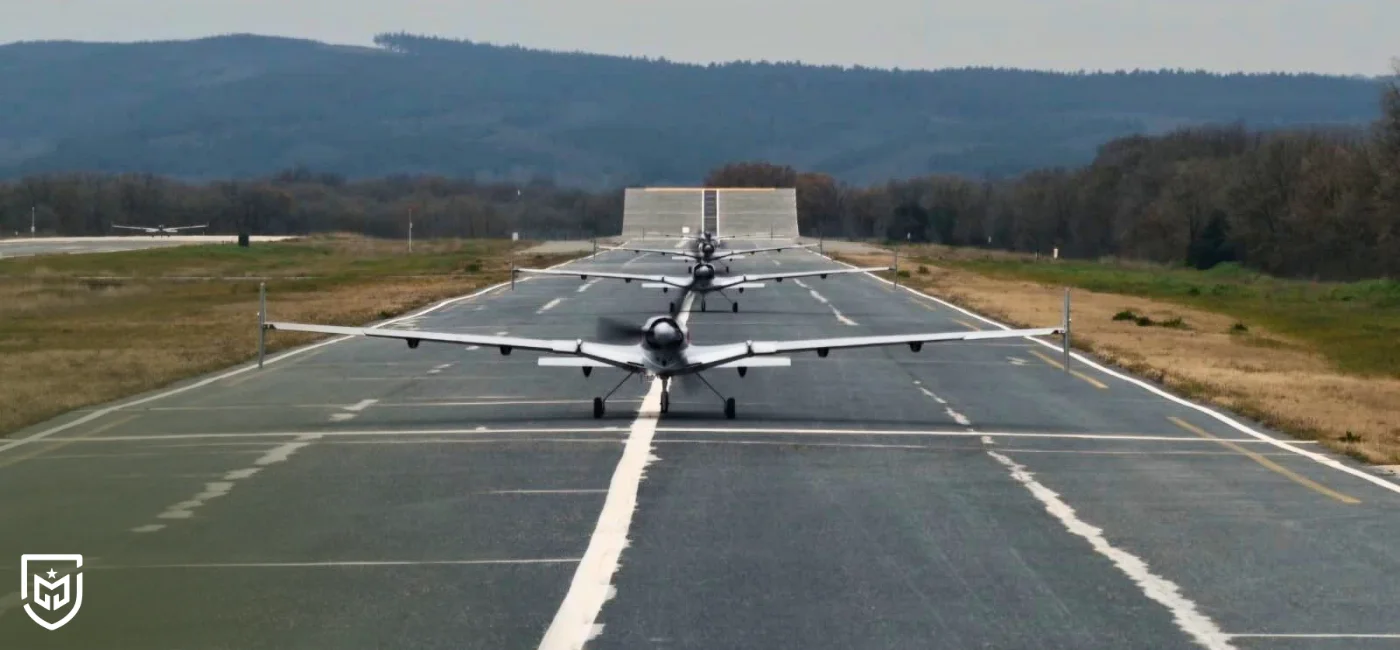
Baykar’s indigenously developed K2 Kamikaze Unmanned Aerial Vehicle has successfully completed autonomous swarm flight and air patrol tests, marking an important milestone in Türkiye’s growing unmanned combat aviation capability. According to the shared test footage and available information, five K2 platforms took off from Baykar’s Flight Training and Test Center in Keşan and carried out coordinated formation flights using advanced autonomy, artificial intelligence, and onboard sensor systems. The demonstration showed that the platform is being positioned not just as a standalone loitering munition, but as part of a broader multi-UAV combat concept.
During the test campaign, the K2s flew in different formations and maintained their assigned positions within the swarm without direct human intervention. Through AI-supported software and sensor fusion, each aircraft was able to determine its place relative to the others and preserve formation discipline throughout the mission. This kind of capability is especially important for future battlefield environments in which multiple unmanned systems are expected to operate together under dynamic and contested conditions. Baykar also highlighted that the platform can perform different formations such as “Turan” and “Wall,” reinforcing its intended role in coordinated group operations.
The operational significance of autonomous swarm capability is considerable. When multiple UAVs can move together, adapt their positions, and focus collectively on shared objectives, they can create greater pressure on enemy defenses and improve mission flexibility. In practical terms, such systems may be used to saturate hostile air defense networks, approach targets from multiple directions, and generate combat effects at lower cost than traditional high-value munitions. This makes platforms like K2 especially relevant in asymmetric warfare scenarios and in operations against dense or layered air defense environments.
Another notable aspect of the K2 program is Baykar’s forward-looking concept for reusable variants. The next phase of research and development is expected to focus on versions that can release their payload on target and then return to base for reuse. This would represent a significant shift from the classic one-way kamikaze UAV concept toward a more flexible and cost-efficient model. Such an approach could reduce the operational cost per mission while preserving the tactical benefits of a compact strike platform.
Overall, the successful autonomous swarm flight test suggests that Türkiye’s unmanned systems ecosystem is moving toward a new phase centered on coordinated, AI-supported, multi-platform operations. The K2 is emerging not only as a strike asset, but as a building block in future swarm warfare concepts. If the platform continues to mature along this path, it could become one of the notable examples of next-generation loitering munition design within the broader Turkish defense industry.


The cookies used on our website are used to provide you with a better user experience and to improve our website. You can manage your cookie preferences from the options below.
 Süheyla Yıldız
Post Comment
Comments
No comments yet.
Related News
Skyfall II Exercise: U.S. Army Demonstrates UAV Defense Capabilities in Germany
STM's Swarm UAV System Demonstrates Operational Success at Ateş Serbest-2026
TUSAŞ Kamikaze UAV Systems Achieve Success in Exercise Ateş Serbest-2026
Fire Free-2026 Exercise Successfully Completed
Spain Plans to Purchase 15 Additional Hürjet Advanced Trainers
Baykar platforms demonstrated capabilities at Ateş Serbest-2026 exercise
Turkey and Spain to Develop Joint Version of Hürjet Aircraft
Unmanned Naval and Aerial Vehicles Demonstrated Integrated Command Control Coordination