BREAKING NEWS
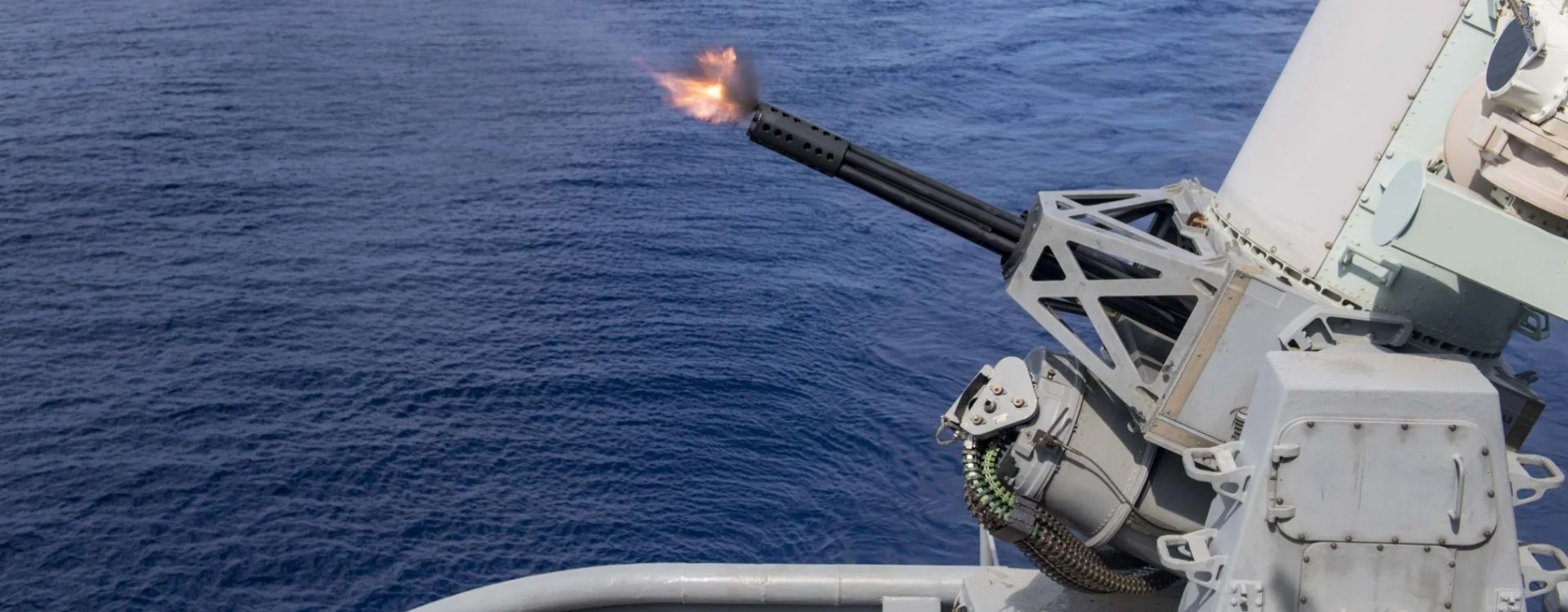
CIWS (Close-In Weapon System) is an advanced automated defense system used on modern warships to neutralize incoming missiles, unmanned aerial vehicles, and low-altitude aerial threats at very short range. Within naval defense systems, CIWS serves as the last line of defense, designed to detect and destroy threats within seconds before impact. In today’s naval warfare doctrine, where high-speed anti-ship missiles pose significant risks, CIWS has become a standard and indispensable component of layered maritime air defense.
Technically, a CIWS integrates radar tracking systems, electro-optical sensors, fire-control computers, and a rapid-fire gun platform into a single autonomous unit. One of the most recognized systems, developed by Raytheon, is the Phalanx CIWS, which employs a 20 mm Gatling gun capable of firing between 4,500 and 6,000 rounds per minute. Comparable systems such as the Dutch Goalkeeper and the Russian AK-630 operate with different calibers and sensor configurations but share the same core mission: intercepting high-speed threats at close range. The system detects targets via radar, calculates trajectory and velocity in real time, locks onto the threat automatically, and engages without requiring human intervention. CIWS is particularly effective against sea-skimming missiles with low radar cross-sections. Since its conceptual development in the 1970s—following the rapid proliferation of anti-ship missile technology—the CIWS platform has continuously evolved. Today, modern variants integrate advanced tracking algorithms and AI-assisted threat assessment, reinforcing their role as a critical component of multi-layered naval air defense architecture.


The cookies used on our website are used to provide you with a better user experience and to improve our website. You can manage your cookie preferences from the options below.




 Süheyla Yıldız