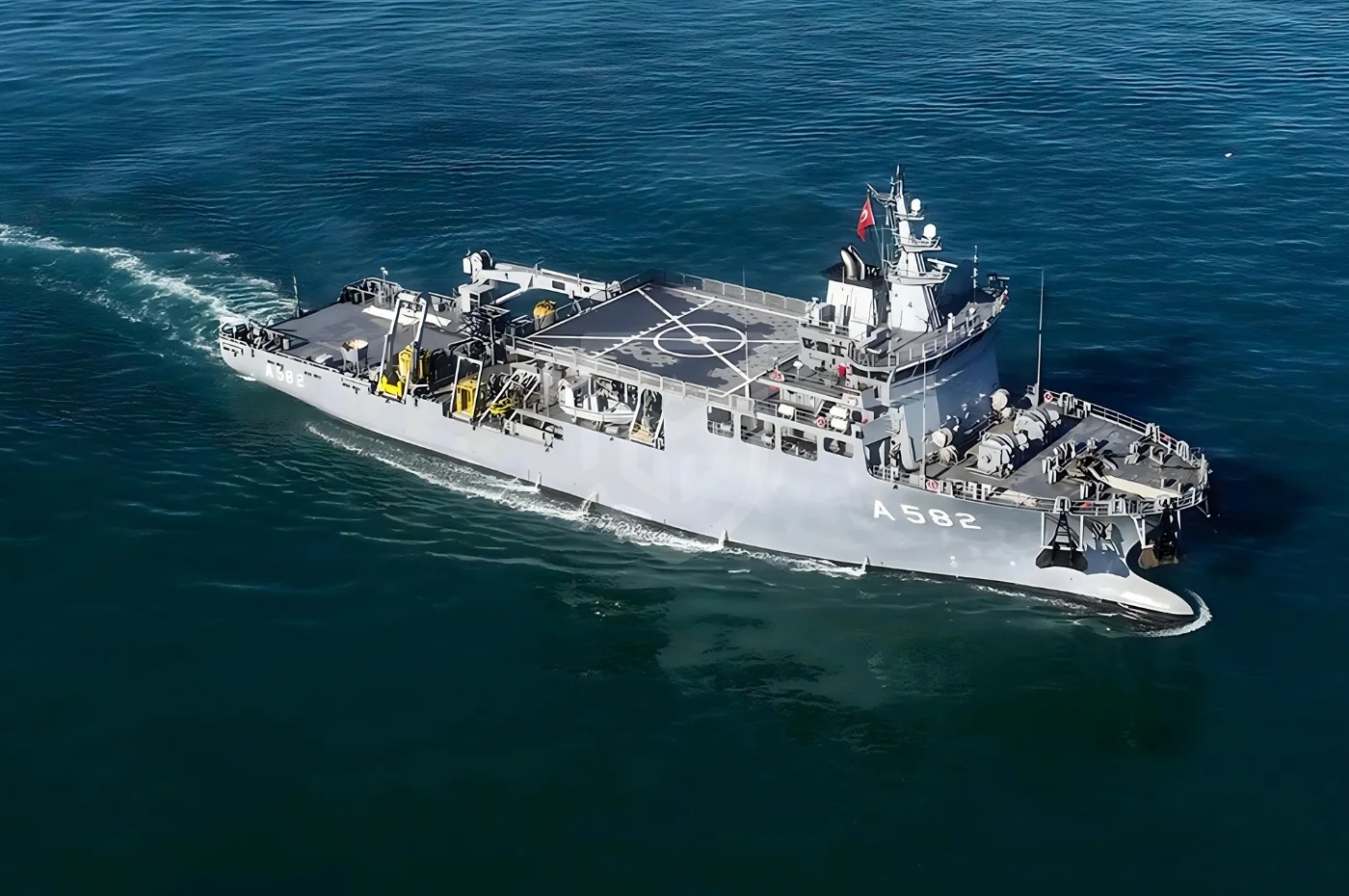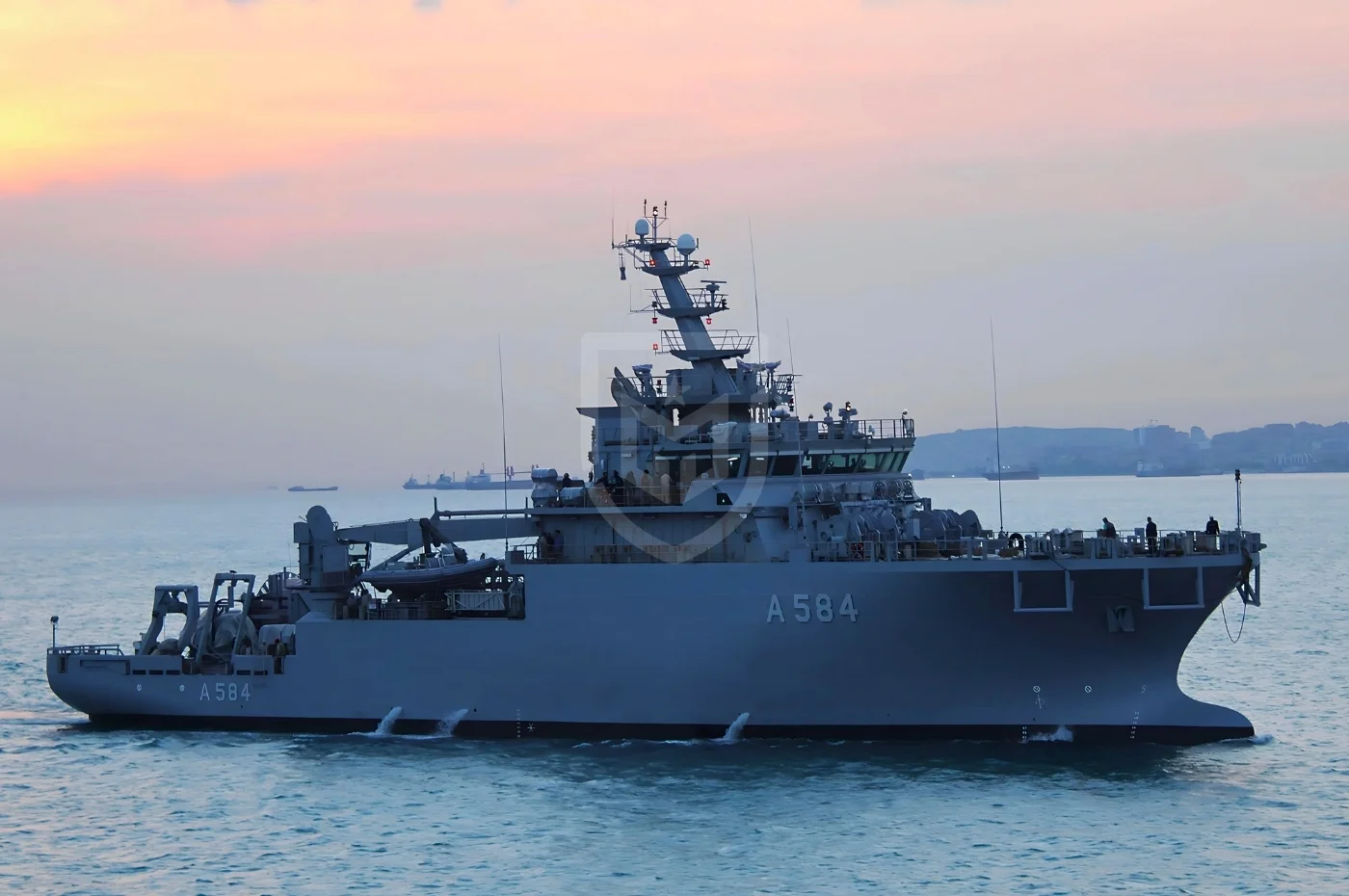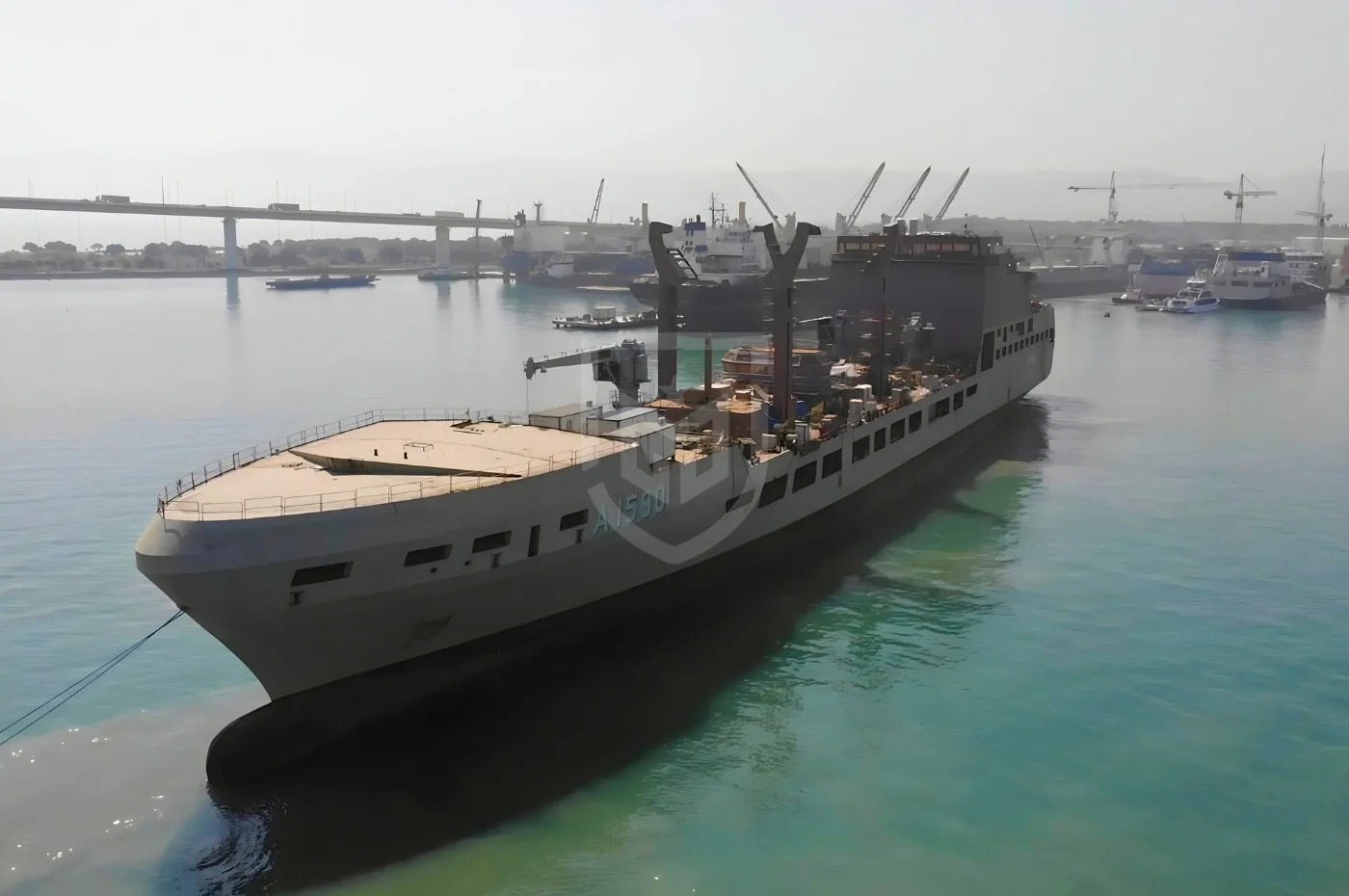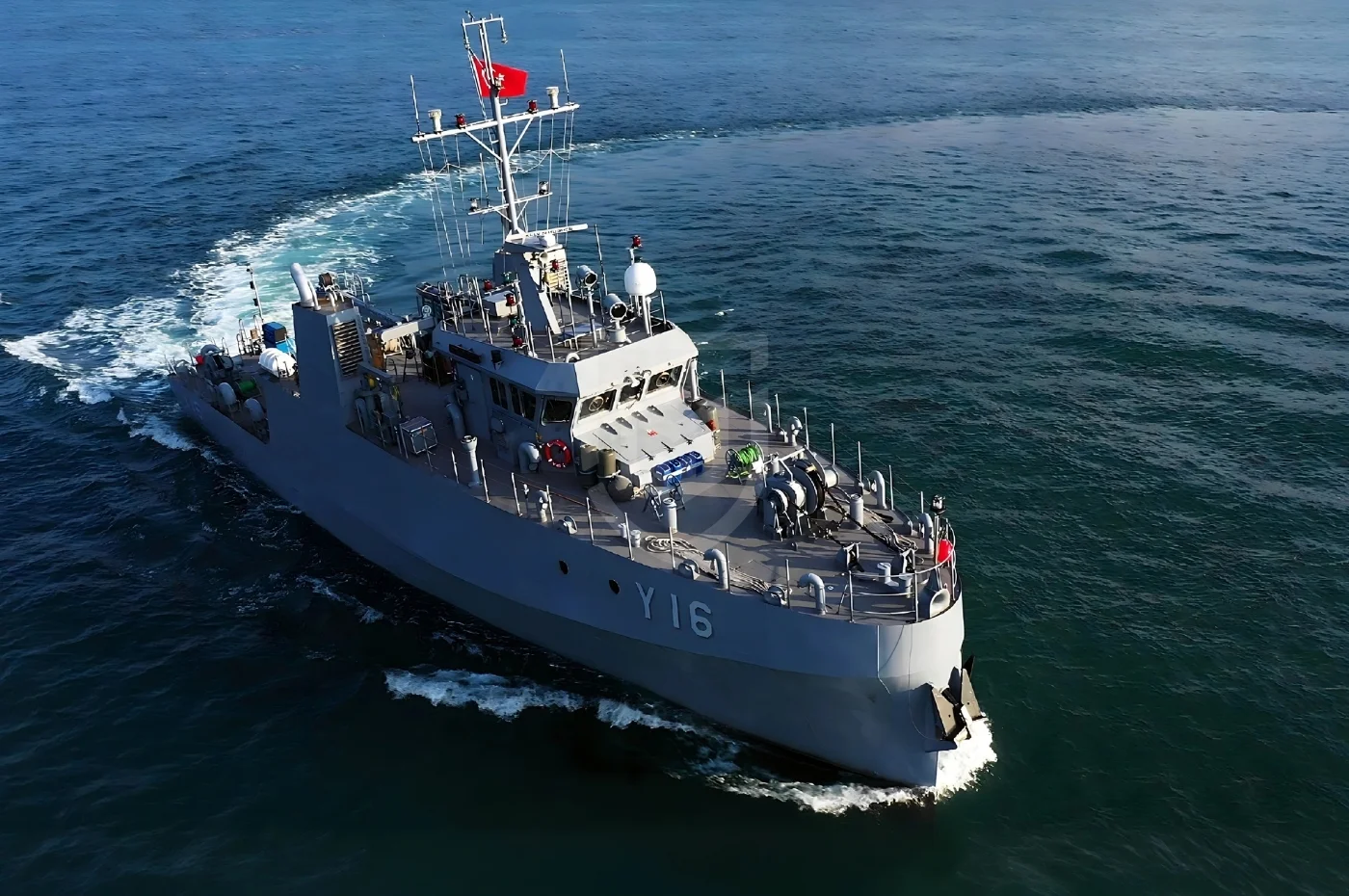
MOSHIP represents a strategic capability designed to address one of the most critical yet low-probability maritime emergencies: submarine accidents. Submarine rescue vessels are essential force multipliers that ensure crew survivability and reinforce naval deterrence by guaranteeing an extraction solution in worst-case scenarios.
Operational Purpose and Role
The primary mission of MOSHIP is to locate, support, and evacuate personnel from distressed submarines. Its mission profile includes:
- Deployment of submarine rescue vehicles
- ROV and diver-assisted intervention
- Pressurized crew transfer
- Onboard decompression and medical support
- Surface firefighting operations
- Offshore logistical support
Submarine rescue operations generally follow three phases:
- Localization and verification of the distressed submarine
- Deployment of rescue systems
- Pressurized transfer and life-support management
MOSHIP integrates all three phases within a single, purpose-built platform.
Doctrine and Operational Concept
MOSHIP is certified for interoperability with NATO’s NSRS (NATO Submarine Rescue System) and the US Navy’s SRDRS (Submarine Rescue Diving and Recompression System). This ensures compatibility in multinational operations.
Operational concept:
- Rapid deployment to incident area
- Dynamic positioning over the target
- Deployment of rescue module or vehicle
- Mating with submarine escape hatch
- Controlled pressurized transfer of crew
The 600-meter operational depth envelope covers the majority of conventional submarine operating depths worldwide.
Platform Architecture
MOSHIP’s architecture is structured around three core layers:
Platform Layer
- Diesel-electric propulsion supported by 2 × azimuth thrusters enables precise maneuvering and station keeping.
Mission Layer
- Life support systems
- Pressurized transfer modules
- Rescue system integration
- Stern A-frame and heavy lifting equipment
Command and Control Layer
- Integrated monitoring of depth, pressure, environmental conditions, and rescue system status during operations.
Survivability and Safety Approach
- Monohull design optimized for offshore endurance
- High stability in rough sea states
- Firefighting capability
- 2 × 12.7 mm heavy machine gun systems for self-defense
The vessel is not a combatant but includes limited defensive armament against asymmetric threats.
Advantages and Limitations in Modern Threat Environment
Advantages
- Certified interoperability with both NATO NSRS and US SRDRS
- Deep-water rescue capability (600 m)
- High maneuverability with azimuth propulsion
- Multi-role capability including firefighting
Limitations
- Not designed for high-intensity naval combat
- No publicly disclosed air-defense capability
- Rescue capacity depends on deployed rescue module configuration
Detailed Technical Specifications
Dimensions and Displacement
- Length overall: 90.80 m
- Beam: 19.00 m
- Depth: 7.80 m
- Draft: 4.45 m
- Displacement: 4,200 tons
Propulsion System
- Diesel-electric configuration
- Main engines: 2 × 3,500 kW
- Propulsion: 2 × Azimuth thrusters
Azimuth propulsion allows 360-degree thrust vectoring for precise positioning.
Performance
- Maximum speed: 18 knots
- Economic speed: 14 knots
- Range: 4,500 nautical miles
Rescue and Life Support Capability
- Operational rescue depth: 600 meters
- Pressurized transfer capability: 5 bar
- Integrated decompression and life-support systems
Maximum evacuation throughput per cycle is not publicly disclosed.
Armament
- 2 × 12.7 mm heavy machine guns
Personnel
- Total complement: 130 personnel
Additional rescue specialists can be embarked depending on mission profile.
Classification and Certification
- Classed by an IACS-member classification society
- Certified for NATO NSRS operations
- Compatible with US SRDRS systems
Frequently Asked Questions
What is MOSHIP used for?
- MOSHIP is designed to rescue submarine crews in case of underwater emergencies. It provides pressurized evacuation, decompression, and medical support in a single integrated platform.
What is its maximum rescue depth?
- The vessel supports rescue operations down to 600 meters.
Is it NATO compatible?
- Yes. It is certified for NATO NSRS operations and compatible with US SRDRS systems.
Is MOSHIP armed?
- Yes, it carries 2 × 12.7 mm heavy machine guns for self-defense, but it is not a combat warship.
Is it mobile or fixed?
- It is a fully mobile offshore platform with a maximum speed of 18 knots and long-range deployment capability.
How many personnel does it carry?
- The vessel accommodates 130 personnel, including ship crew and mission specialists.
What are its equivalents?
Comparable capabilities exist within NATO NSRS deployment vessels and US SRDRS support ships. MOSHIP’s dual certification provides enhanced interoperability compared to many single-system platforms.
Sources
- Official publications of İstanbul Shipyard
- Publicly available information from the Turkish Naval Forces
- NATO NSRS open-source documentation
- US Navy SRDRS publicly available technical documents