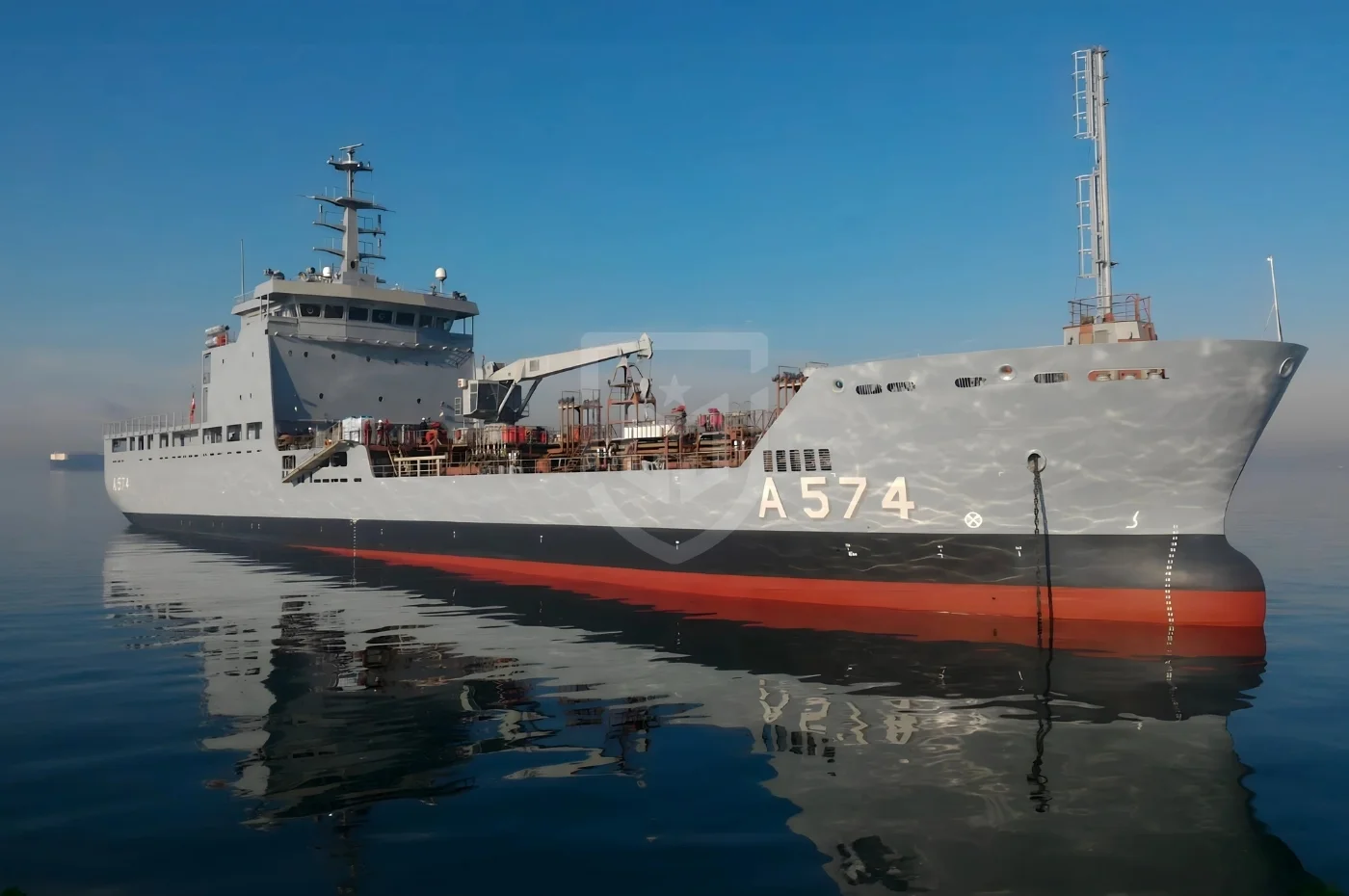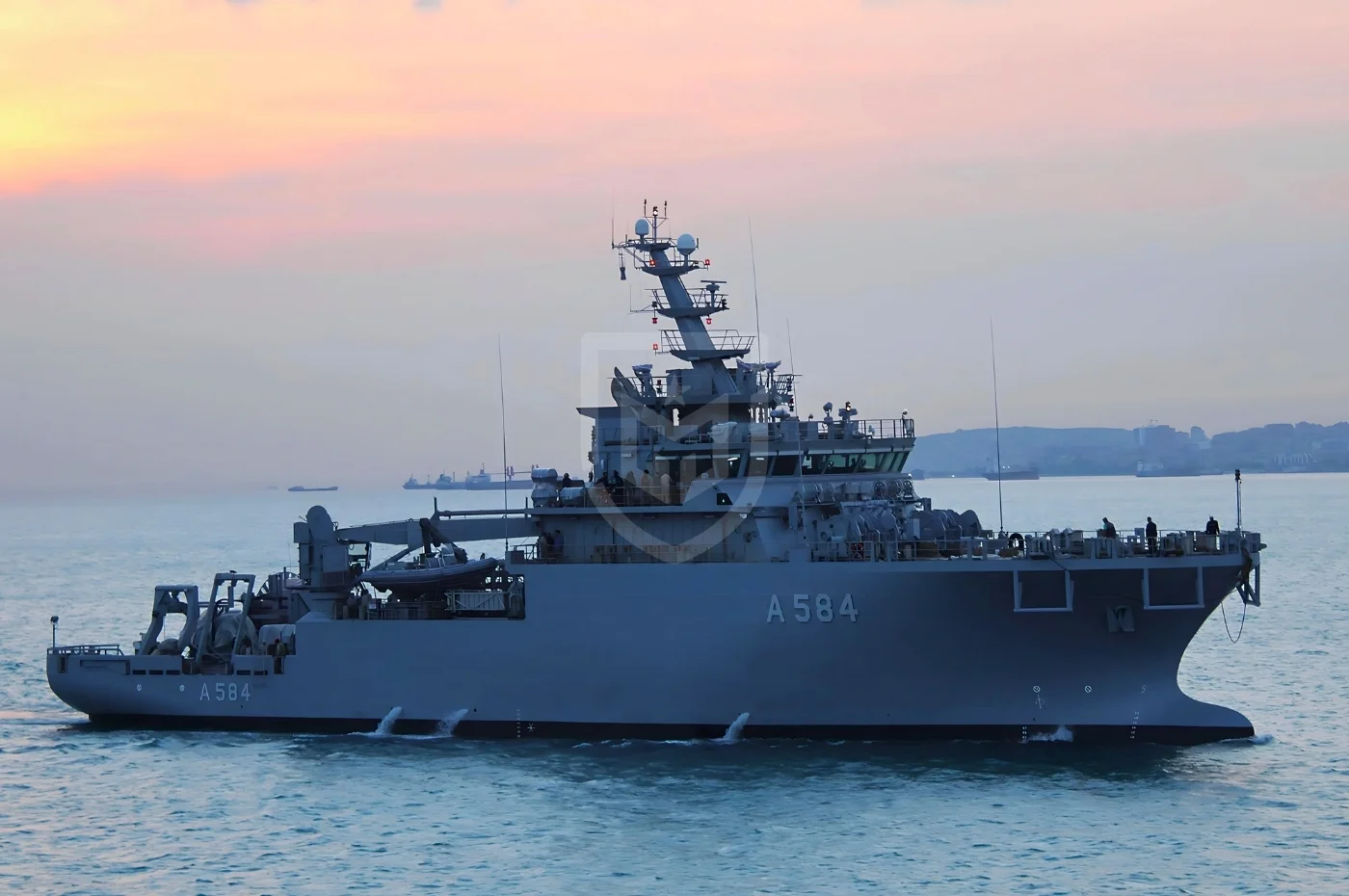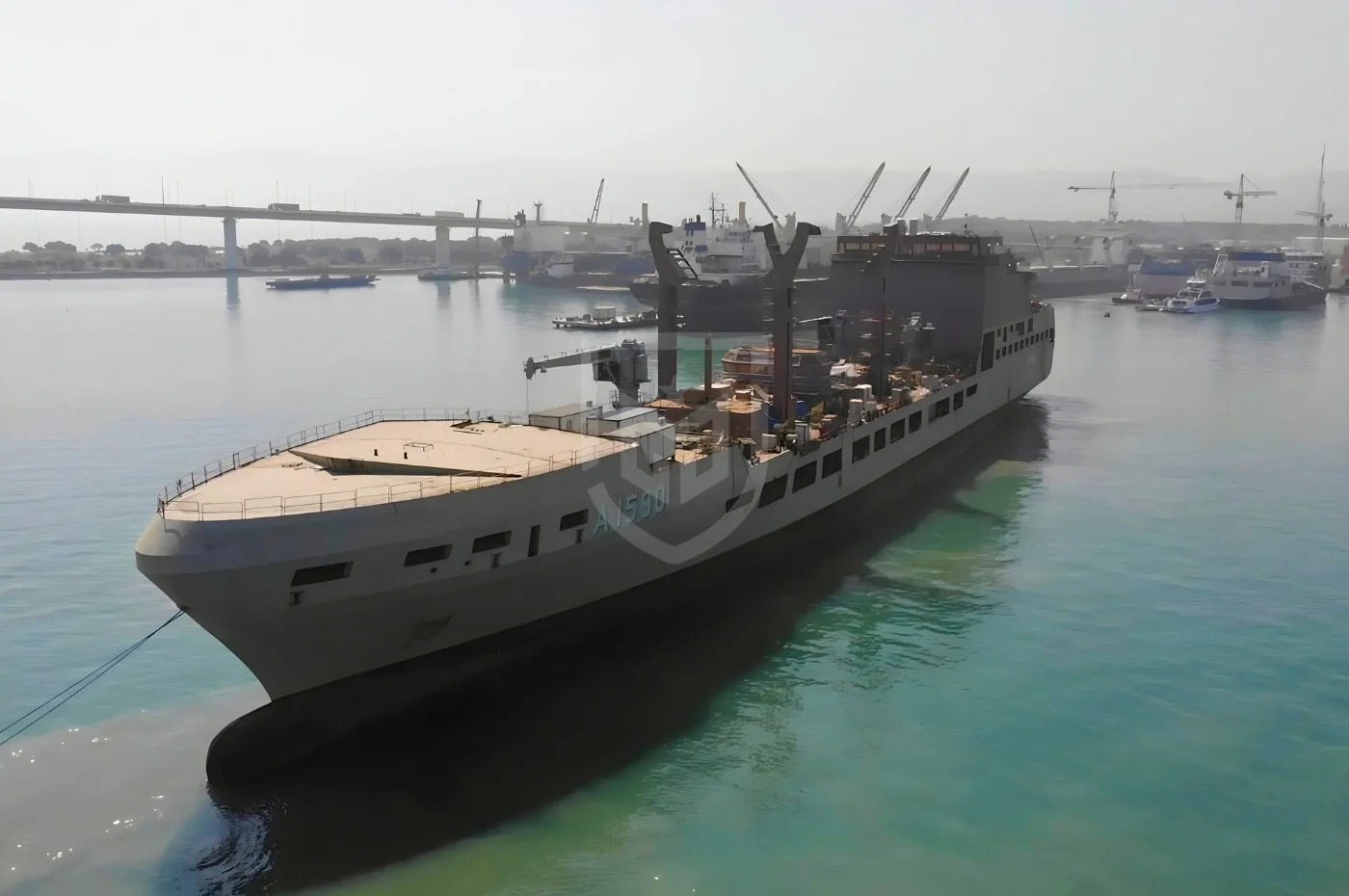
The Selah Shipyard Logistic Support Vessel is designed to enhance naval operational sustainability by ensuring continuous logistical support for surface combatants. In modern naval doctrine, the effectiveness of frigates, corvettes, fast attack craft, and mine countermeasure vessels depends not only on their combat systems but also on uninterrupted fuel, maintenance, and supply chains. This vessel directly supports that requirement.
Operational Role and Mission Profile
The ship is capable of:
- Providing shore power supply to naval vessels at port or anchorage
- Transporting fuel (marine diesel and JP-5 aviation fuel)
- Supplying fresh water
- Carrying ammunition and general cargo
- Deploying repair and maintenance teams
- Supporting SAT (naval special operations) units
Its operational concept focuses primarily on port and anchorage support but extends to limited at-sea refueling operations through a stern float system. This capability reduces dependency on fixed naval bases and enhances operational endurance of task groups.
Platform Architecture
The vessel follows a conventional auxiliary ship architecture optimized for volume and cargo efficiency. Key architectural elements include:
- Segregated fuel tanks for marine diesel and JP-5
- High-capacity fresh water storage
- Heavy-duty 18-ton service crane
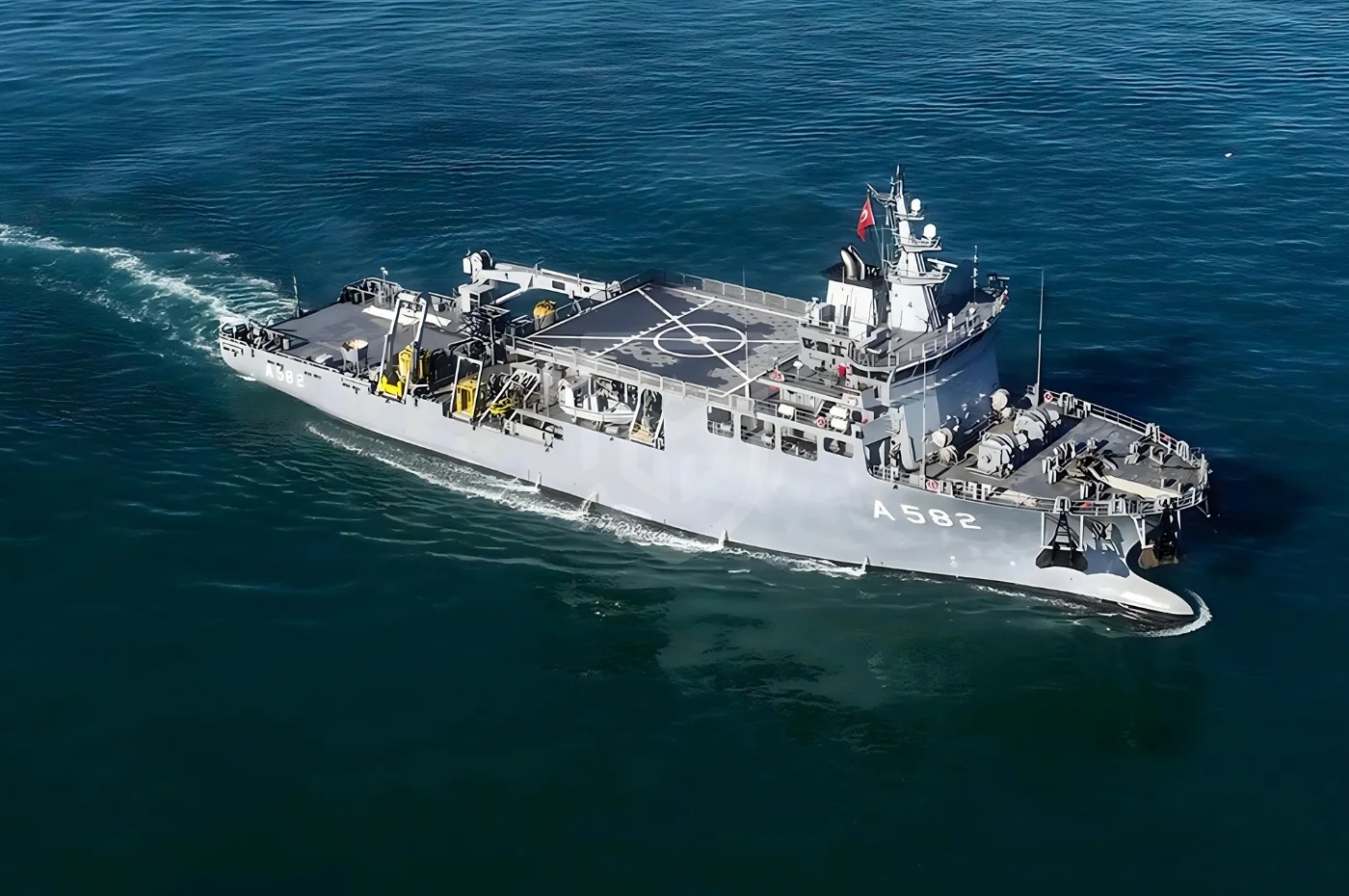
- Helicopter landing deck rated for 15-ton general-purpose helicopters
- NATO and Turkish Armed Forces communications integration
The helicopter deck enables vertical replenishment (VERTREP), personnel transfer, and medical evacuation operations. Publicly available sources do not specify whether a hangar facility is present.
Survivability and Self-Protection
As an auxiliary platform, the vessel is not heavily armored. However, it is equipped with a 12.7 mm STAMP remote-controlled weapon station, providing protection against asymmetric threats such as small boats or low-level security risks.
The system is intended for defensive deterrence rather than high-intensity naval combat. In high-threat environments, the vessel is expected to operate under escort of combatants.
Advantages and Limitations
Advantages:
- High fuel and water capacity relative to vessel size
- Capability for limited at-sea refueling
- Helicopter support capability
- Multi-role logistical flexibility
Limitations:
- Limited speed (12 knots maximum)
- Minimal organic air or missile defense
- Not designed for independent operations in high-threat combat zones
Publicly available information does not specify total production numbers or detailed deployment history.
Detailed Technical Specifications
Dimensions
- Full Length: 106.51 meters
- Beam: 16.80 meters
- Depth to main deck: 8.40 meters
- Displacement: Not publicly disclosed
Propulsion System
- Main engines: 2 × 15,200 kW
- Maximum speed: 12 knots
- Propulsion configuration details are not publicly disclosed
Cargo and Fuel Capacity
- Marine Diesel: 4,036 tons
- JP-5 Aviation Fuel: 336 tons
- Fresh Water: 594 tons
- Ammunition and cargo volume: Not publicly disclosed
Replenishment at Sea
- Stern float system for fuel transfer
- Simultaneous transfer capacity: Not publicly disclosed
Aviation Facilities
- 15-ton class helicopter landing deck
- Day and night operation capability
- Hangar facility: Not publicly disclosed
Armament
- 1 × 12.7 mm STAMP Remote Weapon Station
Command and Communication
- NATO-compatible communications systems
- Integrated with Turkish Armed Forces communication networks
- Detailed data link standards are not publicly disclosed
Crew and Accommodation
- Personnel capacity: 82
- Minor surgical intervention room available
- Capability to carry repair teams
Classification
- Class society: Türk Loydu
Frequently Asked Questions
What is the primary purpose of this vessel?
- It provides fuel, water, power supply, maintenance, and logistical support to naval vessels both at port and, to a limited extent, at sea.
What is its operational range?
- The operational range is not publicly disclosed. However, its large fuel capacity indicates extended support capability.
Can it refuel ships at sea?
- Yes. It is equipped with a stern float system enabling at-sea fuel transfer operations.
What types of ships can it support?
- Frigates, corvettes, fast attack craft, mine warfare vessels, and SAT special operations boats.
Does it carry helicopters?
- It supports operations of 15-ton class general-purpose helicopters. Public sources do not confirm a hangar.
Is it heavily armed?
- No. It is equipped with a 12.7 mm STAMP remote weapon system primarily for self-defense.
How fast is the vessel?
- Maximum speed is 12 knots.
What are its equivalents?
- Comparable platforms include small fleet tankers and auxiliary replenishment vessels, though this platform is optimized for port and anchorage support with limited at-sea capability.
Sources
- Selah Shipyard official announcements and technical brochures
- Türk Loydu classification records
- Publicly available defense industry publications