Air Forces News
Electronic Systems
Global Developments

US Prepares to Accept New F-35s Without Radars as APG-85 Delays Trigger Fresh Program Crisis
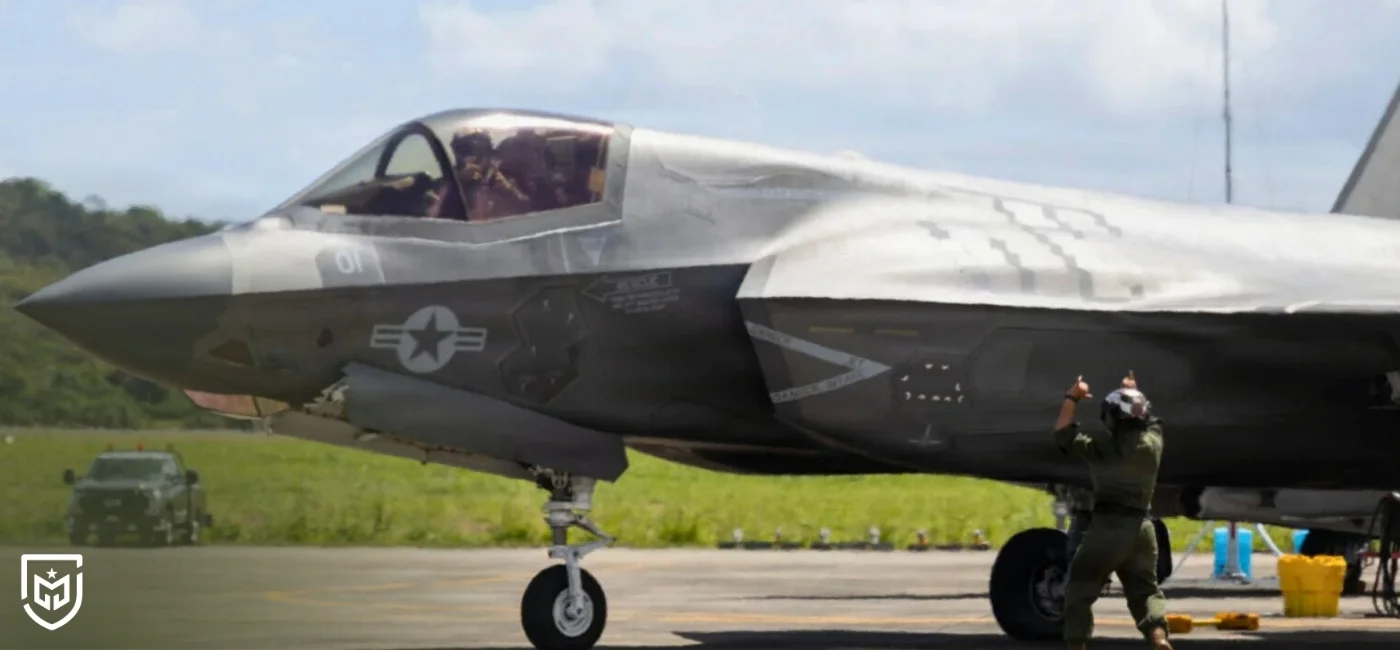
A new delivery and integration crisis has emerged in the US F-35 program. According to a report by Breaking Defense, the US Marine Corps is preparing to accept newly built F-35B fighter jets without radar systems in the coming months. The same practice is also expected to extend later this year to the US Air Force’s F-35A and the US Navy’s F-35C variants. Sources cited in the report indicate that the main reason behind this unusual step is the slower-than-expected maturation of Northrop Grumman’s next-generation AN/APG-85 AESA radar.
The AN/APG-85 is regarded as a critical sensor that will replace the AN/APG-81 radar currently used on F-35 aircraft. The new radar is planned to serve as a central component of the F-35’s future sensor architecture, particularly alongside the Block 4 modernization package and more advanced mission systems. Reports published in 2025 had already suggested that risks related to the radar schedule could even lead to changes in the aircraft’s fuselage design. Now, the problem appears to have evolved into an operationally controversial interim solution: delivering aircraft without radars rather than slowing the production line.
According to recent reporting by Air & Space Forces, the radarless F-35s could continue arriving at their bases over the next several months, and possibly into next year. Until radar integration is completed, these aircraft are expected to be used mainly for training and may not be considered fully combat-capable. This means that while the number of delivered aircraft may continue to rise on paper, the number of mission-ready jets entering service could remain limited. Assessments cited by Breaking Defense suggest that the Pentagon wants to keep production moving, but this creates a delicate balance between maintaining manufacturing momentum and preserving operational readiness.
The F-35 program has already been under considerable pressure in recent years due to the Tech Refresh 3 software package, Block 4 upgrades, and the broader testing schedule. The delivery pause involving TR-3-configured aircraft in 2024 highlighted just how dependent the program is on a complex, multilayered supply and integration chain. In this context, the APG-85 delay is not merely a radar issue; it has become a strategic challenge affecting sensor integration, mission software, combat readiness, and budget efficiency. While accepting new F-35s without radars may help preserve production tempo in the short term, it could also place new strain on modernization timelines, maintenance planning, and long-term readiness rates.





 Süheyla Yıldız

Post Comment
Comments
No comments yet.
Related News
SSB Sector Meeting: Focus on Supply Chain and Production Capabilities
Turkish defense industry signed 15 billion dollars in new contracts in 2026
SSB Hosts Second Supply Chain Strengthening Summit
Skyfall II Exercise: U.S. Army Demonstrates UAV Defense Capabilities in Germany
IDA Turkey 2026 Defense and Aviation Industrial Cooperation Days Launched
SSB Chief: Transparent Licensing Will Strengthen Defense Cooperation
STM's Swarm UAV System Demonstrates Operational Success at Ateş Serbest-2026
TUSAŞ Kamikaze UAV Systems Achieve Success in Exercise Ateş Serbest-2026