Air Forces News
Naval Forces News
Global Developments

U.S. Navy’s MQ-25A Drone Refueler Completes First Flight, but Carrier Deployment Slips to 2029
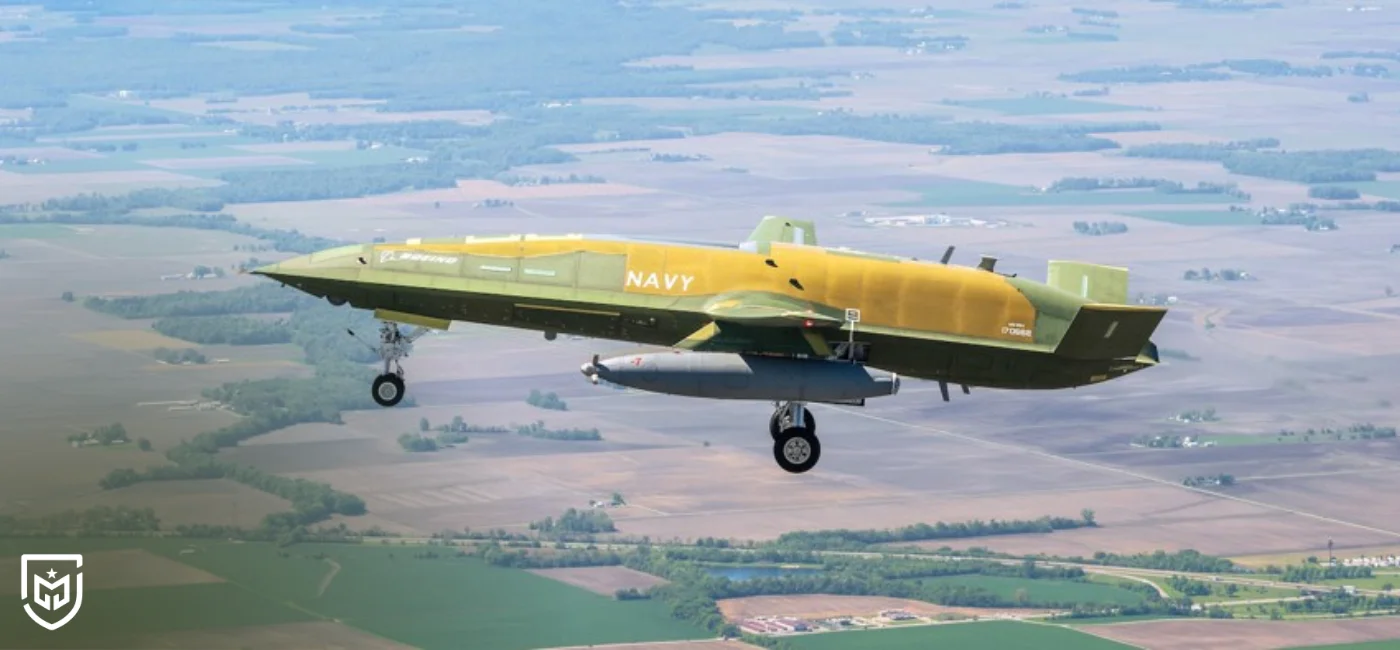
The U.S. Navy’s carrier-based unmanned refueling aircraft, the MQ-25A Stingray, has passed an important test milestone. Boeing’s first operational MQ-25A completed its maiden flight on April 25, 2026, flying for about two hours over Illinois. According to Defense One, the aircraft successfully completed taxiing, takeoff, landing and multiple command-response checks during the flight.
The MQ-25A Stingray stands out as the U.S. Navy’s first operational unmanned tanker aircraft designed for carrier air wing operations. The main goal of the program is to transfer aerial refueling missions currently performed by F/A-18 Super Hornet fighter jets to an unmanned platform. This would allow Super Hornets to focus more on combat, strike, air defense and other core missions.
Despite the successful first flight, the program’s operational timeline has slipped again. According to U.S. Navy budget documents, the MQ-25A is now expected to reach initial operational capability in February 2029. The program was originally expected to enter service in 2024, before being delayed to 2026 and then 2027. With the latest schedule, carrier-based operational use of the MQ-25A has been delayed by about five years compared with the original plan.
The production MQ-25A that flew is one of four Engineering Development Model aircraft being built for the U.S. Navy. The Navy’s program of record covers a total of 76 MQ-25 aircraft, including four engineering development models and five system demonstration test aircraft. For the 2027 budget, the Navy is requesting $771 million to procure three MQ-25A aircraft.
The MQ-25 program carries major strategic importance for the future of carrier air operations. Until now, F/A-18 Super Hornets used for tanker missions have consumed flight hours and operational availability that could otherwise support combat tasks. Once the MQ-25A enters service, more Super Hornets are expected to be available for strike, air combat, fleet defense and electronic warfare support missions. This is directly linked to the Navy’s goal of extending carrier air wing range, especially in wide operating areas such as the Pacific.
The program’s test history is also significant. The MQ-25 test aircraft first flew in 2019 and later demonstrated aerial refueling with the F/A-18 Super Hornet, E-2D Hawkeye and F-35C Lightning II. These tests were important because they showed that an unmanned aircraft could refuel different elements of a carrier air wing.
However, the program has faced problems for several years. U.S. Defense Department reports have pointed to Boeing supply chain issues related to COVID-19, aircraft design difficulties and quality problems. These challenges have been among the main reasons for repeated delays in the MQ-25A’s initial operational capability timeline.
Rear Admiral Tony Rossi, head of the U.S. Navy’s Program Executive Office for Unmanned Aviation and Strike Weapons, described the first flight as a milestone achievement. According to Navy officials, the MQ-25A will significantly increase the fleet’s reach and striking power once it is integrated into carrier operations.
Boeing and the U.S. Navy will continue additional flight testing at MidAmerica St. Louis Airport in Illinois. In the next phase, testing is expected to move to Naval Air Station Patuxent River in Maryland, where the aircraft will prepare for carrier suitability work. This stage will be critical for proving that the MQ-25A can operate safely and effectively in the demanding environment of aircraft carrier operations.
The first flight of the MQ-25A Stingray marks an important step in the U.S. Navy’s plan to integrate unmanned aircraft into the carrier air wing. However, the delayed 2029 operational timeline shows that the program still faces technical and industrial challenges. Once fielded, the MQ-25A is expected to become a critical platform that extends carrier air wing range, reduces the burden on manned fighter aircraft and expands the role of unmanned systems in naval aviation.




 Süheyla Yıldız

Post Comment
Comments
No comments yet.
Related News
Germany denies claims of MGCS tank project withdrawal
Thales Introduces HexaForce AI-Powered Command and Control System to Gulf Region
ÇEPNI Tactical UAV Family Enters Operational Service
ASELSAN's Drone-Hunting System Completes Successful Demonstration
Romania Signs Contract for Airbus H225M Helicopter Procurement
ASELSAN's GÖKALP drone defense system completes successful demonstration
Ari Arms begins OR-4 rifle production in Azerbaijan
AKINCI UAV Successfully Tested with MORFOZ Guidance Kit