Air Forces News
Missiles and Rockets
Global Developments

New low-cost US hypersonic push: Flight-proven missile demonstrator completes first test with a storable liquid-fueled engine
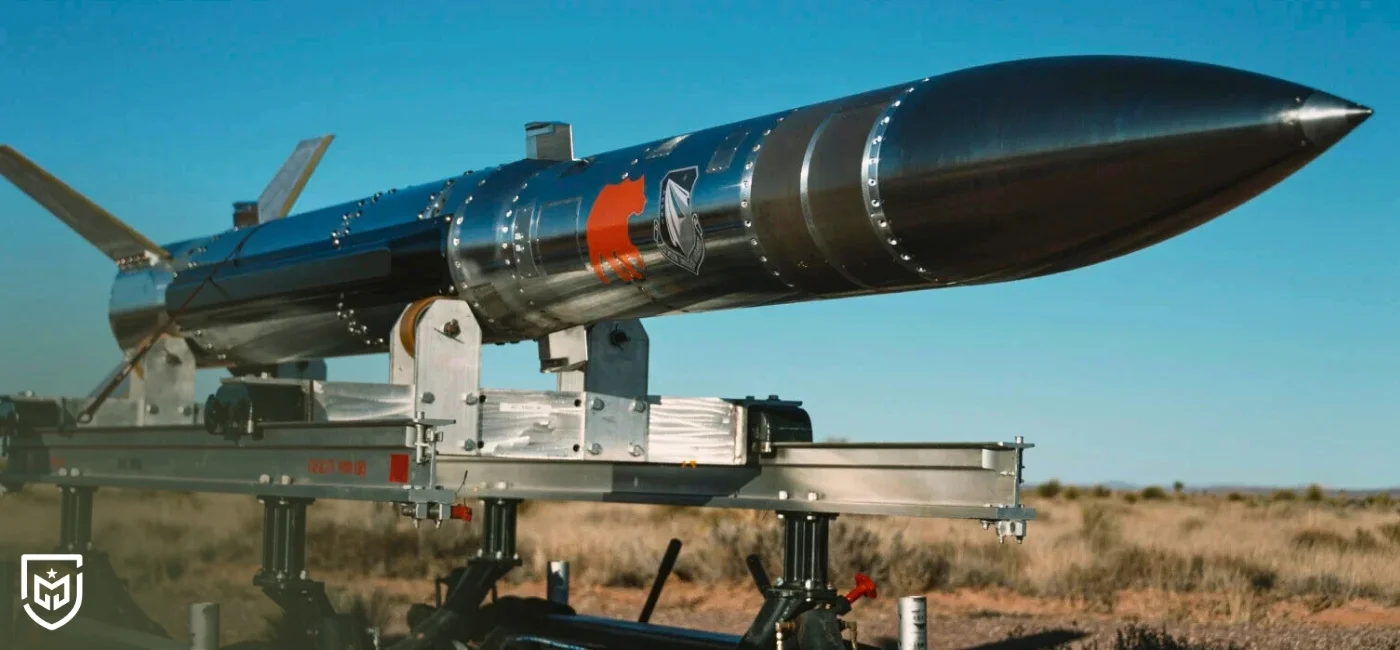
Hypersonic weapons in the US defense ecosystem are often associated with long development timelines, high costs, and limited production volumes. The Affordable Rapid Missile Demonstrator (ARMD) program, supported by the Air Force Research Laboratory, aims to challenge that model. According to the March 18, 2026 report by Breaking Defense, ARMD was designed to achieve its first flight in less than a year, and it successfully reached that milestone a few weeks ago. At the center of the program is the Draper engine, a storable liquid rocket motor developed by Ursa Major.
One of the most notable aspects of this engine is its propulsion concept, which does not require cryogenic infrastructure, can be stored across a wide range of temperatures, and is described as non-toxic. Breaking Defense reported that Draper’s closed-cycle architecture offers strong efficiency, while also carrying both its fuel and oxidizer on board. Unlike air-breathing hypersonic systems, this allows the vehicle to operate with less dependence on speed and altitude changes. As a result, the system is designed not only to reach hypersonic speed, but also to maintain powered and controllable maneuverability throughout flight. This gives it a more flexible mission profile compared with traditional boost-glide systems that lose propulsion during the glide phase.
Ursa Major’s role in the program goes beyond simply supplying the engine. According to the report, the company also served as the prime contractor for ARMD and integrated much of the vehicle from the ground up. Company officials attributed the speed of the program, moving from contract award to full vehicle flight testing in less than a year, to co-locating engineering, manufacturing, and testing activities, running development processes in parallel, and prioritizing rapid flight learning over lengthy ground-test campaigns. Experience gained from the company’s earlier Hadley engine program was also cited as an important factor in accelerating Draper’s development.
Another critical aspect of the program is its emphasis on cost and scalable production. Ursa Major stated that it made heavy use of additive manufacturing, including 3D printing, to reduce part counts while achieving high performance through more complex geometries. On the vehicle side, the design reportedly relies not only on the traditional aerospace and defense supply chain but also on materials and production processes that can draw from the broader industrial and automotive base. This approach signals an effort to move hypersonic capabilities away from being niche, high-cost assets and toward systems that could be fielded in greater numbers.
According to the report, Ursa Major plans to transfer the lessons learned from ARMD into its HAVOC Missile System, a tactical liquid-fueled hypersonic missile concept. The company says it is aiming to provide faster-to-build and lower-cost alternatives that can complement the more complex, higher-end solutions developed by major prime contractors. In that sense, the ARMD flight is not just a technology milestone, but also a sign of a broader US effort to pursue faster procurement, lower cost, and greater production capacity in the hypersonic weapons field. It is also worth noting that Breaking Defense clearly labeled the original piece as a sponsored post.




 Süheyla Yıldız

Post Comment
Comments
No comments yet.
Related News
SSB Sector Meeting: Focus on Supply Chain and Production Capabilities
Turkish defense industry signed 15 billion dollars in new contracts in 2026
SSB Hosts Second Supply Chain Strengthening Summit
Skyfall II Exercise: U.S. Army Demonstrates UAV Defense Capabilities in Germany
SSB Chief: Transparent Licensing Will Strengthen Defense Cooperation
STM's Swarm UAV System Demonstrates Operational Success at Ateş Serbest-2026
TUSAŞ Kamikaze UAV Systems Achieve Success in Exercise Ateş Serbest-2026
ÇAKIR Cruise Missile Supply Contract Signed