


Missiles and Rockets
Electronic Systems


BREAKING NEWS
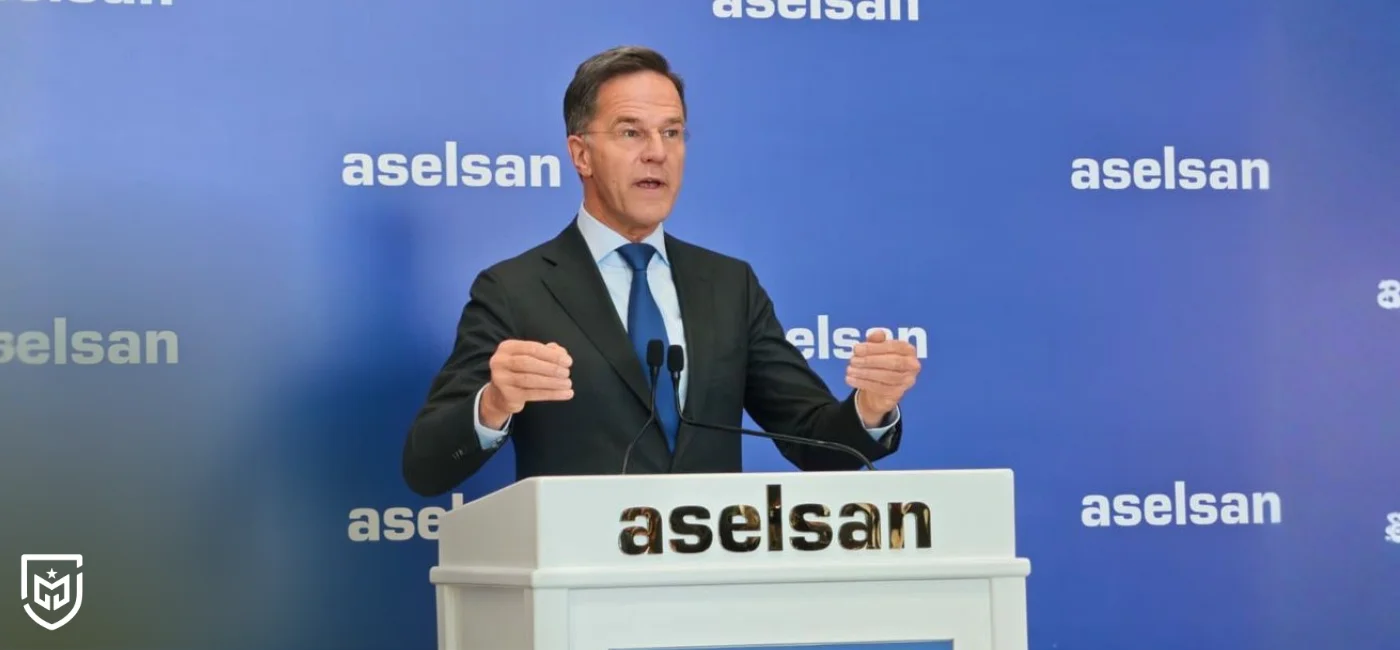
A major agreement worth $26.279 billion has been signed under NATO’s new initiative to strengthen integrated air and missile defense capabilities. The multinational initiative aims to create a stronger, more coordinated and layered defense architecture against air threats, ballistic missiles, cruise missiles, unmanned aerial vehicles and next-generation attack systems. The participation of Türkiye’s ASELSAN and ROKETSAN in the initiative once again highlights the growing technological weight of the Turkish defense industry within NATO.
Integrated air and missile defense stands out as one of NATO’s most critical capability areas in the modern security environment. Today’s air threats are not limited to conventional fighter aircraft or ballistic missiles. Low-altitude cruise missiles, kamikaze drones, swarm drone attacks, hypersonic threats and electronic-warfare-supported strikes require defense systems to become faster, more interconnected and multi-layered. For this reason, NATO’s initiative is considered a strategic step that will increase the Alliance’s deterrence and collective defense capacity.
Türkiye’s contribution to the project through ASELSAN and ROKETSAN is particularly significant. ASELSAN stands out with its solutions in radar, command and control, sensor fusion, communications, electronic warfare and air defense systems, while ROKETSAN can play a critical role with its capabilities in missiles, rockets, guidance technologies and air defense munitions. The involvement of both companies in a NATO-scale initiative shows that Türkiye is no longer merely a defense industry country meeting its own needs, but has become an advanced technology provider contributing to allied security.
The integrated air and missile defense architecture aims to bring together sensors, command-control networks, interceptor systems and decision-support infrastructures from different countries under a common framework. In such a structure, early detection, target classification, threat prioritization and the activation of the appropriate interceptor must take place within seconds. Therefore, companies involved in the project must possess strong capabilities in high reliability, NATO standards compliance, cyber resilience and interoperability.
The inclusion of ASELSAN and ROKETSAN in an initiative of this scale shows that the progress made by the Turkish defense industry in air defense technologies in recent years is gaining international recognition. Türkiye’s layered air defense approach, radar systems, missile solutions and command-control infrastructures are becoming valuable not only for national security, but also for NATO’s collective defense architecture. This development also strengthens the possibility that Turkish companies will take part in more multinational defense projects in the future.
As a result, NATO’s $26.2 billion integrated air and missile defense initiative stands out as one of the Alliance’s most important steps to adapt to the new threat environment. The contribution of Türkiye’s ASELSAN and ROKETSAN to this project is regarded as an important development that reinforces the country’s level in defense technologies and its strategic role within NATO. This agreement will make a significant contribution both to NATO’s air and missile defense capacity and to the international visibility of the Turkish defense industry.


The cookies used on our website are used to provide you with a better user experience and to improve our website. You can manage your cookie preferences from the options below.
 Süheyla Yıldız
Post Comment
Comments
No comments yet.
Related News
Skyfall II Exercise: U.S. Army Demonstrates UAV Defense Capabilities in Germany
IDA Turkey 2026 Defense and Aviation Industrial Cooperation Days Launched
SSB Chief: Transparent Licensing Will Strengthen Defense Cooperation
STM's Swarm UAV System Demonstrates Operational Success at Ateş Serbest-2026
ÇAKIR Cruise Missile Supply Contract Signed
Drone Shield Showcased at Marksman Competition
Fire Free-2026 Exercise Successfully Completed
Görgün: Turkish-German defense partnership to be revitalized with new vision