


Air Forces News
Satellite and Space News


BREAKING NEWS
The U.S. Air Force has decided to significantly expand its investment in secure satellite communications terminals, one of the most critical elements of its nuclear command, control and communications infrastructure. In a statement released on March 13, the Strategic Communications Division under the Air Force Nuclear Weapons Center announced that the ceiling value of the Advanced Extremely High Frequency (AEHF) terminal contract awarded to Raytheon had been raised by $2 billion. Originally issued in 2021 with a ceiling value of $960 million, the contract has now grown to an approximate total of $3 billion. This development once again highlights how strategically important uninterrupted communication with U.S. nuclear forces is considered under all conditions.
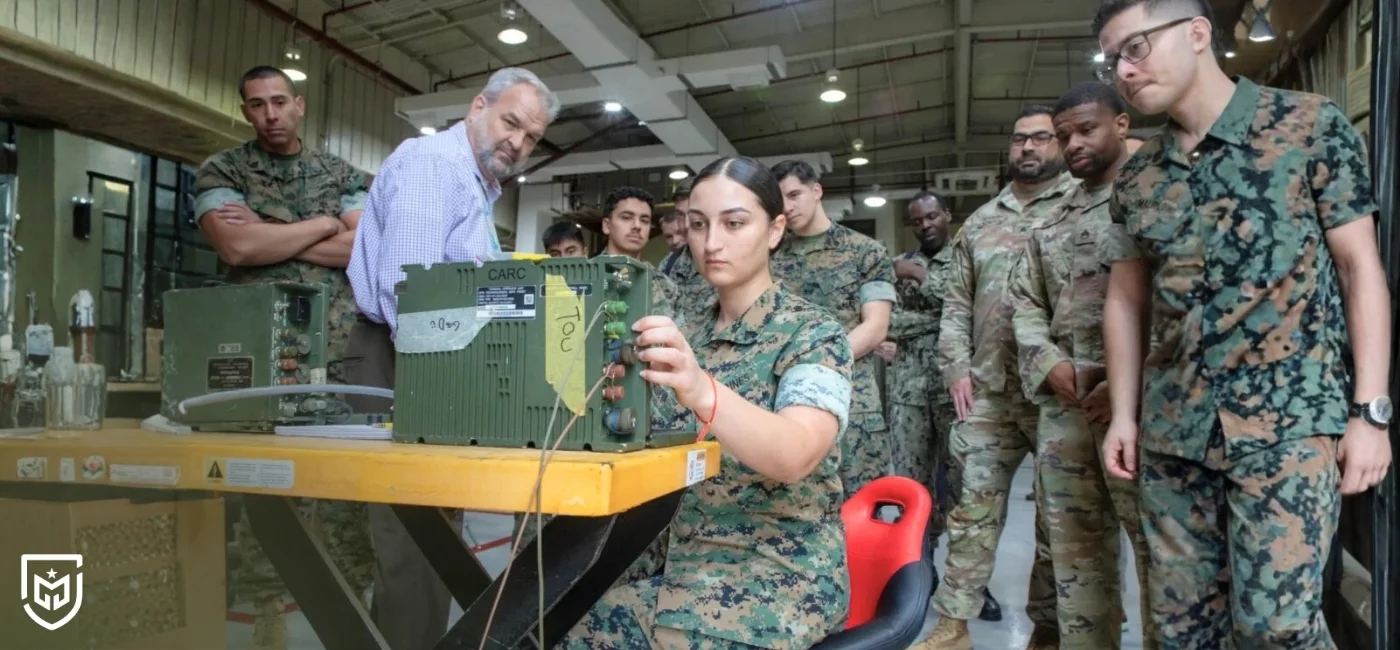
The contract plays a key role in the United States’ nuclear command, control and communications architecture, commonly referred to as NC3. This system enables the U.S. president and senior military leaders to maintain secure contact with strategic forces and transmit orders, including in scenarios involving nuclear weapons. The ability of these systems to function without interruption during crises, wartime conditions and intense electronic warfare environments is seen as essential. Satellite communications stand out as one of the core channels within this structure. Raytheon’s work focuses on the terminal segment of this architecture, covering the production, integration and sustainment of equipment installed on aircraft, ground stations and command centers that allows platforms to connect securely to the AEHF satellite constellation.
AEHF satellites are regarded as the backbone of the Pentagon’s protected satellite communications architecture thanks to their advanced encryption, anti-jam resilience and ability to operate in highly contested environments. These systems are especially used for highly sensitive missions such as nuclear command and control, where secure voice and data transmission is indispensable. The AEHF-T program is not limited to a single terminal type; instead, it refers to a family of systems designed to provide access to the satellite network for different users and platforms. In this regard, the program includes not only the production of new terminals, but also their integration with operational platforms and their long-term sustainment.
One of the most prominent elements of the program is the Family of Advanced Beyond-Line-of-Sight Terminals, known as FAB-T. Developed for airborne platforms, these terminals enable strategic aircraft such as the E-4B Nightwatch and the B-52 Stratofortress to remain securely connected with national leadership even in heavily jammed environments. By providing encrypted voice and data communications through AEHF satellites, FAB-T systems play a critical role in ensuring the continuity of the U.S. airborne nuclear command chain. Raytheon has been responsible for producing these terminals since 2014, after taking over the program from Boeing, the previous prime contractor. The additional $2 billion funding clearly demonstrates Washington’s determination to further strengthen its protected military satellite communications capability.


The cookies used on our website are used to provide you with a better user experience and to improve our website. You can manage your cookie preferences from the options below.
 Süheyla Yıldız
Post Comment
Comments
No comments yet.
Related News
Skyfall II Exercise: U.S. Army Demonstrates UAV Defense Capabilities in Germany
STM's Swarm UAV System Demonstrates Operational Success at Ateş Serbest-2026
TUSAŞ Kamikaze UAV Systems Achieve Success in Exercise Ateş Serbest-2026
Fire Free-2026 Exercise Successfully Completed
Spain Plans to Purchase 15 Additional Hürjet Advanced Trainers
Baykar platforms demonstrated capabilities at Ateş Serbest-2026 exercise
Turkey and Spain to Develop Joint Version of Hürjet Aircraft
Unmanned Naval and Aerial Vehicles Demonstrated Integrated Command Control Coordination