


Missiles and Rockets
Global Developments


BREAKING NEWS
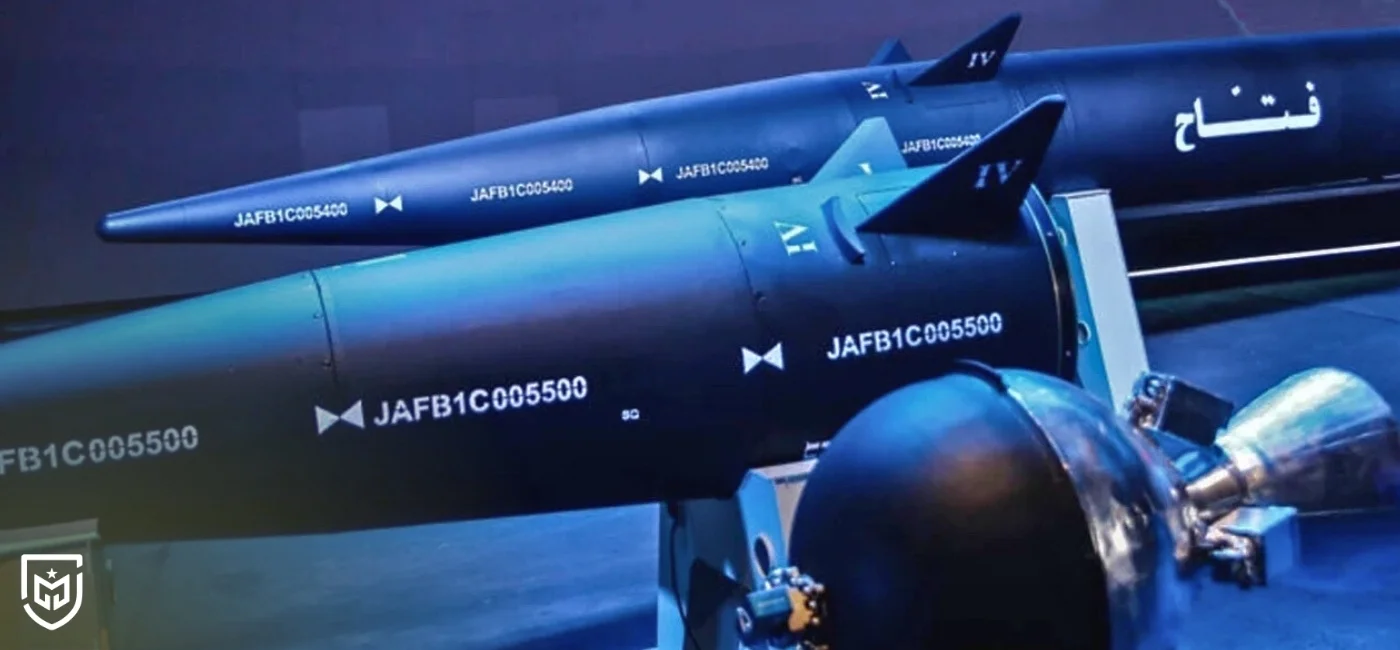
On Saturday morning, Iran launched a large-scale retaliatory strike against U.S. military bases in the region, responding to what it described as joint U.S.-Israeli attacks. According to Iranian media sources, the operation included ballistic missiles and unmanned aerial vehicles (UAVs). Notably, Iran claimed it operationally deployed the Fattah-2 hypersonic missile for the first time during these strikes. The announcement was reported by Iran’s Fars News Agency and has drawn significant international attention.
The Fattah-2 hypersonic missile was first unveiled in November 2023 during an event held at Ashura University of Aerospace Science and Technology, attended by Iran’s Supreme Leader Ayatollah Seyyed Ali Khamenei. The system is being developed by the Aerospace Force of the Islamic Revolutionary Guard Corps (IRGC). It is considered a successor to the Fattah-1 missile, introduced in 2022, which Iran claimed could reach speeds of up to Mach 13.
Technically, the Fattah-2 features a two-stage configuration. The first stage is believed to use a solid-fuel rocket motor, similar to the Fattah-1. The second stage reportedly incorporates a liquid-fueled propulsion system integrated with a hypersonic glide vehicle or maneuverable reentry vehicle. This design is said to enable speed modulation and aggressive maneuvering during the terminal phase, enhancing its ability to evade missile defense systems. The missile is also believed to include aerodynamic control surfaces and a thrust-vectoring exhaust system for improved maneuverability.
Iranian officials claim the missile can reach speeds of approximately Mach 15 (around 18,375 km/h) during midcourse flight, while approaching its target at around Mach 5 in the terminal phase. It is also reportedly capable of achieving Mach 10 at lower altitudes. With an estimated range exceeding 1,500 kilometers, a launch weight between 3,500 and 4,100 kilograms, and a warhead capacity of approximately 500 kilograms, the Fattah-2 is assessed to be designed for high-value strategic targets, including missile defense systems. The missile reportedly uses INS and GPS guidance systems.
The operational use of the Fattah-2 marks a significant development in Iran’s missile capabilities and could impact the regional military balance. Its combination of hypersonic speed and maneuverability poses challenges to existing missile defense systems and reinforces Iran’s stated objective of strengthening its strategic deterrence posture.


The cookies used on our website are used to provide you with a better user experience and to improve our website. You can manage your cookie preferences from the options below.
 Süheyla Yıldız
Post Comment
Comments
No comments yet.
Related News
SSB Sector Meeting: Focus on Supply Chain and Production Capabilities
Turkish defense industry signed 15 billion dollars in new contracts in 2026
SSB Hosts Second Supply Chain Strengthening Summit
SSB Chief: Transparent Licensing Will Strengthen Defense Cooperation
ÇAKIR Cruise Missile Supply Contract Signed
Drone Shield Showcased at Marksman Competition
Fire Free-2026 Exercise Successfully Completed
Görgün: Turkish-German defense partnership to be revitalized with new vision