Air Forces News
Missiles and Rockets
Global Developments

Historic AIM-260 Move from the US: Next-Generation Air-to-Air Missile Approved for First Export
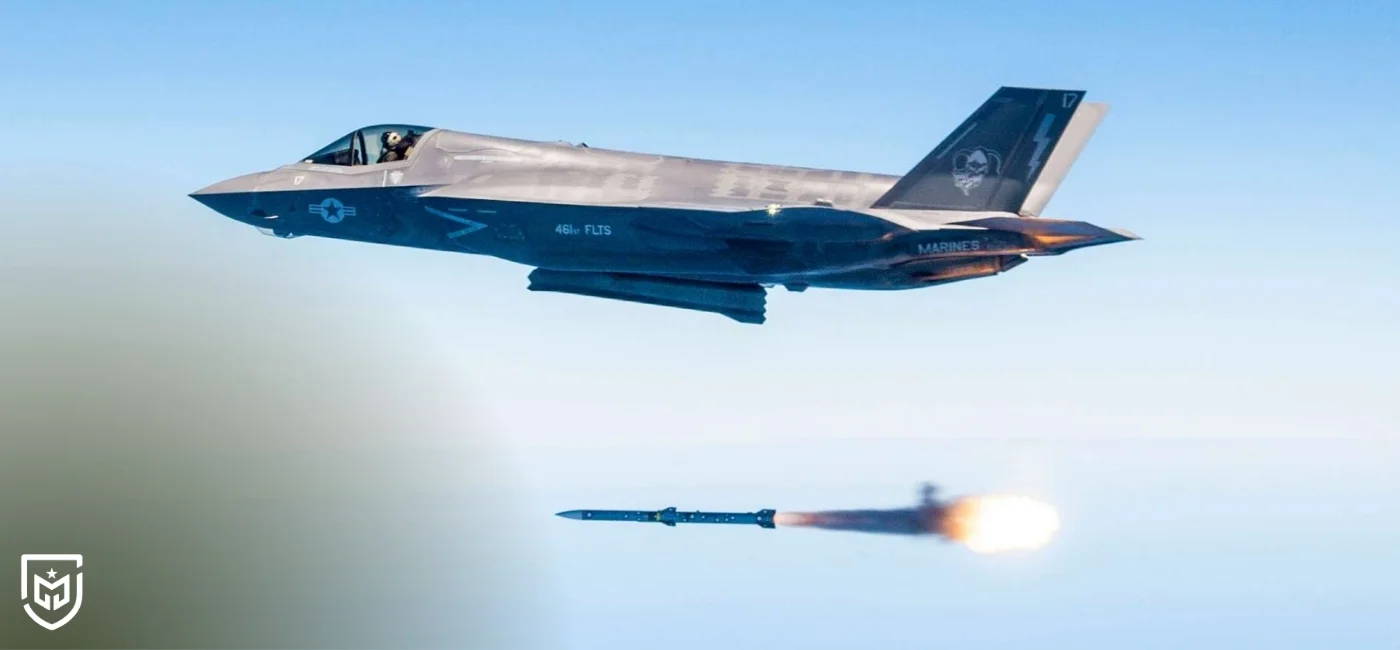
The United States has crossed an important threshold in advanced air-to-air weaponry by approving the first-ever export of the AIM-260 Joint Advanced Tactical Missile (JATM). The approval is intended to strengthen the Royal Australian Air Force’s F-35A fleet and significantly enhance its long-range air combat capabilities. The notified package includes 450 AIM-260 JATM missiles, five integration test vehicles and 30 guided test vehicles. In addition to the missiles themselves, the package also covers support equipment, spare parts, training, logistics and technical assistance. Based on the reported figures, the missile package is valued at approximately $2.61 billion, while the overall package, including sustainment and support elements, reaches around $3.16 billion.
The AIM-260 programme stands out as part of the United States’ effort to restore a long-range engagement advantage, especially in response to the growing capabilities of rival air-to-air missile systems such as China’s PL-15. Launched in 2017, the programme is widely regarded as the first completely new-generation air-to-air missile initiative developed for US fighter aircraft in the post-Cold War era. Its primary purpose is to provide US and allied combat aircraft with improved beyond-visual-range strike reach, allowing them to engage threats earlier and from safer distances. In this context, Australia becoming the first export customer is not only a technical milestone but also a strategic signal regarding Washington’s defence priorities in the Indo-Pacific region.
Cost figures further underline the scale of the investment. Based on an order of 450 missiles, the estimated unit cost, excluding long-term support and maintenance elements, stands at roughly $5.8 million per missile. When considered alongside advanced fifth-generation platforms such as the F-35A Block 4, this creates a striking picture of how critical next-generation munitions have become in modern air warfare. A fully internal loadout of six AIM-260 missiles on an F-35A would represent a weapons package worth approximately $34.8 million. That comparison highlights how future air combat superiority will depend not only on aircraft performance, but also on the sophistication and range of the missiles they carry.
Although the full technical details of the AIM-260 have not yet been publicly disclosed, the missile is widely expected to deliver greater range, improved resistance to electronic warfare and better target engagement performance compared with the AIM-120 AMRAAM. It is also believed to feature a highly advanced radar seeker designed to improve effectiveness against low-observable fifth-generation threats. The export approval for Australia indicates that the United States views Canberra as a key partner in its future Indo-Pacific airpower architecture. At the same time, the decision points to intensifying competition in regional air superiority, where advanced missile technology is becoming just as important as the aircraft platforms themselves.






 Süheyla Yıldız

Post Comment
Comments
No comments yet.
Related News
SSB Sector Meeting: Focus on Supply Chain and Production Capabilities
Turkish defense industry signed 15 billion dollars in new contracts in 2026
SSB Hosts Second Supply Chain Strengthening Summit
Skyfall II Exercise: U.S. Army Demonstrates UAV Defense Capabilities in Germany
SSB Chief: Transparent Licensing Will Strengthen Defense Cooperation
STM's Swarm UAV System Demonstrates Operational Success at Ateş Serbest-2026
TUSAŞ Kamikaze UAV Systems Achieve Success in Exercise Ateş Serbest-2026
ÇAKIR Cruise Missile Supply Contract Signed