





Air Forces News
Global Developments


BREAKING NEWS
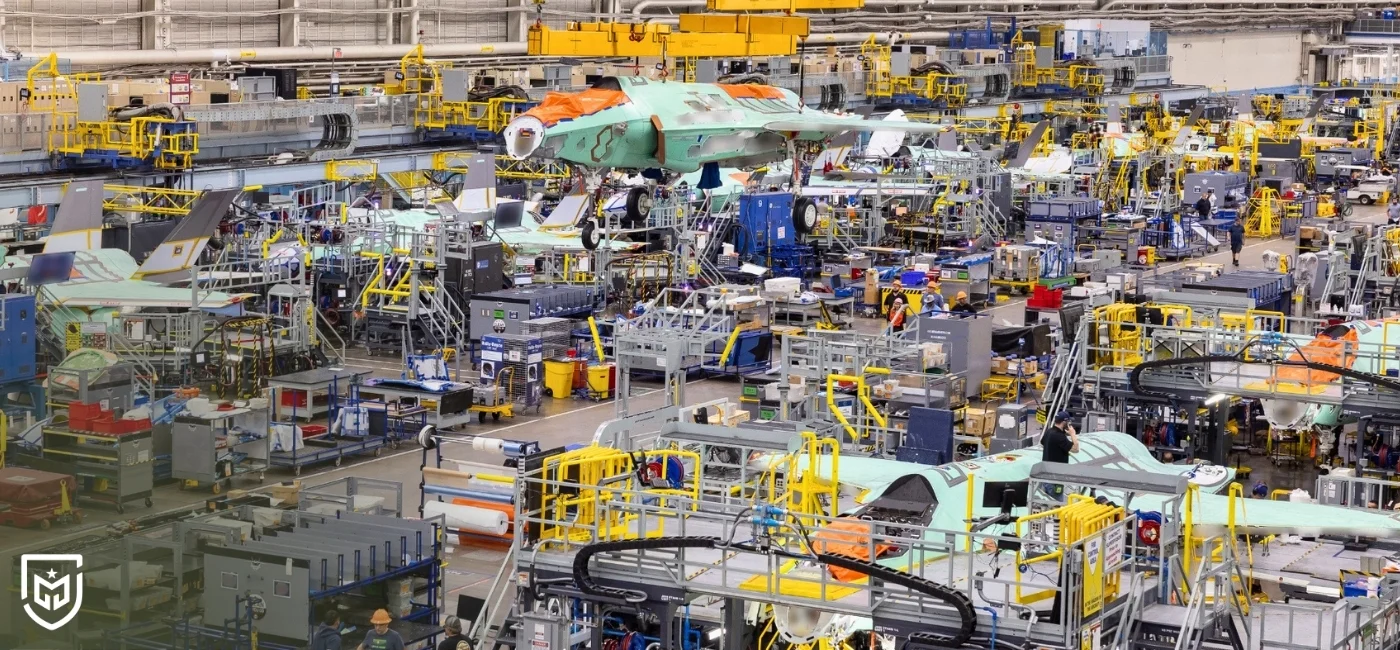
Germany’s F-35A Lightning II procurement program has reached another major milestone. The first F-35A being built for the German Air Force has now entered the final assembly phase at Lockheed Martin’s production facility in Fort Worth, Texas. This development highlights tangible progress in Berlin’s efforts to field a fifth-generation combat aircraft capability, while also showing that the program continues to move forward in line with its projected schedule.
During the manufacturing process, the aircraft’s four major structural sections — the wing assembly, forward fuselage, center fuselage and aft fuselage — were brought together before the jet was moved onto the final assembly line on its landing gear for the first time. According to the report, this joining process was carried out using an electronic mate and alignment system supported by advanced laser-guided fixtures. This means the aircraft has successfully advanced into the next stage of production in accordance with the platform’s strict manufacturing requirements. At the final assembly stage, the aircraft will receive its engine, control surfaces and the remaining onboard systems needed to complete integration.
The program is not limited to a single aircraft. This jet is one of the first eight F-35As currently in production for Germany at the Fort Worth facility, making it the leading aircraft of a broader delivery batch. It was also reported that major assembly work for Germany’s F-35 fleet began in December 2024 at the Marietta facility in Georgia. Following final assembly, the aircraft will undergo painting, low-observable coating applications and final inspections before being prepared for its maiden flight. An official delivery ceremony is expected after these key steps are completed.
Germany’s overall F-35A program consists of 35 aircraft. The first eight jets are expected to be delivered to Ebbing Air National Guard Base in Fort Smith, Arkansas, where pilot training activities will be carried out. This approach shows that Germany is not merely acquiring a new combat aircraft, but is also building a phased transition plan covering training, operational integration and personnel readiness. Once the F-35A enters German service, the country’s air power capacity within NATO missions is expected to increase significantly, particularly in terms of low observability, survivability and network-enabled combat operations.


The cookies used on our website are used to provide you with a better user experience and to improve our website. You can manage your cookie preferences from the options below.
 Süheyla Yıldız
Post Comment
Comments
No comments yet.
Related News
SSB Sector Meeting: Focus on Supply Chain and Production Capabilities
Turkish defense industry signed 15 billion dollars in new contracts in 2026
SSB Hosts Second Supply Chain Strengthening Summit
Skyfall II Exercise: U.S. Army Demonstrates UAV Defense Capabilities in Germany
SSB Chief: Transparent Licensing Will Strengthen Defense Cooperation
STM's Swarm UAV System Demonstrates Operational Success at Ateş Serbest-2026
TUSAŞ Kamikaze UAV Systems Achieve Success in Exercise Ateş Serbest-2026
Fire Free-2026 Exercise Successfully Completed