Air Forces News
Weapons and Ammunition
Global Developments

Eurofighter Typhoon Tested with APKWS as a Low-Cost Precision Strike Option
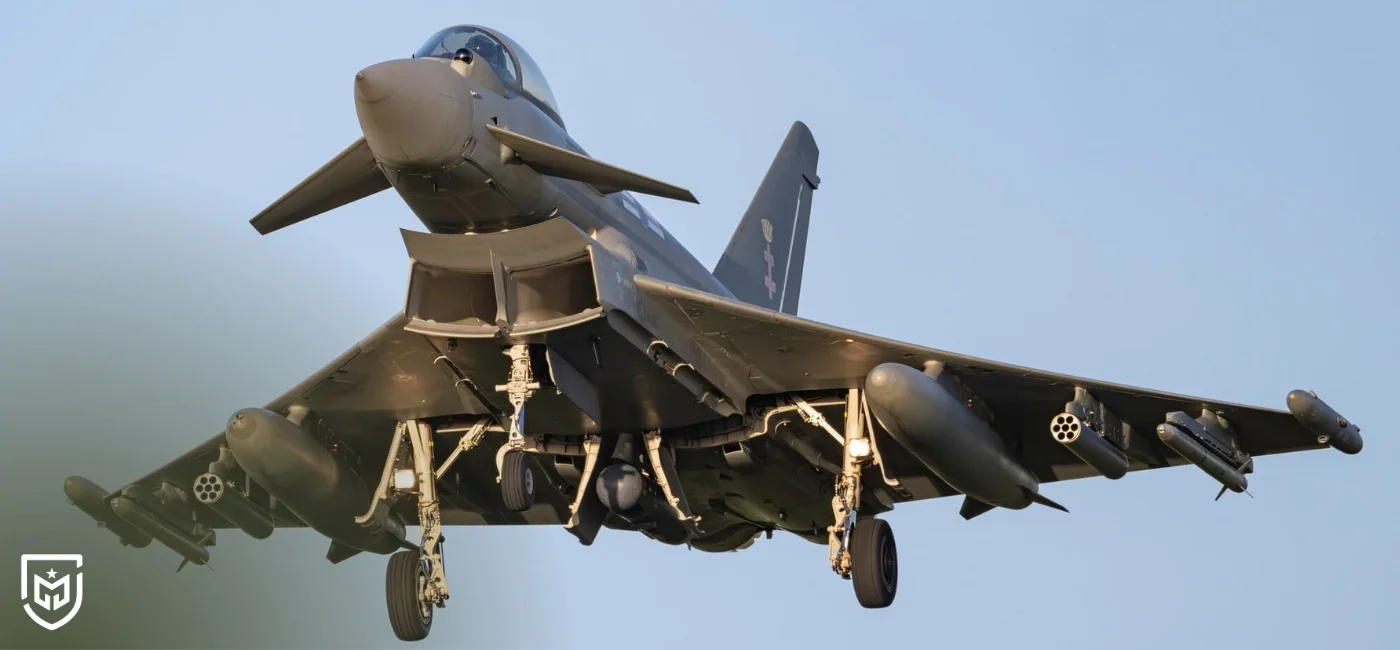
UK-based BAE Systems has announced the successful test firing of the APKWS laser-guidance kit from a Eurofighter Typhoon, marking a notable step in the effort to expand the aircraft’s precision strike options with a more cost-effective weapon. According to the company’s April 8, 2026 statement, the trial is intended to support the integration of a lower-cost engagement solution for modern threats, particularly unmanned aerial systems.
The firing test was conducted from BAE Systems’ Flight Test Development Centre at Warton in Lancashire. During the trial, a Royal Air Force Typhoon test and evaluation aircraft successfully engaged a ground target at a UK military test range. BAE Systems said the event took place in March 2026, with the public announcement released on April 8. The company added that the activity forms part of ongoing work to broaden Typhoon’s available weapons portfolio, with future trials planned against airborne targets as well.
APKWS is a guidance kit that converts unguided 70 mm rockets into laser-guided precision weapons. In its statement, BAE Systems described the system as a flexible solution that can support both air-to-ground and potential air-to-air engagements. The company argued that this capability could provide Typhoon with a cost-effective answer to the growing challenge posed by small and low-cost drones. Richard Hamilton, Managing Director Europe & International for Air at BAE Systems, said the test could add a significant new capability to Typhoon’s already broad weapons inventory.
The test is particularly important because of the cost-effectiveness issue now shaping modern air combat. Using expensive air-to-air missiles against low-cost drones is increasingly seen as unsustainable. Integrating cheaper precision-guided munitions such as APKWS onto a fast jet could offer a more scalable response to drone swarms and other low-cost airborne threats. This assessment is an inference based on BAE Systems’ emphasis on low-cost capability and the stated relevance to unmanned threats.
The activity was carried out with support from the Royal Air Force and the UK Ministry of Defence. In that sense, the trial was not simply a weapon release event, but part of a broader modernization effort aimed at making the Typhoon more flexible, more affordable to employ, and better adapted to evolving threat environments. This final point is an inference drawn from the official company statement and the support structure behind the test.




 Süheyla Yıldız

Post Comment
Comments
No comments yet.
Related News
SSB Sector Meeting: Focus on Supply Chain and Production Capabilities
Turkish defense industry signed 15 billion dollars in new contracts in 2026
SSB Hosts Second Supply Chain Strengthening Summit
Skyfall II Exercise: U.S. Army Demonstrates UAV Defense Capabilities in Germany
SSB Chief: Transparent Licensing Will Strengthen Defense Cooperation
STM's Swarm UAV System Demonstrates Operational Success at Ateş Serbest-2026
TUSAŞ Kamikaze UAV Systems Achieve Success in Exercise Ateş Serbest-2026
Fire Free-2026 Exercise Successfully Completed