


Air Forces News
Global Developments


BREAKING NEWS
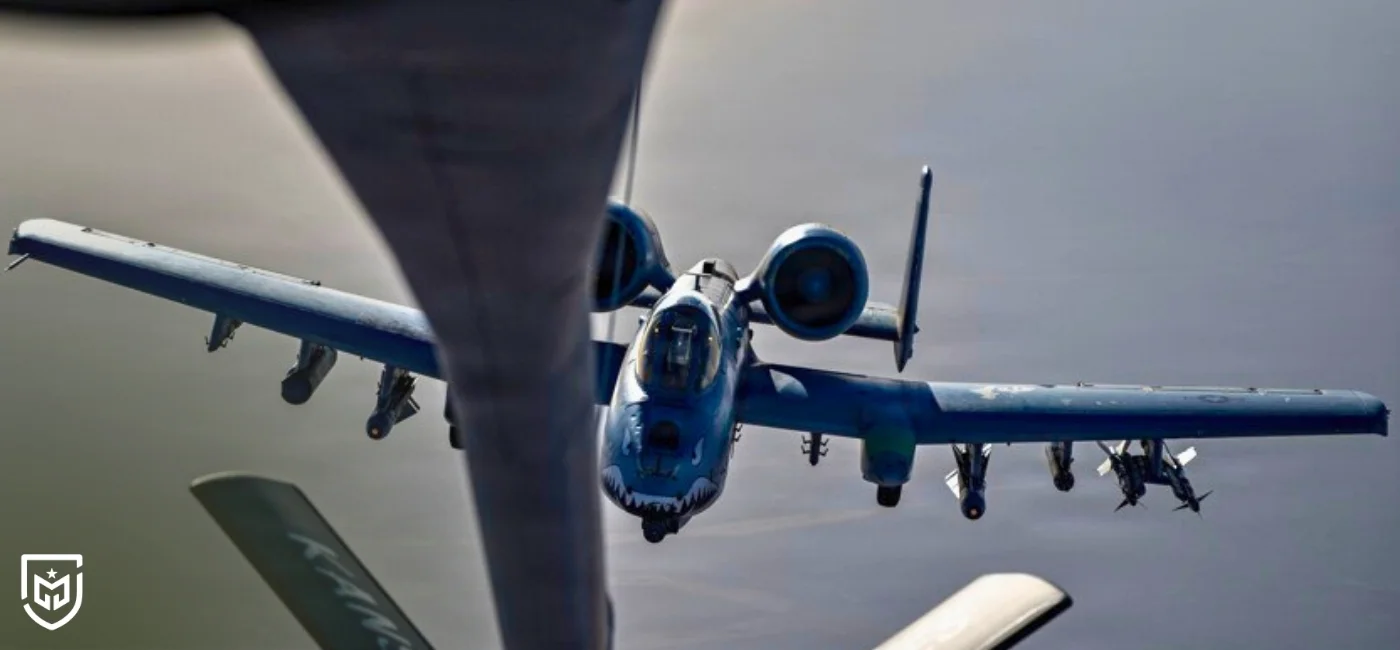
The A-10 Thunderbolt II, one of the most debated aircraft in the US Air Force inventory for years, has once again moved into the spotlight amid rising tensions in the Middle East. According to a Defense One report published on March 19, 2026, A-10 aircraft were used in offensive operations against Iran-linked fast attack boats in the Strait of Hormuz as part of “Operation Epic Fury,” launched during President Donald Trump’s administration. Chairman of the Joint Chiefs of Staff Gen. Dan Caine stated during a Pentagon briefing that A-10s were operating in the southern sector of the region, hunting and neutralizing hostile fast boats.
The report emphasizes that US Central Command (CENTCOM) has also highlighted the operational value of the A-10 in this environment. One of the aircraft’s biggest strengths is its ability to remain on station for long periods and respond rapidly when needed. This endurance makes it especially useful against small, fast, and relatively low-cost maritime threats. Compared with deploying expensive fifth-generation fighter jets for similar tasks, the A-10 offers a far more cost-effective option. As a result, the aircraft is once again being viewed as a relevant platform for close air support and lower-intensity combat missions.
The renewed combat role of the A-10 has also revived debate in Washington over its retirement timeline. Under the National Defense Authorization Act passed at the end of 2025, Congress restricted the Air Force from reducing the A-10 fleet below 103 aircraft before the end of the current fiscal year. The same legislation also requires Air Force Secretary Troy Meink to submit a plan to Congress for retiring the full fleet before fiscal year 2029. However, recent combat developments around Iran have led some experts to argue that retiring the aircraft too quickly would be a mistake. Dan Grazier of the Stimson Center noted that the A-10’s survivability and mission-focused design continue to make it a valuable tool on the modern battlefield.
The article also notes that the US campaign against Iran has involved advanced aircraft such as the F-35 and B-1 bomber. However, relying on such costly platforms against cheap drones and small surface targets may not be sustainable over time. Reports that an F-35 was forced to make an emergency landing during operations have further fueled the debate. This has strengthened arguments that fully removing aircraft like the A-10 from service may be strategically premature. With its heavy weapons load, durable design, and lower operating costs relative to more advanced platforms, the A-10 Warthog is increasingly being seen not only as a symbol of past wars, but also as a practical and still-relevant asset for specific modern combat scenarios.


The cookies used on our website are used to provide you with a better user experience and to improve our website. You can manage your cookie preferences from the options below.
 Süheyla Yıldız
Post Comment
Comments
No comments yet.
Related News
SSB Sector Meeting: Focus on Supply Chain and Production Capabilities
Turkish defense industry signed 15 billion dollars in new contracts in 2026
SSB Hosts Second Supply Chain Strengthening Summit
Skyfall II Exercise: U.S. Army Demonstrates UAV Defense Capabilities in Germany
SSB Chief: Transparent Licensing Will Strengthen Defense Cooperation
STM's Swarm UAV System Demonstrates Operational Success at Ateş Serbest-2026
TUSAŞ Kamikaze UAV Systems Achieve Success in Exercise Ateş Serbest-2026
Fire Free-2026 Exercise Successfully Completed