Guidance Kits and Special Air Mun.


BREAKING NEWS
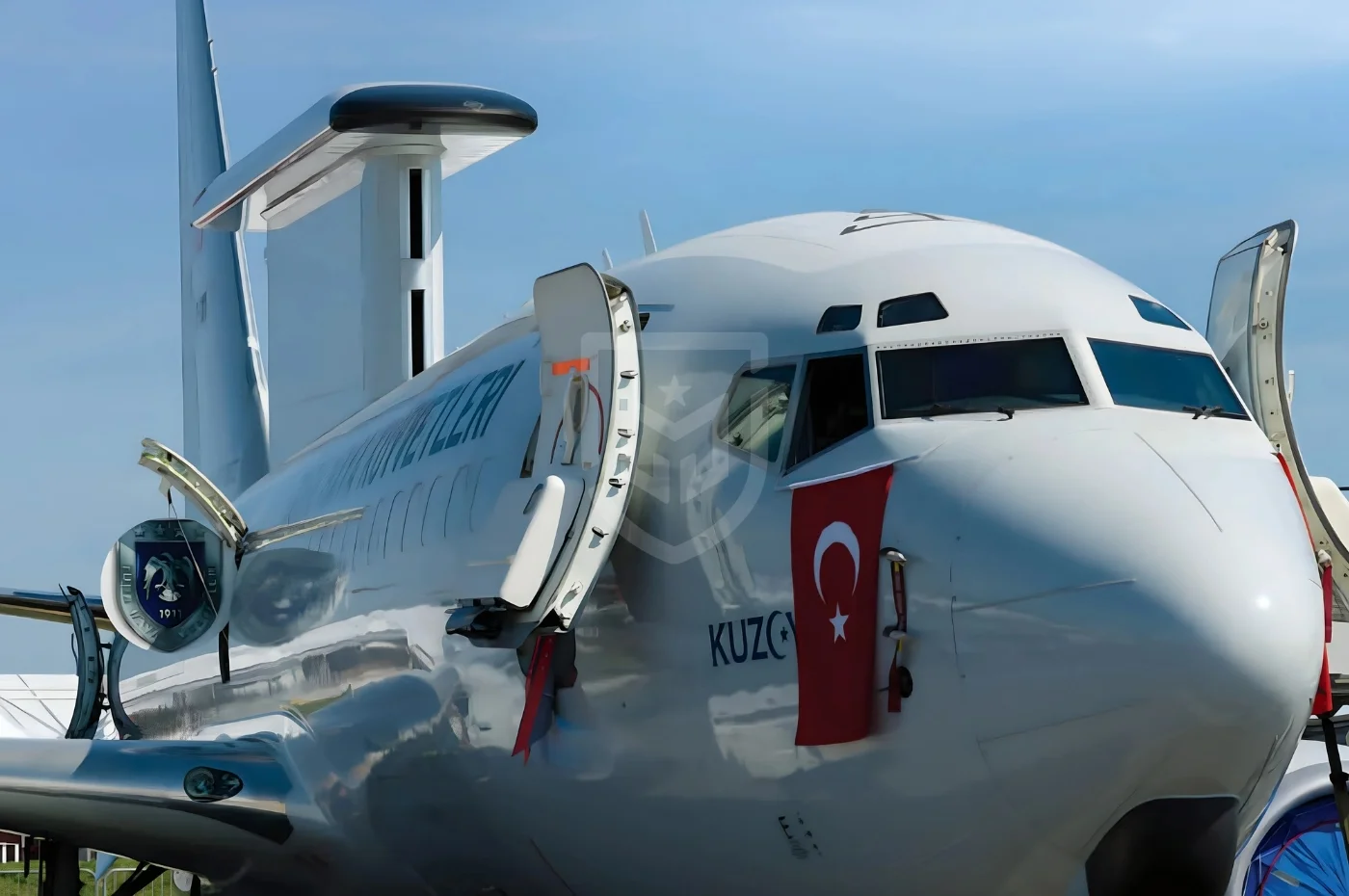
The Barış Kartalı system is designed to meet the modern requirements of early warning, airspace surveillance, command and control, and joint force coordination. It integrates airborne sensor superiority with a comprehensive ground-based mission planning and support infrastructure, forming a unified operational ecosystem.
Operational Role and Mission
The primary mission of Barış Kartalı is to detect, identify, and track airborne targets at long ranges, provide reliable friend-or-foe identification, and coordinate air and air-defense assets from a centralized airborne command node. It acts as a force multiplier in air defense, air superiority, border security, maritime surveillance, and joint operations.
Doctrine and Concept of Operations
Operating at high altitude and stand-off distances, AEW&C aircraft avoid direct engagement zones while maintaining wide-area situational awareness. Through Link-11 and Link-16/IJMS tactical data links, Barış Kartalı fully supports network-centric warfare concepts, enabling rapid decision-making and reduced reaction times across the battlespace.
System Architecture
The system architecture is structured around three main layers:
Mission software developed by HAVELSAN enables sensor fusion, threat evaluation, target tracking, and advanced human-machine interfaces.
Survivability and Protection
Barış Kartalı is designed to operate outside high-threat zones. Its electronic support measures provide electromagnetic situational awareness, allowing detection and classification of hostile emitters. Specific self-protection system details are not publicly disclosed.
Detection, Reaction, and Engagement Support
With radar coverage exceeding 200 nautical miles and IFF identification ranges of up to 300 nautical miles, the system generates a comprehensive recognized air picture. Data is processed in real time and distributed to allied platforms. While the aircraft does not engage targets directly, it plays a decisive role in engagement management and control.
System Integration
Barış Kartalı is interoperable with fighter aircraft, ground-based air defense systems, naval platforms, and command headquarters. NATO-standard data links ensure seamless integration within allied operational frameworks.
Variants and Modernization
The Turkish Air Force operates four AEW&C aircraft under the Barış Kartalı program. Capability upgrades and software improvements have been implemented over time, though detailed block configurations are not fully disclosed publicly.
Operational Use and Service Status
The system is actively deployed within the Turkish Air Force. Specific operational missions and sortie details are not publicly available.
Detailed Technical Information
Dimensions and Weight
Based on the Boeing 737-700 AEW&C airframe. Detailed dimensional and weight data follow the base platform specifications.
Powerplant
Twin turbofan engines with enhanced electrical generation and cooling capacity to support AEW&C mission systems.
Performance
Sensors and Detection
Target Tracking
Capable of tracking multiple airborne targets simultaneously; exact track capacity figures are not publicly disclosed.
Engagement Support
The platform does not carry weapons. It provides command, control, and engagement coordination for shooter platforms.
Command, Control, and Data Links
Deployment and Logistics
Aircraft operate from main operating bases. The Ground Support Segment includes mission planning systems, simulators, and software support centers.
Crew and Operation
Mixed flight crew and mission operator configuration. Exact personnel numbers are not publicly disclosed.
Frequently Asked Questions
What is the purpose of the Barış Kartalı system?
What is its detection range?
What types of targets can it detect?
How many targets can it track simultaneously?
Is the system mobile or fixed?
What are its main equivalents?
Sources





The cookies used on our website are used to provide you with a better user experience and to improve our website. You can manage your cookie preferences from the options below.