


Air Forces News
Missiles and Rockets


BREAKING NEWS
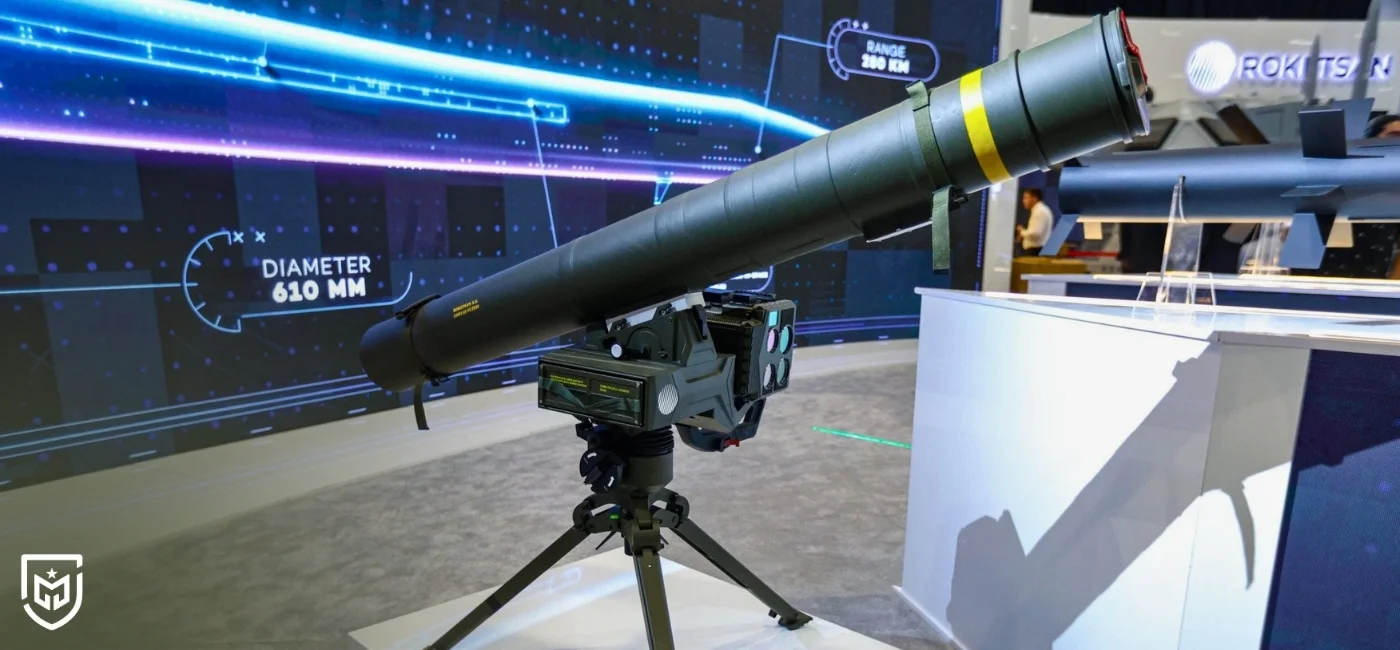
Roketsan has announced that production of the laser-guided L-OMTAS anti-tank guided missile, which was introduced at SAHA EXPO 2024, is continuing. The new missile is expected to become an important part of Türkiye’s anti-tank missile family, standing out as a more cost-effective solution compared to the baseline OMTAS system. In operational environments where large-scale procurement is essential, the availability of a lower-cost yet capable anti-tank missile offers a significant advantage for armed forces.
One of the most notable differences of the L-OMTAS is its guidance system. While the baseline OMTAS uses an imaging infrared seeker (IIR), the L-OMTAS is equipped with a laser seeker head. The IIR seeker reduces the amount of operator intervention required during engagement, but it is considerably more expensive and more demanding in terms of production. In contrast, the laser-guided configuration of the L-OMTAS provides a simpler and more affordable alternative. However, this guidance method requires the target to remain designated until the missile reaches impact, which creates a different operational concept while still delivering strong cost-efficiency benefits.
Beyond its lower production cost, the L-OMTAS also offers an extended range. Compared to the 4-kilometer range of the standard OMTAS, the L-OMTAS reaches up to 5.5 kilometers. This added range allows operators to engage threats from safer stand-off distances and increases battlefield flexibility for anti-tank units. The missile is designed with a tandem shaped-charge warhead for defeating armored targets, particularly main battle tanks. In addition, Roketsan is also developing alternative warhead options for the L-OMTAS, including thermobaric and multipurpose blast-fragmentation variants. These warheads are optimized for use against structures and soft targets, broadening the missile’s mission profile beyond anti-armor operations.
Considering its role and operating principle, defense observers assess that the L-OMTAS is likely intended to replace older-generation Kornet-E anti-tank guided missiles currently used on KAPLAN STA and PARS STA anti-tank vehicles, as well as on tripod-based systems. The Turkish Land Forces’ apparent interest in fielding a simpler medium-range anti-tank missile alongside the IIR-guided OMTAS indicates a broader effort to expand this capability in larger numbers. This approach points to a strategy focused not only on technological advancement, but also on widespread deployment of effective and sustainable anti-tank systems across the force.


The cookies used on our website are used to provide you with a better user experience and to improve our website. You can manage your cookie preferences from the options below.
 Süheyla Yıldız
Post Comment
Comments
No comments yet.
Related News
KAAN Fighter Jet's New Prototype Begins Taxi Tests
KAAN Fighter Jet Completes Pre-Flight Taxi Test Successfully
BAE Systems and Lockheed Martin Unveil Blizzard Multi-Mission Unmanned Aircraft
Anduril's Ohio Facility Produces First YFQ-44A Fury Unmanned Combat Aircraft
South Korea's envoy highlights KAAN fighter jets as cornerstone of defense partnership with Türkiye
TAI Chief: Turkey Shaping NATO's Future Security Architecture
Anduril Thunder: Autonomous Attack Helicopter with Level 5 Autonomy Capabilities
Bayraktar AKINCI Successfully Strikes Target with TOLUN-P in Electronic Warfare Environment