Air Forces News
Electronic Systems
Global Developments

NATO to Invest Over $40 Billion in Counter-UAS Capabilities
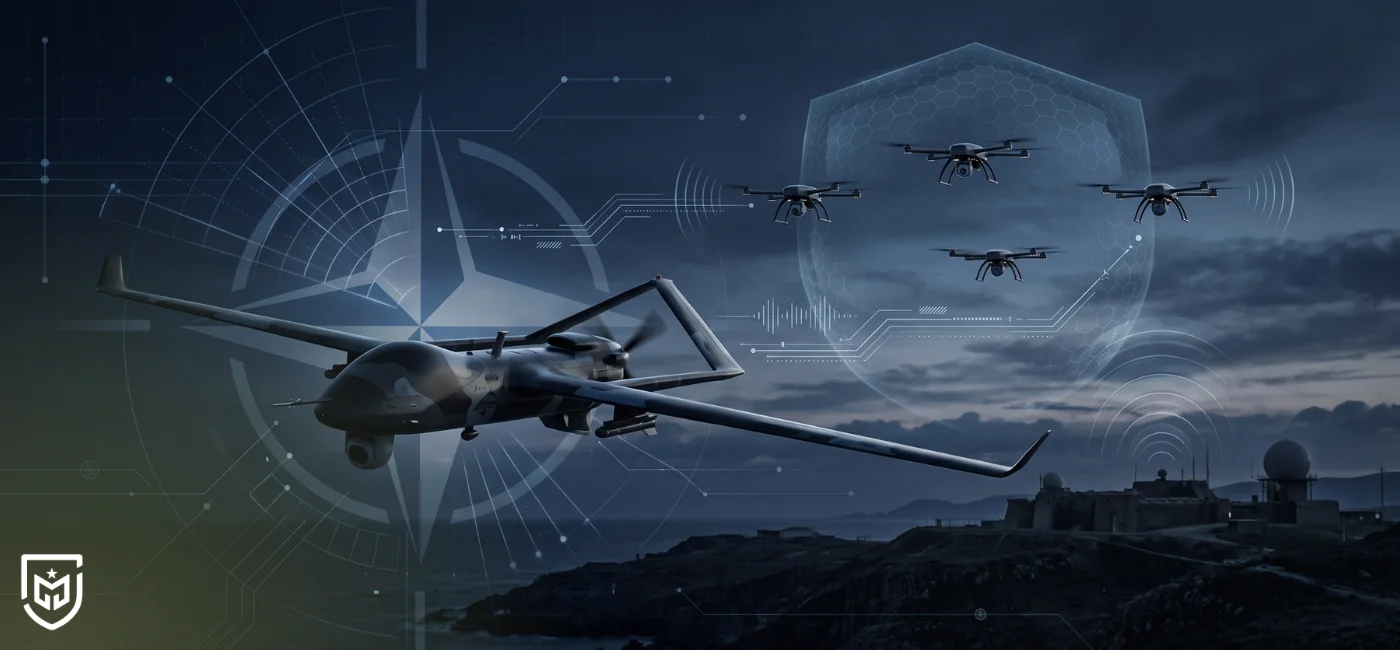
NATO announced a new initiative during the Heads of State and Government Summit in Ankara to strengthen unmanned aerial systems and counter-UAS defense capabilities. The program, called the Drone Edge Initiative, aims to increase the Alliance’s collective defense capacity against drone threats that have become increasingly decisive on the modern battlefield. Under the initiative, NATO allies will invest more than $40 billion in counter-UAS capabilities over the next five years.
NATO Secretary General Mark Rutte emphasized that unmanned aerial vehicles have fundamentally changed the character of warfare. The war in Ukraine, conflicts in the Middle East and repeated drone incursions affecting NATO countries show that the need in this field is no longer only a future-oriented preparation, but a direct and current security requirement. For this reason, NATO aims both to expand its large-scale drone deployment and operation capabilities and to rapidly strengthen counter-UAS defenses that can detect, identify and neutralize these systems.
All 32 NATO allies, including Türkiye, made a joint commitment to the Drone Edge Initiative. In this context, the initiative will focus not only on system procurement, but also on the development of human resources. Allied countries pledged to increase the number of drone operators in their armed forces fivefold by the end of 2027. This step shows that NATO treats unmanned systems not merely as a technology investment, but as a capability that must be supported by trained personnel, operational doctrine and sustainable mission readiness.
Another notable aspect of the initiative is the new marketplace model designed to accelerate the procurement of counter-UAS systems. NATO will establish a “Counter-UAS Marketplace” to enable allied countries to acquire the counter-drone solutions they need more quickly and at greater scale. Through this structure, technologies such as radar, electro-optical sensors, electronic warfare systems, command-control infrastructure, kinetic interceptors and directed-energy-based defeat solutions are expected to be evaluated and transferred to the field more rapidly.
It was also announced that contracts worth hundreds of millions of euros are being prepared through the NATO Support and Procurement Agency for the acquisition of surveillance drones. In addition, with the participation of Finland, France and Sweden in the NATO Flight Training Europe project, the number of allied countries involved has increased to 20. The inclusion of 16 flight training centers operating in eight allied countries within a common training network will contribute to strengthening NATO’s shared training standards for both manned and unmanned air operations.
The Drone Edge Initiative is considered an important part of NATO’s effort to transfer operational lessons learned from the battlefield in Ukraine into the defense architecture of the future. The use of drones in reconnaissance, strike, electronic warfare, target designation and swarm concepts has created a multidimensional impact on the battlefield, making it necessary to reconsider traditional air defense approaches. Therefore, the investment exceeding $40 billion will not be limited to increasing the number of counter-UAS systems; it will also strengthen NATO’s transatlantic defense industry cooperation, training infrastructure and readiness for the unmanned systems of the future.







 Süheyla Yıldız

Post Comment
Comments
No comments yet.
Related News
SSB Sector Meeting: Focus on Supply Chain and Production Capabilities
Turkish defense industry signed 15 billion dollars in new contracts in 2026
SSB Hosts Second Supply Chain Strengthening Summit
Skyfall II Exercise: U.S. Army Demonstrates UAV Defense Capabilities in Germany
IDA Turkey 2026 Defense and Aviation Industrial Cooperation Days Launched
SSB Chief: Transparent Licensing Will Strengthen Defense Cooperation
STM's Swarm UAV System Demonstrates Operational Success at Ateş Serbest-2026
TUSAŞ Kamikaze UAV Systems Achieve Success in Exercise Ateş Serbest-2026