


Land Forces News
Global Developments


BREAKING NEWS
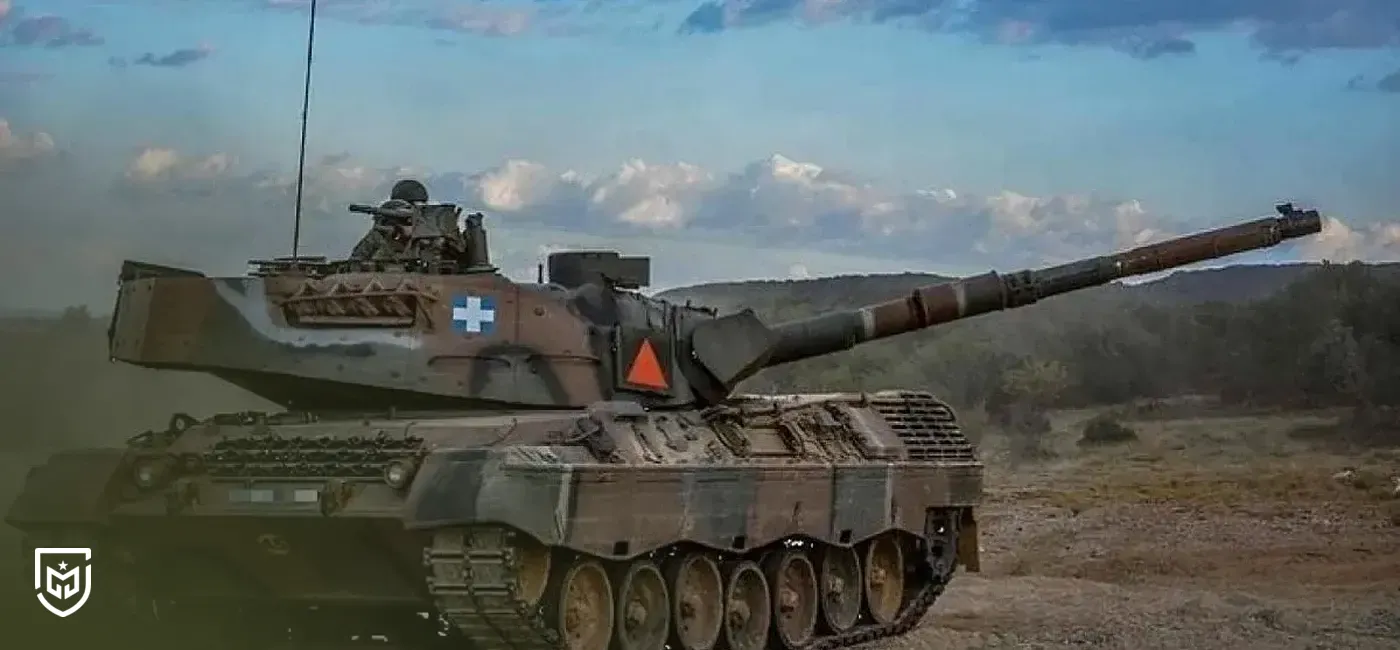
The Republic of Cyprus (RoC) military sent an assessment team to Greece to evaluate Leopard 1A5 main battle tanks offered by Athens for potential acquisition. Following on-site inspections, the delegation determined that these platforms fall short of the Cyprus National Guard's (CNG) operational standards and cannot serve as an adequate interim solution for the island's armored capabilities. According to official statements, any transfer agreement would only proceed if the examined vehicles met established operational criteria.
The Cyprus National Guard's ground platform inventory faces a significant modernization gap following the aging of 126 EE-9 Cascavel wheeled armored vehicles delivered in 1980. These vehicles have served the island for over four decades but no longer meet contemporary combat environment requirements. Greece's proposal to transfer Leopard 1A5 tanks was intended to address this capability gap. However, the assessment team's evaluation revealed that these platforms do not align with Cyprus's operational needs.
The Leopard 1A5 system is a main battle tank designed in Germany and operationalized in the 1970s. The platform is equipped with a 105-millimeter main gun, modern fire control systems, and improved armor protection. It remains widely deployed across NATO member and allied nations' ground forces. The system represents classic Cold War-era main battle tank design but has limited capacity to fully address the increasing technological demands of 21st-century combat environments. Turkey's ground forces, by contrast, are investing in more advanced-generation platforms such as the Altay main battle tank.
From a Turkish defense industry perspective, Cyprus's ground platform modernization efforts reflect the technical dimensions of regional balance. Greece and the RoC's efforts to strengthen ground forces are part of broader Eastern Mediterranean military dynamics. Turkey's development of indigenous and nationally designed tanks such as Altay, Kaplan, and Pars demonstrates technological competition in the region. Additionally, Turkish defense companies including FNSS, BMC, and OTOKAR are advancing localization rates in ground platforms, strengthening independent design and production capabilities within the sector.
This development underscores long-standing modernization challenges affecting Cyprus's military balance. The Cyprus National Guard is evaluating various options to replace its aging 1980s-era vehicle fleet with new platforms. While official sources indicate Greece could transfer Leopard 1A5 tanks, no such transfer has yet occurred. Proposals for establishing a modernization facility on the island also remain off the agenda at present. Strengthening the island's ground forces remains a long-term challenge for regional stability and military capability.


The cookies used on our website are used to provide you with a better user experience and to improve our website. You can manage your cookie preferences from the options below.
 Murat Yılmaz
Post Comment
Comments
No comments yet.
Related News
SSB Sector Meeting: Focus on Supply Chain and Production Capabilities
Turkish defense industry signed 15 billion dollars in new contracts in 2026
SSB Hosts Second Supply Chain Strengthening Summit
SSB Chief: Transparent Licensing Will Strengthen Defense Cooperation
Görgün: Turkish-German defense partnership to be revitalized with new vision
Spain Plans to Purchase 15 Additional Hürjet Advanced Trainers
Turkey and Spain to Develop Joint Version of Hürjet Aircraft
Romanian Corvette Conducts Black Sea Exercises