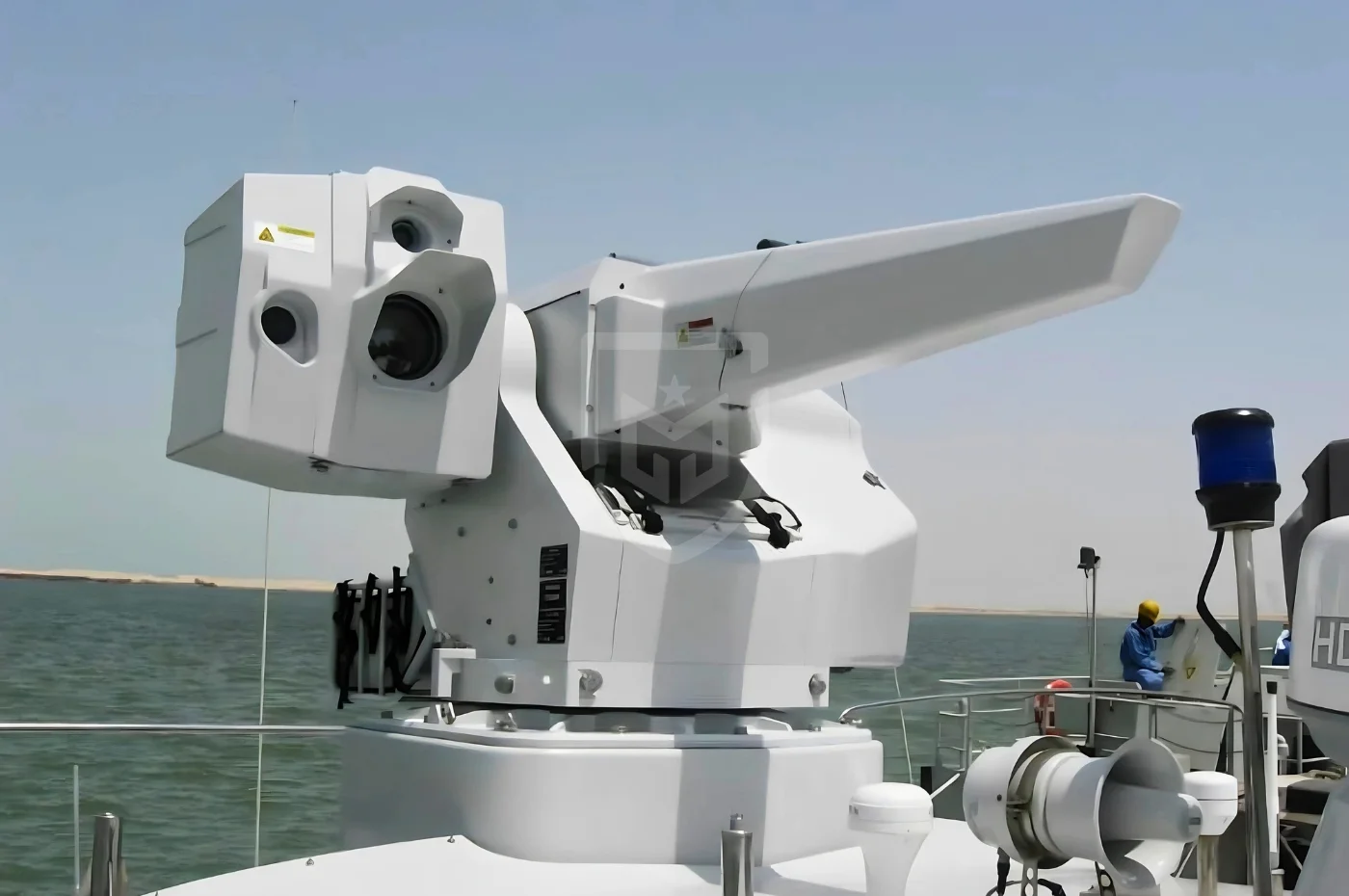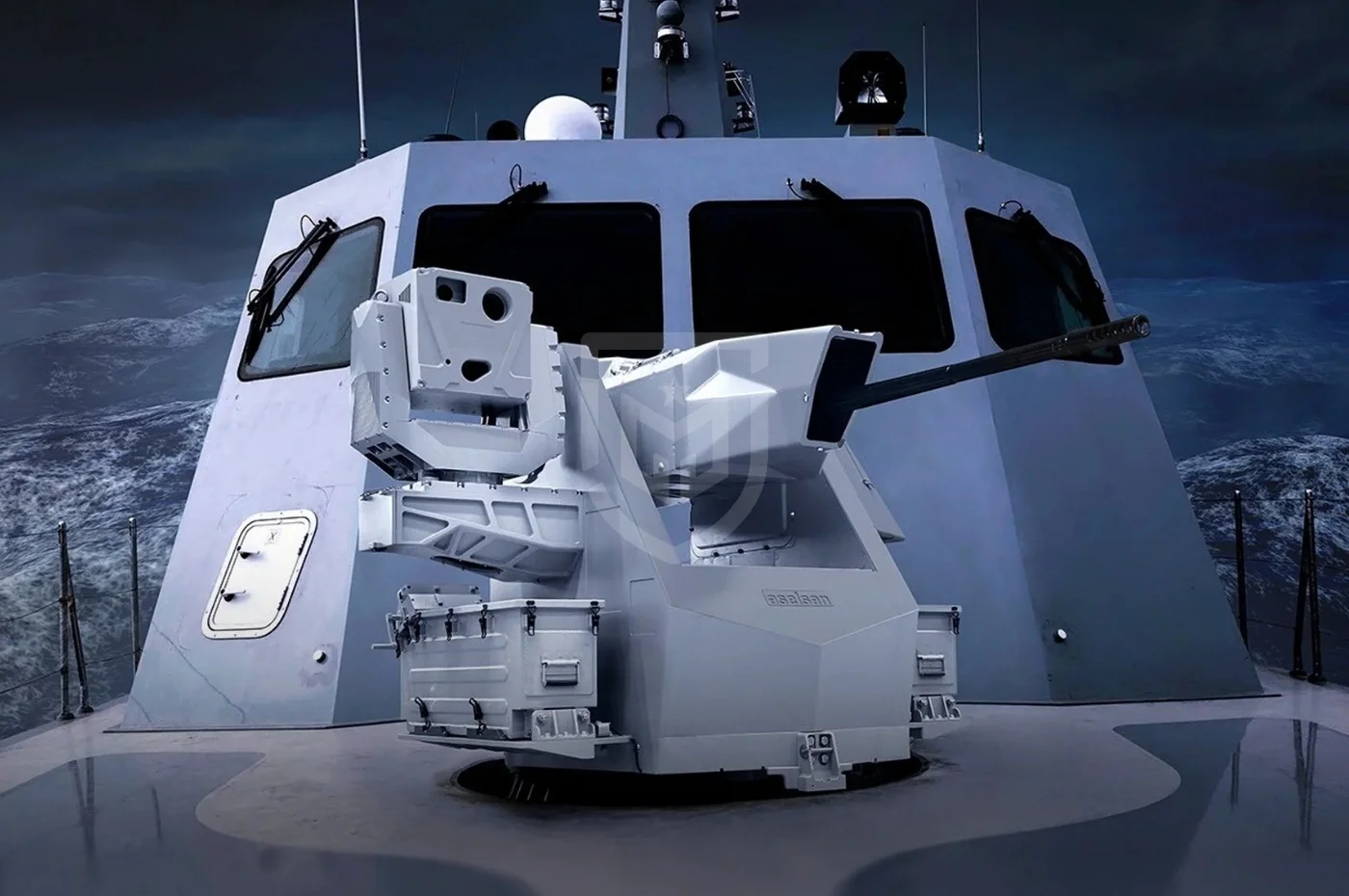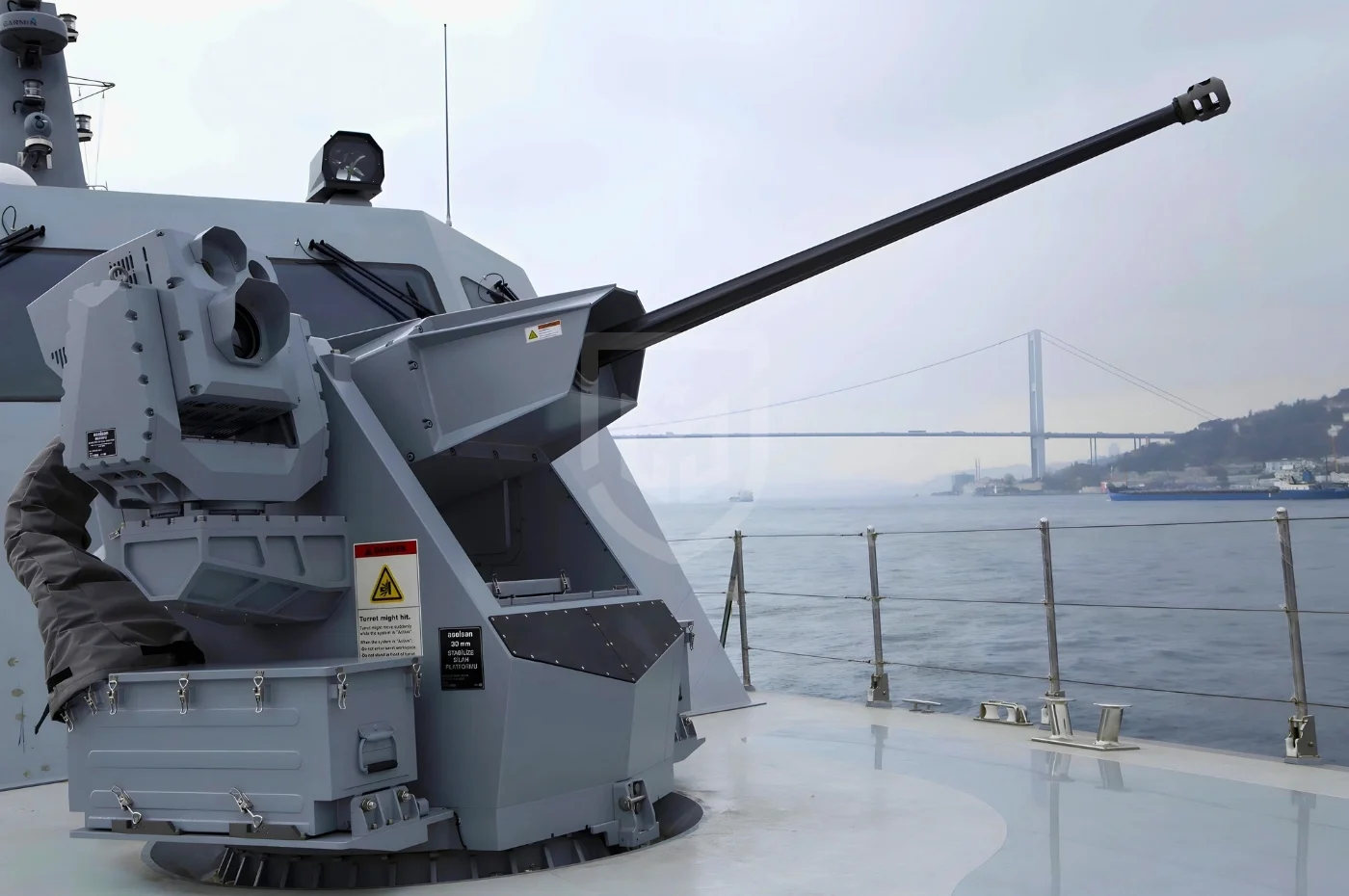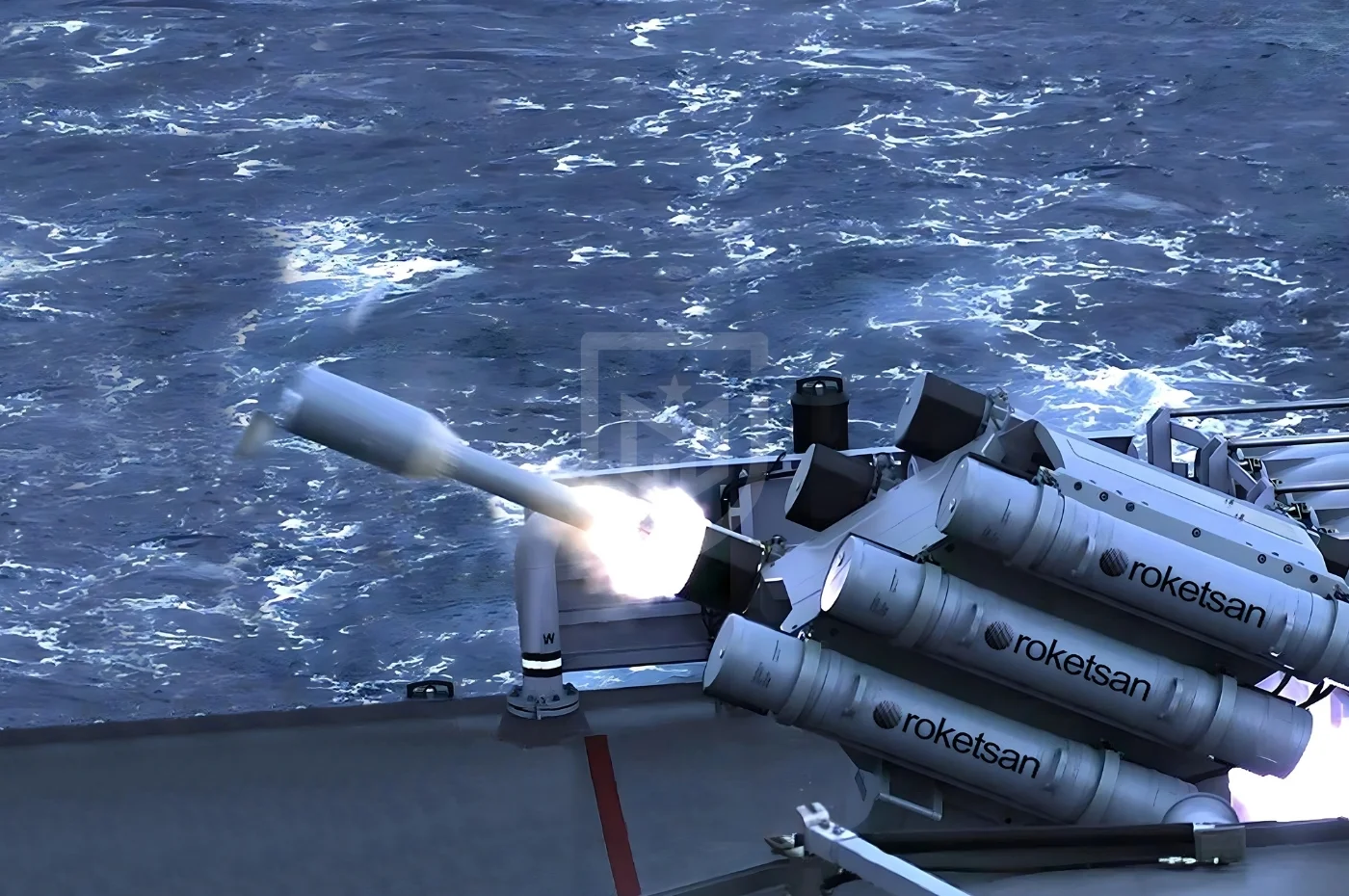

STAMP is a two-axis stabilized remote weapon station optimized for naval applications. It was developed to address the growing need for effective close-in defense against asymmetric maritime threats such as fast attack craft, pirate boats, unmanned surface vehicles, and low-altitude aerial targets.
Operational Purpose and Role
STAMP primarily fulfills a close-in defense and force protection role aboard naval vessels. It enhances survivability in littoral and congested maritime environments where rapid reaction and precision engagement are essential.
Typical missions include:
- Port and harbor security
- Counter-piracy and anti-smuggling operations
- Protection against swarm attacks by fast boats
- Fire support during amphibious operations
- Protection of high-value naval assets
Within a layered naval defense architecture, STAMP forms the innermost defensive ring, bridging the gap between large-caliber naval guns and small arms.
Doctrine and Concept of Employment
STAMP operates within a platform-centric defense doctrine. It can function as:
- A standalone operator-controlled weapon system
- A sensor-cued system integrated with ship radar
- A component of the Combat Management System (CMS)
Typical engagement sequence:
- Target detection via ship radar or EO sensors
- Identification through electro-optical system
- Automatic target tracking activation
- Operator authorization and engagement
This structure reduces collateral damage risks while maintaining rapid response capability.
System Architecture
STAMP consists of three core subsystems:
Stabilized Weapon Turret
- Two-axis gyroscopic stabilization
- 360° continuous rotation via slip ring
- Elevation range: –15° to +55°
- Resistant to ship roll and pitch movements
Electro-Optical Sensor Suite
- Daylight CCD camera
- Thermal imager
- Laser range finder (public range data limited)
- Automatic target tracking algorithm
Fire Control and Operator Console
- Below-deck control unit (< 70 kg)
- Ballistic computation system
- Manual and semi-automatic engagement modes
Survivability and Protection Approach
- Remote operation increases crew survivability
- Low radar and visual signature turret design
- Marine-grade corrosion-resistant construction
- Stabilization ensures accuracy in rough sea states
- Accuracy and Reaction Time
The reaction time depends on the sensor cueing method and operator response. Automatic tracking significantly improves engagement precision against fast-moving small targets.
Integrated Ecosystem
STAMP can integrate with:
- Shipboard Combat Management Systems
- Surveillance and navigation radars
- Meteorological sensors
- External EO director systems
On network-centric platforms such as MİLGEM-class corvettes, it operates as a fully integrated subsystem.
Advantages Against Modern Threats
- Effective against swarm attacks
- High precision in rough sea conditions
- Cost-effective close-in solution
- Reduced manpower exposure
Limitations:
Limited effective range compared to main naval guns
Not optimized for heavily armored targets
Variants and Configurations
STAMP supports multiple weapon configurations:
- 12.7 mm M2 heavy machine gun
- 7.62 mm machine gun
- 40 mm MK19 Mod 3 automatic grenade launcher
- GA-19/A Gatling gun (limited publicly available data)
Detailed Technical Specifications
Weight and Structure
- Above-deck unit: < 250 kg (excluding weapon and ammunition)
- Below-deck unit: < 70 kg
- Compact and suitable for small displacement vessels
Mobility
- Elevation: –15° / +55°
- Azimuth: 360° continuous rotation
Weapon Options
- 12.7 mm M2 HMG
- 7.62 mm machine gun
- 40 mm MK19 Mod 3 AGL
- GA-19/A Gatling
Sensors
- Daylight CCD camera
- Thermal imaging system
- Laser range finder
- Publicly available detection range data is limited.
Fire Control and Engagement
- Computerized ballistic calculation
- Automatic target tracking
- Operator-controlled firing
Command & Control
- CMS integration capability
- Radar cueing support
- Network-enabled configuration
Electronic Warfare Resistance
Detailed electronic protection specifications are not publicly disclosed. Military-standard EMI/EMC compliance is reported.
Deployment and Logistics
- Modular design
- Low maintenance requirements
- Suitable for retrofit integration
Frequently Asked Questions
What is STAMP used for?
- STAMP provides close-range naval defense against asymmetric and fast-moving threats, enhancing vessel self-protection capability.
What is the effective range?
- Effective range depends on weapon configuration. For the 12.7 mm M2, effective engagement is typically around 1.5–2 km. The 40 mm AGL configuration differs.
Can it operate at night?
- Yes. The thermal imaging system enables night and low-visibility operations.
How many targets can it track simultaneously?
- The automatic tracker focuses on one primary target. Multi-target awareness depends on ship radar and CMS.
Is it stabilized?
- Yes. Two-axis stabilization compensates for ship roll and pitch, significantly improving accuracy.
Which platforms can integrate STAMP?
- Corvettes, patrol boats, landing ships, fast attack craft, and coast guard vessels.
What are its competitors?
- Comparable systems include:
- Rafael Typhoon
- MSI Seahawk
- Kongsberg Sea Protector
STAMP is considered competitive in cost-effectiveness and maritime adaptation.
Sources

- ASELSAN official STAMP product page
- ASELSAN annual reports
- Public naval procurement disclosures
- International defense exhibition catalogs
- SEO Tags: aselsan, stamp, remote weapon station, naval defense, rws, milgem, close in defense