



Weapons and Ammunition
Electronic Systems


BREAKING NEWS
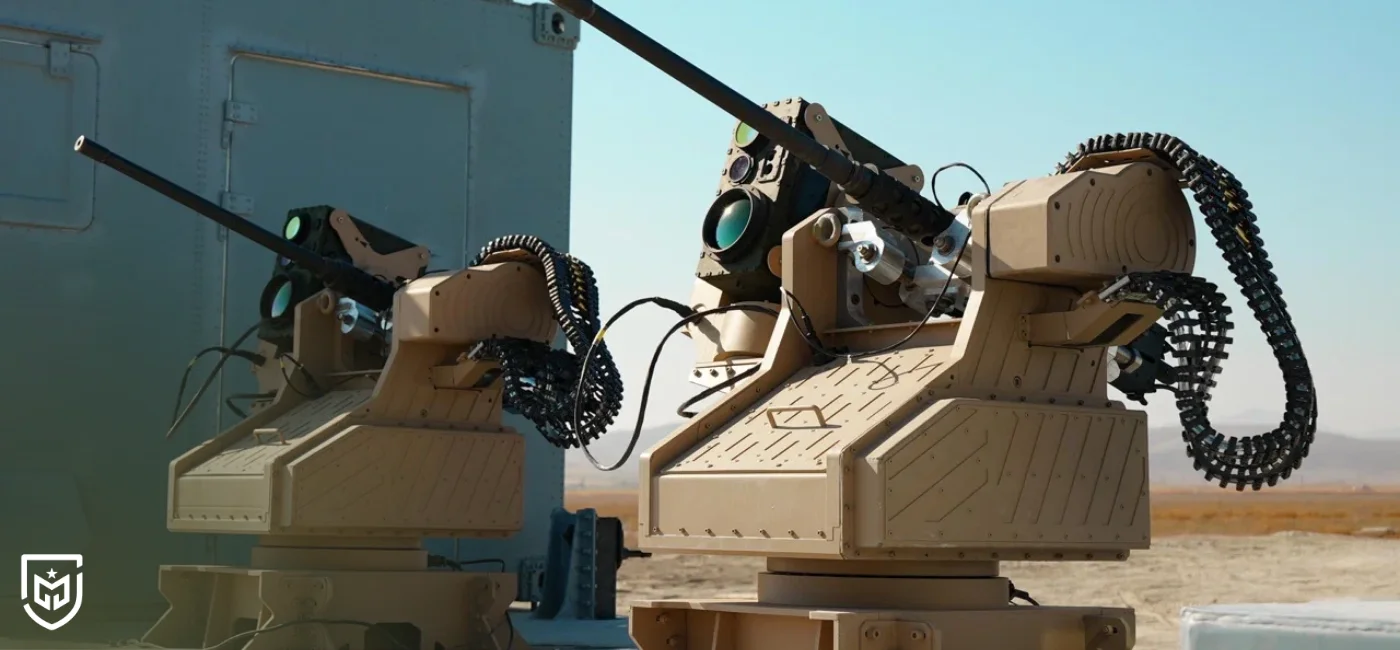
The Turkish defense industry has added a new capability with the TOLGA Close Air Defense System, developed as an indigenous solution against mini and micro drones, which have become one of the most critical threats on the modern battlefield. Developed by Makine ve Kimya Endüstrisi with domestic and national resources, TOLGA demonstrated high effectiveness against aerial threats during live-fire tests. The system successfully neutralized all targets in seven different challenging scenarios with 100 percent success, marking an important milestone in close air defense.
TOLGA was designed by MKE with an “effective-simple-affordable” approach against increasingly common threats on the modern battlefield, including drones, fixed-wing UAVs, smart munitions and cruise missiles. The tests were carried out with the participation of an approximately 150-person delegation from the General Staff, Land, Naval and Air Forces Commands, Gendarmerie General Command, Coast Guard Command, Presidency of Defense Industries and sector representatives. This broad participation showed that the system was evaluated in terms of different user requirements and operational scenarios.
One of TOLGA’s most notable features is its ability to offer flexible solutions against different threat levels through a multi-layered defense architecture. The system brings together 12.7 mm and 20 mm vehicle-mounted mobile or fixed turret weapon systems, the GÖKBÖRÜ AESA Radar, an acoustic detection system and electronic jamming capability under a single structure. This allows threats to be detected first by radar and electro-optical sensors, after which electronic intervention or physical destruction options are activated depending on the type and distance of the threat.
TOLGA can apply electronic intervention against detected drones at ranges of up to 10 kilometers in the first stage. In this layer, defined as “soft kill,” the target’s communication, control or navigation capability is disrupted. When electronic intervention is not sufficient, the “hard kill” layer is activated to physically destroy the target. This structure provides important advantages in protecting critical facilities, border regions, bases, convoys and high-security areas against low-cost aerial threats.
One of the most important elements increasing the system’s striking power is the fragmenting anti-drone ammunition specially developed by MKE. These munitions increase the probability of hit by creating a cloud of metal fragments around the target and can operate in different calibers. The 35 mm fragmenting munition is effective up to 3,000 meters, the 20 mm munition up to 1,000 meters and the 12.7 mm munition up to 300 meters. In addition, the 7.62 mm fragmenting anti-drone ammunition gives infantry personnel a new capability to counter nearby drone threats with their existing rifles, without the need for an additional platform.
Managed through mobile and fixed command-control units, TOLGA can be adapted to field requirements with manual, semi-autonomous and fully autonomous operating modes. This feature enables the system to be used both for independent point defense and as part of wider air defense networks. In the near future, TOLGA’s multi-layered defense capability is planned to be further enhanced with the integration of a laser weapon system and the ENFAL-17 missile. This development stands out as an important step strengthening Türkiye’s ability to produce more comprehensive, flexible and cost-effective solutions in close air defense and counter-drone technologies.


The cookies used on our website are used to provide you with a better user experience and to improve our website. You can manage your cookie preferences from the options below.
 Süheyla Yıldız
Post Comment
Comments
No comments yet.
Related News
Thales Introduces HexaForce AI-Powered Command and Control System to Gulf Region
ÇEPNI Tactical UAV Family Enters Operational Service
ASELSAN's Drone-Hunting System Completes Successful Demonstration
ASELSAN's GÖKALP drone defense system completes successful demonstration
Ari Arms begins OR-4 rifle production in Azerbaijan
SSB Chief Görgün Warns Against Open Source Intelligence Risks
SSB Chief: Localization in Defense Projects Starts from Design Phase
AKINCI UAV Successfully Tested with MORFOZ Guidance Kit