


Air Forces News
Global Developments


BREAKING NEWS
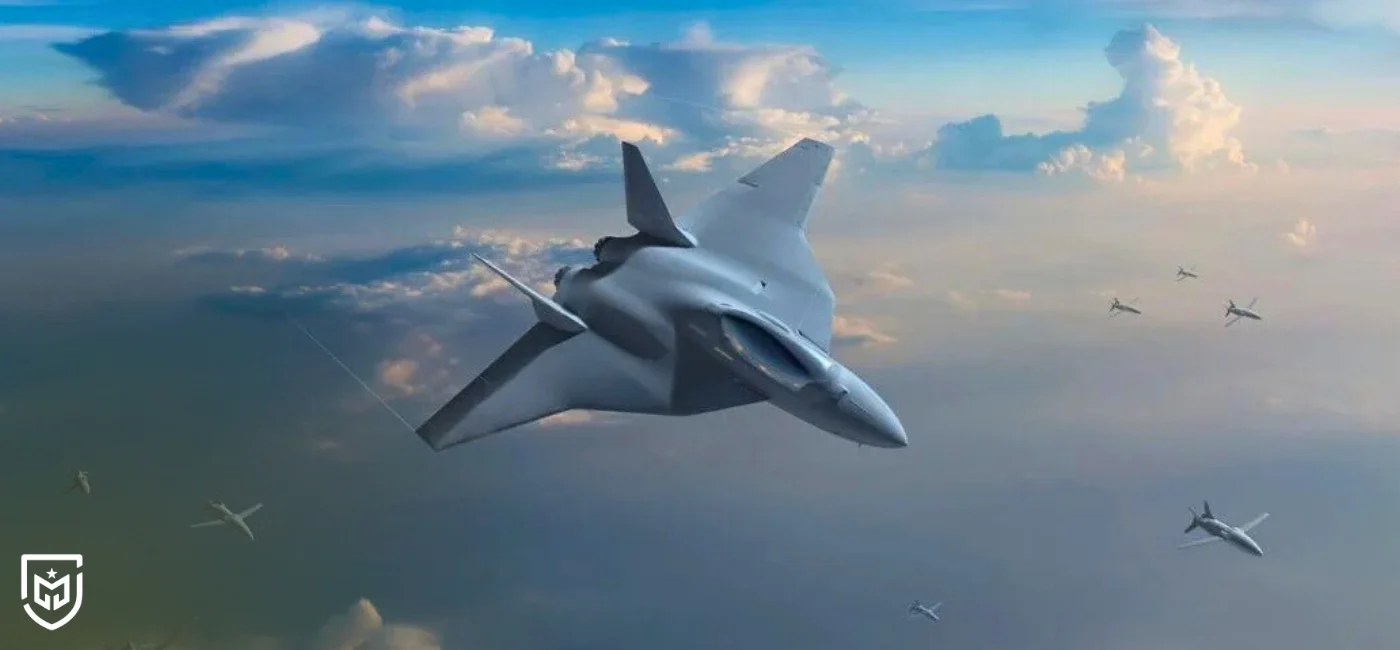
India is reportedly exploring the possibility of joining one of Europe’s ongoing sixth-generation fighter aircraft programs. According to reports, a document submitted by India’s Ministry of Defence to the Parliamentary Standing Committee on Defence indicated that New Delhi is considering cooperation with one of the two major European consortiums. The move reflects India’s intention to avoid falling behind in the race for future air combat technologies and to accelerate its long-term modernization efforts.
The two main options under consideration are the Global Combat Air Programme (GCAP), led by the United Kingdom, Italy, and Japan, and the Future Combat Air System (FCAS), developed by France, Germany, and Spain. GCAP is focused on building a sixth-generation fighter aircraft along with advanced supporting combat systems. FCAS, on the other hand, is designed as a broader air warfare ecosystem that combines a new-generation fighter jet, unmanned remote carriers, and a combat cloud architecture under one integrated operational concept.
However, India’s potential inclusion as a full development partner may not be straightforward. Analysts suggest that the current member states in either program may be reluctant to bring in an additional partner during the development phase, given the complexity of work-sharing, industrial participation, and decision-making structures. While India could still become a future customer or strategic industrial participant, gaining full access to the core development process would likely require difficult political and technological negotiations. Similar concerns have reportedly emerged in past discussions about expanding participation in such multinational fighter programs.
India’s interest in these projects is closely tied to the challenges it faces in its own combat aviation modernization roadmap. While the country continues to procure Rafale fighter jets from France, its indigenous Tejas program has faced development and maturity-related hurdles. At the same time, India’s fifth-generation Advanced Medium Combat Aircraft (AMCA) project remains in an early stage, with major milestones still ahead. This situation is pushing New Delhi not only to fill current operational gaps, but also to secure a role in the next era of air combat capability. Interest in GCAP or FCAS therefore signals that India is aiming for more than a simple fighter acquisition; it is seeking long-term technological cooperation and strategic relevance in the future combat aviation landscape.


The cookies used on our website are used to provide you with a better user experience and to improve our website. You can manage your cookie preferences from the options below.
 Süheyla Yıldız
Post Comment
Comments
No comments yet.
Related News
SSB Sector Meeting: Focus on Supply Chain and Production Capabilities
Turkish defense industry signed 15 billion dollars in new contracts in 2026
SSB Hosts Second Supply Chain Strengthening Summit
Skyfall II Exercise: U.S. Army Demonstrates UAV Defense Capabilities in Germany
SSB Chief: Transparent Licensing Will Strengthen Defense Cooperation
STM's Swarm UAV System Demonstrates Operational Success at Ateş Serbest-2026
TUSAŞ Kamikaze UAV Systems Achieve Success in Exercise Ateş Serbest-2026
Fire Free-2026 Exercise Successfully Completed