


Air Forces News
Global Developments


BREAKING NEWS
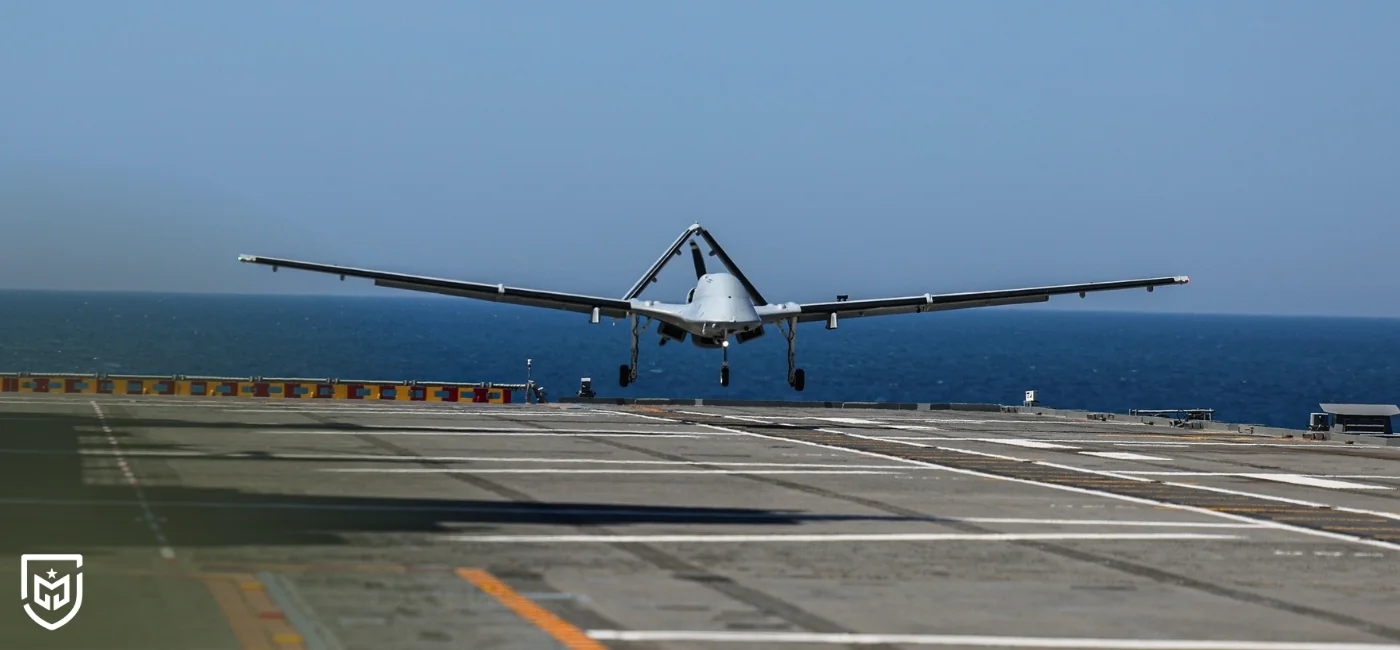
Türkiye’s defense industry continues to draw international attention, with BAYKAR once again at the forefront. During the Steadfast Dart 2026 NATO exercise hosted in Germany, Bayraktar TB-3 successfully conducted fully autonomous takeoff and landing operations on the deck of TCG Anadolu under extremely harsh winter conditions.
With temperatures dropping to -5°C, accompanied by heavy snowfall and strong winds, TB-3 launched from the amphibious assault ship positioned in open waters. After completing its assigned mission, the unmanned combat aerial vehicle (UCAV) returned and executed a flawless autonomous landing on the ship’s deck. This capability represents a major milestone not only for Türkiye but also in NATO’s operational history.
The success was made possible through advanced real-time data exchange between the drone and the ship’s onboard systems. Highly sensitive electronic systems calculated distance, angle, deck motion, and touchdown parameters within milliseconds. The AI-powered interface onboard TB-3 was clearly demonstrated to senior NATO military officials, highlighting the technological maturity of Turkish unmanned systems.
Kuwait 2019: 27-Hour Record in a Sandstorm
The recent NATO success inevitably recalls another defining moment in 2019 in Kuwait. At the time, the Kuwaiti government was evaluating UAV systems from Türkiye, the United States, and China to strengthen its military capabilities. Türkiye participated with Bayraktar TB-2, while the U.S. brought its Predator platform and China presented a comparable system.
On the demonstration day, temperatures exceeded 42°C and a severe sandstorm struck the test area. According to international reports from that period, the U.S. delegation chose not to move its Predator out of the hangar due to the harsh weather conditions. The Chinese team taxied their UAV to the runway but ultimately decided against takeoff because of the storm.
In stark contrast, Bayraktar TB-2 successfully took off despite the extreme heat, sandstorm, and gusting winds exceeding 40 knots. It did more than just fly — it remained airborne for 27 hours and 3 minutes without interruption, setting a historic endurance record. During this single sortie, TB-2 effectively circled Kuwait four times. Shortly after the demonstration, Kuwait signed a $370 million contract with BAYKAR, and TB-2 platforms were inducted into the country’s inventory.
A Strategic Message to Europe
From scorching desert heat and sandstorms to freezing temperatures and heavy snowfall, Turkish UAVs have demonstrated consistent operational reliability across diverse climates and challenging conditions. These achievements represent more than technical milestones; they serve as strategic signals.
As European nations announce multi-billion-euro defense investment plans aimed at strengthening their military capabilities, there remains a limited number of proven UAV systems that have demonstrated operational success in real combat environments and multinational exercises. BAYKAR’s TB-2 and TB-3 platforms have repeatedly proven their capabilities in both battlefield scenarios and international demonstrations.
Ultimately, Türkiye’s unmanned systems are no longer just tactical assets; they have become global symbols of technological advancement and defense industry transformation. The performance displayed before senior NATO officials may well open new strategic and export opportunities for the Turkish defense sector.


The cookies used on our website are used to provide you with a better user experience and to improve our website. You can manage your cookie preferences from the options below.
 Süheyla Yıldız
Post Comment
Comments
No comments yet.
Related News
SSB Sector Meeting: Focus on Supply Chain and Production Capabilities
Turkish defense industry signed 15 billion dollars in new contracts in 2026
SSB Hosts Second Supply Chain Strengthening Summit
Skyfall II Exercise: U.S. Army Demonstrates UAV Defense Capabilities in Germany
SSB Chief: Transparent Licensing Will Strengthen Defense Cooperation
STM's Swarm UAV System Demonstrates Operational Success at Ateş Serbest-2026
TUSAŞ Kamikaze UAV Systems Achieve Success in Exercise Ateş Serbest-2026
Fire Free-2026 Exercise Successfully Completed