



Air Forces News
Weapons and Ammunition


BREAKING NEWS
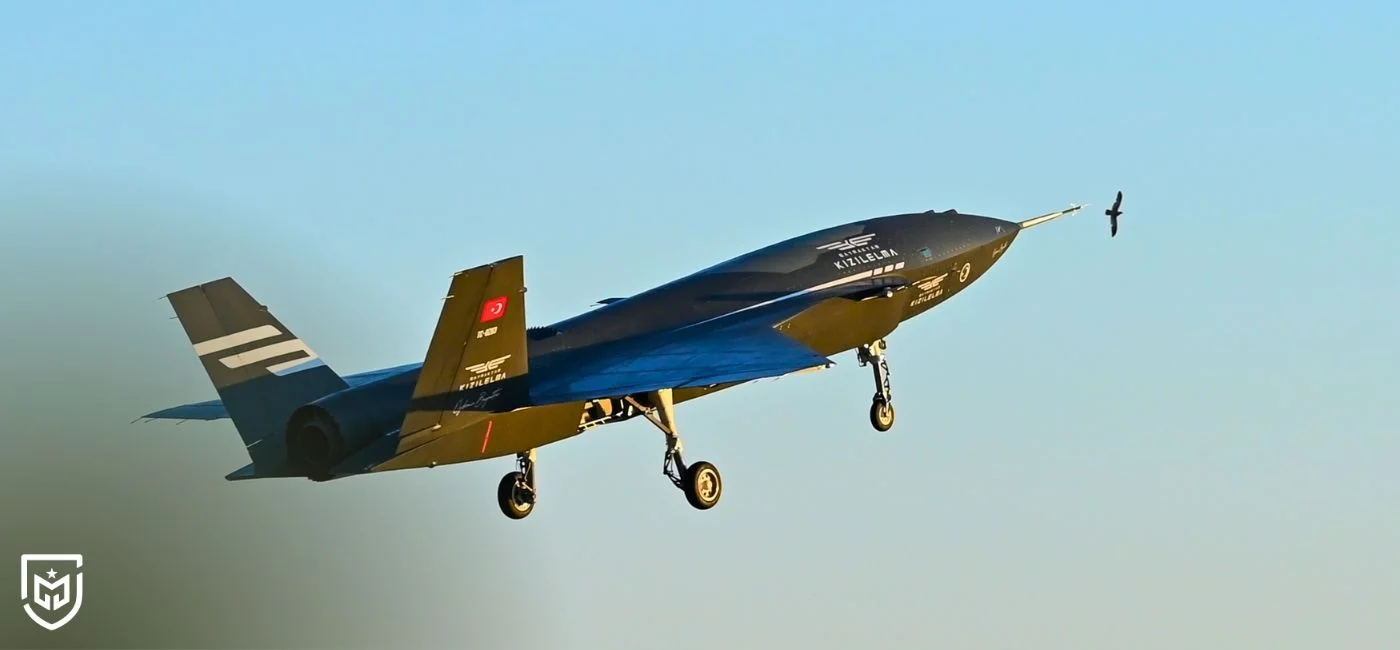
Bayraktar KIZILELMA, one of Türkiye’s fastest-progressing defense projects, is moving steadily toward entering the national inventory next year. The unmanned fighter aircraft recently passed another critical phase by successfully conducting live-munition firing tests. Notably, KIZILELMA demonstrated the ability to launch munitions not only from external hardpoints but also from an internal weapons bay—marking a significant milestone that signals a new era for Türkiye’s air-strike capabilities.
Once integrated into service, KIZILELMA is expected to significantly ease the operational burden currently placed on Türkiye’s manned fighter aircraft, particularly the F-16 and F-4 fleets. In missions where munitions must be released from high altitude and high speed, manned jets have traditionally been indispensable. With KIZILELMA entering the equation, these critical tasks can be transferred to an unmanned platform, offering both operational flexibility and major cost advantages. Reducing the flight hours of manned aircraft means less maintenance, fewer repairs, and longer platform lifespan—resulting in considerable financial savings.
Defense Analyst Yusuf Akbaba highlights an even more transformative aspect: the integration of national air-to-ground munitions. Türkiye is among the top three countries in the world in terms of air-to-ground munition diversity. However, integrating these domestically developed munitions onto foreign-built fighter jets is a lengthy, costly, and politically constrained process that requires external approval. According to Akbaba, KIZILELMA eliminates this bottleneck entirely. Since both the aircraft and the munitions are domestically owned, integration can be completed rapidly and at minimal cost, allowing Türkiye to deploy its full arsenal without operational restrictions imposed by third parties.
Akbaba also emphasizes that KIZILELMA and TUSAŞ’s ANKA-3 unmanned combat aircraft are not separate or competing projects, but complementary platforms capable of conducting coordinated missions. In a long-range strike scenario, for example, ANKA-3s equipped with various munitions could be tasked with attacking a distant naval group. If enemy aircraft attempt to intercept them, air-to-air-armed KIZILELMAs would engage and neutralize the threat. This joint-operations architecture significantly increases mission success rates. In future years, the addition of the KAAN fighter jet to this operational ecosystem will enable Türkiye to become one of the few countries capable of seamlessly integrating manned and unmanned combat aircraft in a unified battle network.
KIZILELMA’s successful live-fire results demonstrate that Türkiye’s vision for unmanned fighter aircraft is rapidly becoming reality. With its broad weapons compatibility, high autonomy, cost efficiency, and expanding operational roles, KIZILELMA is poised to make a substantial contribution to the Turkish Air Force’s combat capability once officially inducted.


The cookies used on our website are used to provide you with a better user experience and to improve our website. You can manage your cookie preferences from the options below.
 Rabia Kılıç
Post Comment
Comments
No comments yet.
Related News
Skyfall II Exercise: U.S. Army Demonstrates UAV Defense Capabilities in Germany
STM's Swarm UAV System Demonstrates Operational Success at Ateş Serbest-2026
TUSAŞ Kamikaze UAV Systems Achieve Success in Exercise Ateş Serbest-2026
Fire Free-2026 Exercise Successfully Completed
Spain Plans to Purchase 15 Additional Hürjet Advanced Trainers
Baykar platforms demonstrated capabilities at Ateş Serbest-2026 exercise
Turkey and Spain to Develop Joint Version of Hürjet Aircraft
Unmanned Naval and Aerial Vehicles Demonstrated Integrated Command Control Coordination