





Air Forces News
Global Developments


BREAKING NEWS
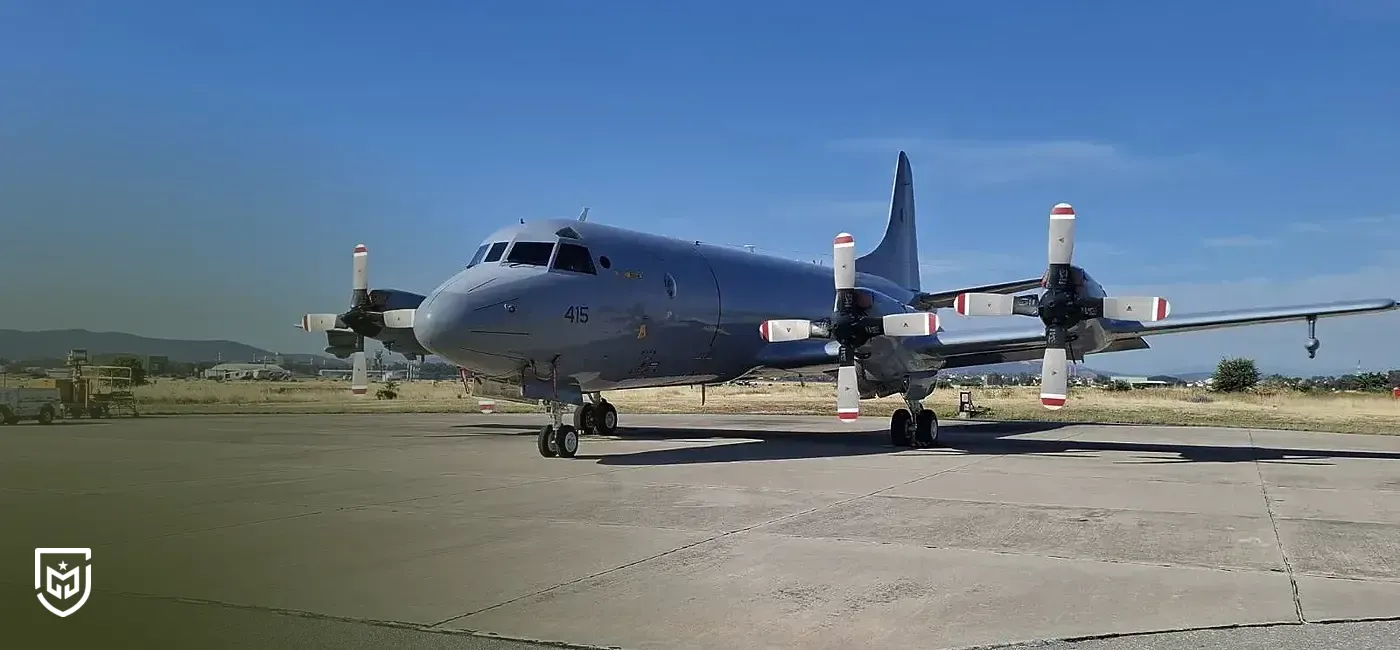
Greek Defense Minister Nikos Dendias announced that the first fully equipped P-3 maritime patrol aircraft under the Mid-Life Upgrade (MLU) program has been delivered to the Naval Aviation Squadron at Elefsis. Occurring exactly 11 years after contract signature, this delivery aims to enhance Greece's anti-submarine warfare, intelligence, surveillance and reconnaissance capabilities in the Aegean Sea and Eastern Mediterranean region.
Greece's inventory of P-3B Orion aircraft was withdrawn from service in 2009 due to spare parts shortages and structural fatigue. In 2014, the government approved and formalized in 2015 a modernization contract worth approximately 500 million dollars with the United States through the Foreign Military Sales (FMS) channel. This decision sparked significant debate both domestically and across Europe, as Greece was navigating a severe economic crisis at the time. The then-Defense Minister Panos Kammenos defended the project in parliament and media, emphasizing that modernization of these aircraft was a "vital necessity" given operational requirements in the Aegean Sea and submarine threats in the region.
The modernization program's technical foundation involved five P-3B aircraft undergoing Service Life Extension Program (SLEP) and mid-life modernization. The program extended airframe service life by 15,000 flight hours, integrated next-generation radar systems, advanced acoustic processing units and modern sensors. The industrial process formally commenced in July 2016 at Lockheed Martin and Hellenic Aerospace Industry facilities, enabling delivery of the first "interim solution" aircraft within five years. In May 2019, this interim P-3B underwent modernization at HAI facilities and was brought to minimum operational capability to meet immediate patrol requirements, though not yet at full MLU standard.
The P-3 Orion platform is widely employed by NATO nations for maritime patrol, playing a critical role in anti-submarine warfare, ship detection and intelligence missions. Similar modernization programs have been executed by Portugal, Australia and Chile. Greece's decision to modernize these aircraft was driven by the need to enhance operational capabilities against submarine threats in the region. The new radar systems and sensor integration provide expanded search area coverage and lower-altitude mission capability, significantly improving detection ranges and target classification accuracy.
The project's 11-year timeline was extended due to supply chain complications, engineering challenges and technical integration obstacles. During this period (January 2019), the program's subcontractor CP Technologies, a U.S.-based firm, signed a separate contract for upgrading mission computers and flight display systems. The delivery schedule for the remaining four aircraft remains uncertain. With the first modernized P-3HN aircraft now commencing operational service, Greece has substantially strengthened its anti-submarine defense capabilities in the Aegean Sea and Eastern Mediterranean, addressing critical operational gaps in maritime domain awareness.


The cookies used on our website are used to provide you with a better user experience and to improve our website. You can manage your cookie preferences from the options below.
 Tolga Demirel
Post Comment
Comments
No comments yet.
Related News
Germany denies claims of MGCS tank project withdrawal
Thales Introduces HexaForce AI-Powered Command and Control System to Gulf Region
ÇEPNI Tactical UAV Family Enters Operational Service
ASELSAN's Drone-Hunting System Completes Successful Demonstration
Romania Signs Contract for Airbus H225M Helicopter Procurement
ASELSAN's GÖKALP drone defense system completes successful demonstration
Ari Arms begins OR-4 rifle production in Azerbaijan
AKINCI UAV Successfully Tested with MORFOZ Guidance Kit