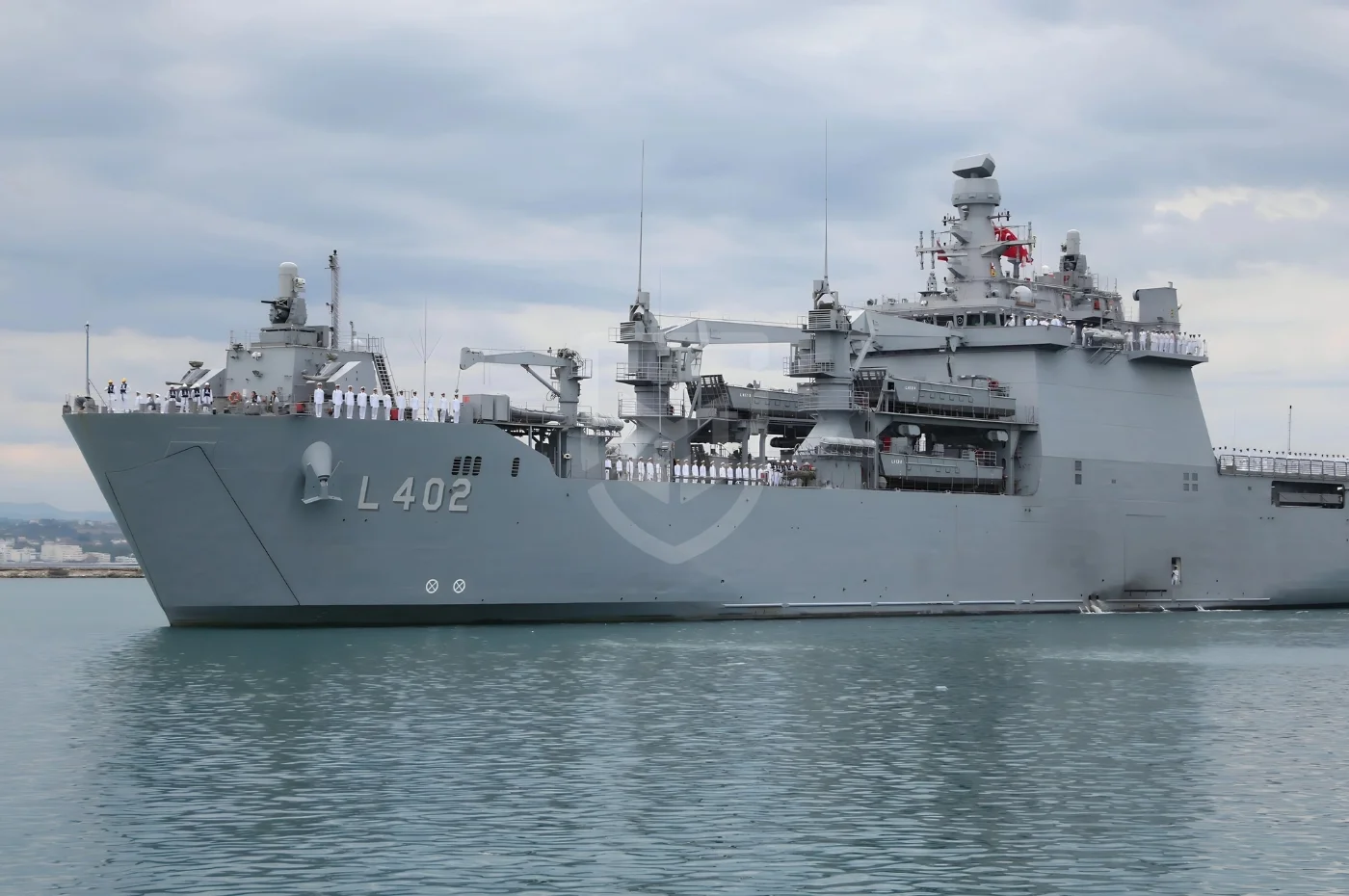
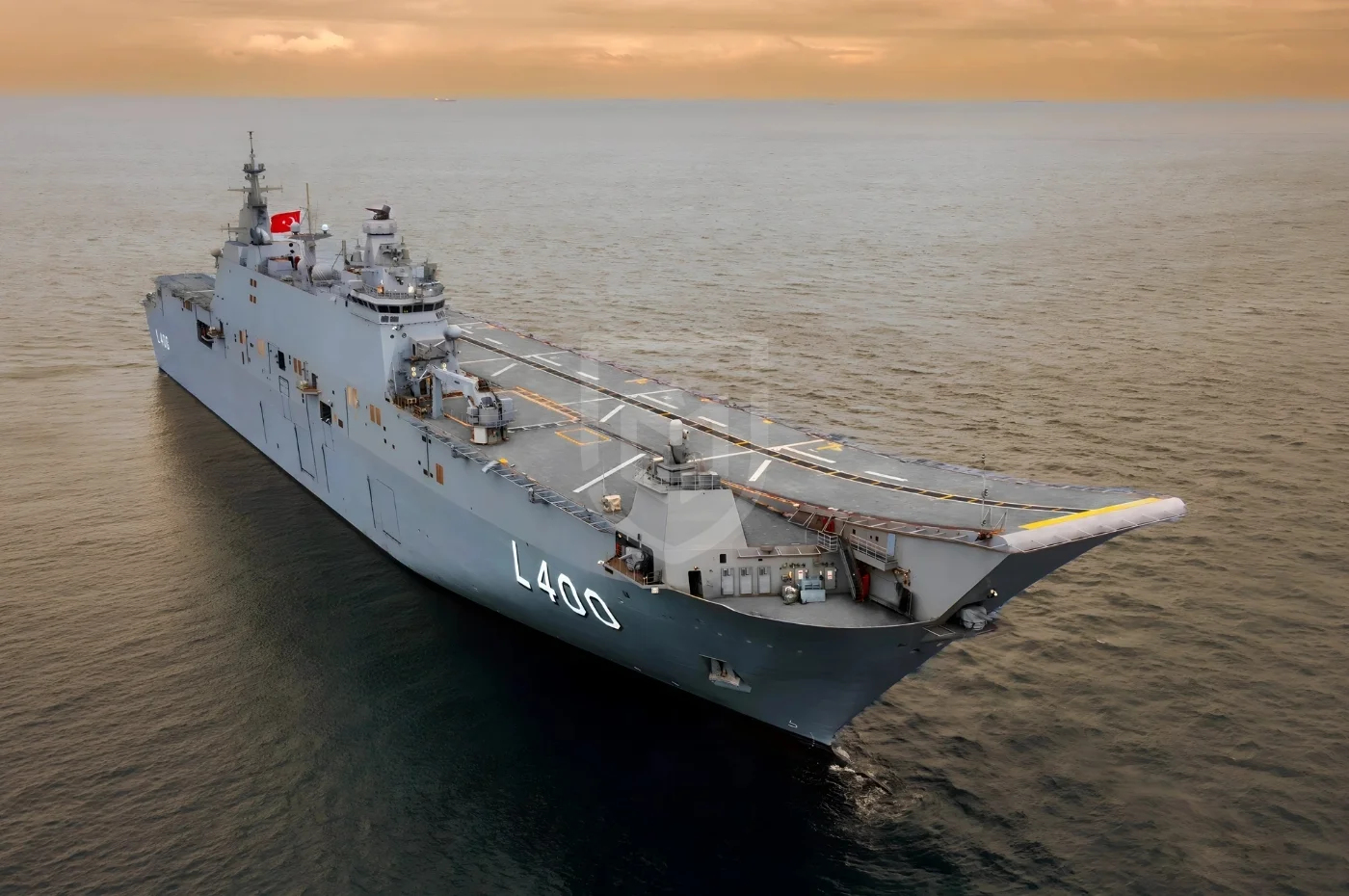
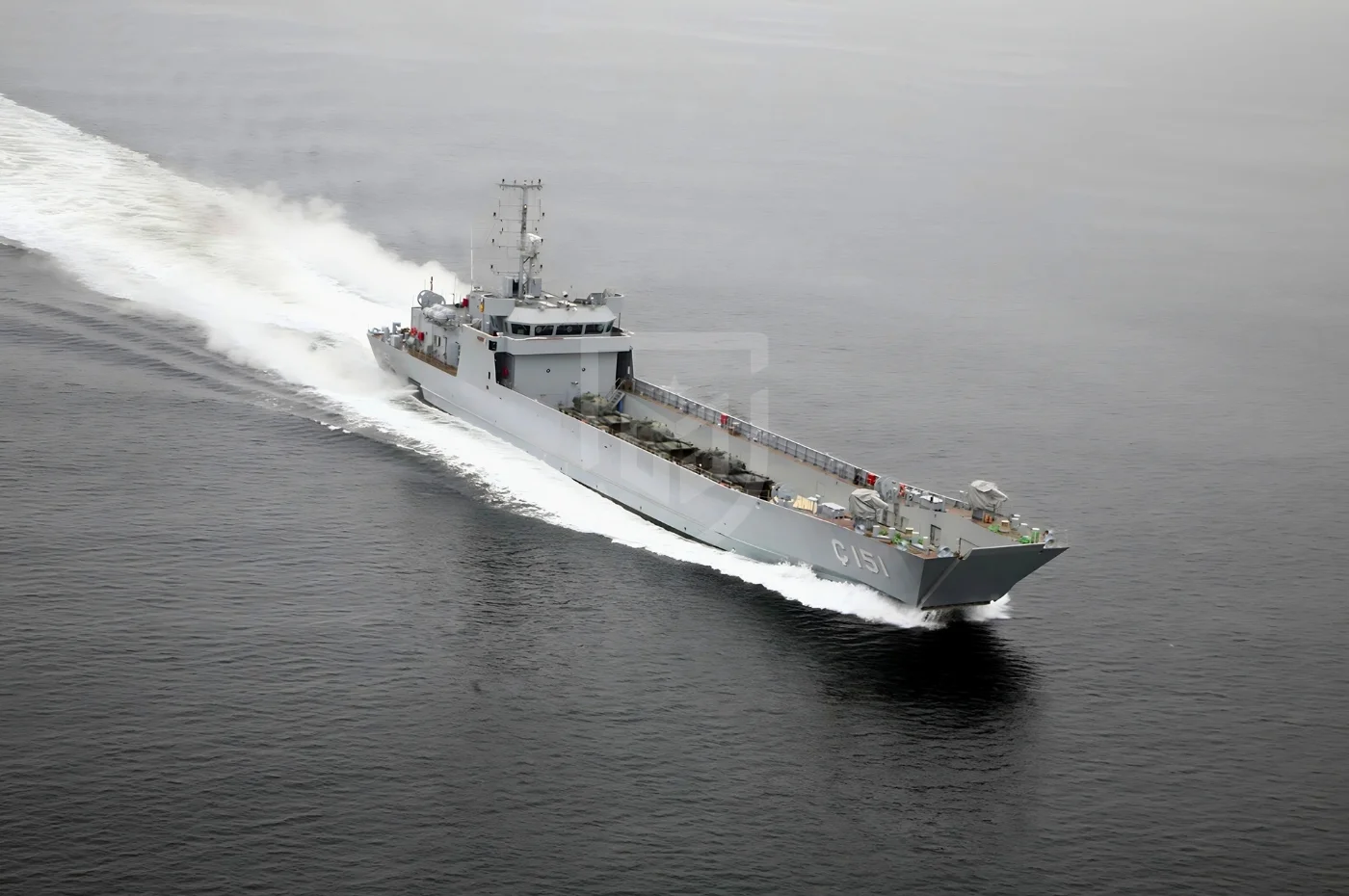
A Landing Ship Tank (LST) is a specialized amphibious assault platform capable of transporting and directly deploying heavy armored vehicles, mechanized units, and logistical cargo onto hostile or semi-prepared shorelines. The LSTs planned by Anadolu Shipyard are designed to function as strategic enablers for expeditionary warfare, crisis response, and humanitarian assistance operations.
Operational Purpose and Role
The primary mission set includes:
- Amphibious assault and mechanized force deployment
- Transportation of main battle tanks and armored vehicles
- Sealift logistics support
- Command and control at sea
- Helicopter-based operations
- Medical evacuation and disaster relief missions
Given Türkiye’s maritime operational areas—Black Sea, Aegean Sea, Eastern Mediterranean—the LST platform supports rapid sea-based force projection and sustained littoral operations.
Doctrine and Concept of Operations
Within amphibious doctrine, LSTs typically operate as part of a joint naval task force. The operational sequence includes:
- Strategic sea transit
- Joint naval and air escort during approach
- Shore deployment via bow ramp (beaching) or landing craft
- Sustained logistics flow from sea to shore
- Helicopter-assisted insertion and casualty evacuation
The integrated helicopter deck significantly expands tactical flexibility and operational tempo.
Platform Architecture
The ship’s combat and mission systems architecture includes:
- 3D air/surface search radar
- Navigation radar systems
- Laser warning system
- Electronic warfare (EW) warning system
- Combat Management System (CMS) by HAVELSAN
- Power generation systems by İŞBİR
- Electronic systems integration by ASELSAN
Data link standards and NATO interoperability details are not publicly disclosed.
Survivability and Protection
- Full Nuclear, Biological, and Chemical (NBC) protection
- Compartmentalized hull structure for damage control
- Electronic warfare awareness systems
Specific weapon systems and close-in defense configurations have not been publicly detailed.
Assessment Against Modern Threats
Advantages:
- High heavy-lift capability
- Multi-role mission flexibility
- Helicopter operations support
- High domestic subsystem integration
Limitations:
- Large radar cross-section inherent to amphibious hull design
- Vulnerability in contested littoral zones without air superiority
- Requires escort support in high-threat environments
Detailed Technical Specifications
Dimensions
- Length: 138.75 meters
- Beam: 19.60 meters
- Displacement: Not publicly disclosed
Performance
- Maximum speed: 18 knots
- Operational areas: Black Sea, Marmara, Aegean, Mediterranean, international waters
Range and endurance figures are not publicly available.
Lift and Capacity
- Cargo capacity: 1,200 tons
- Enclosed vehicle deck: 1,100 m²
- Open deck: 690 m²
- Tank capacity: 20 main battle tanks
- Total accommodation: 566 personnel
Landing Craft
- 4 × LCVP (Landing Craft, Vehicle, Personnel)
- Each capable of carrying 8 tons of cargo or 40 troops
Aviation Capability
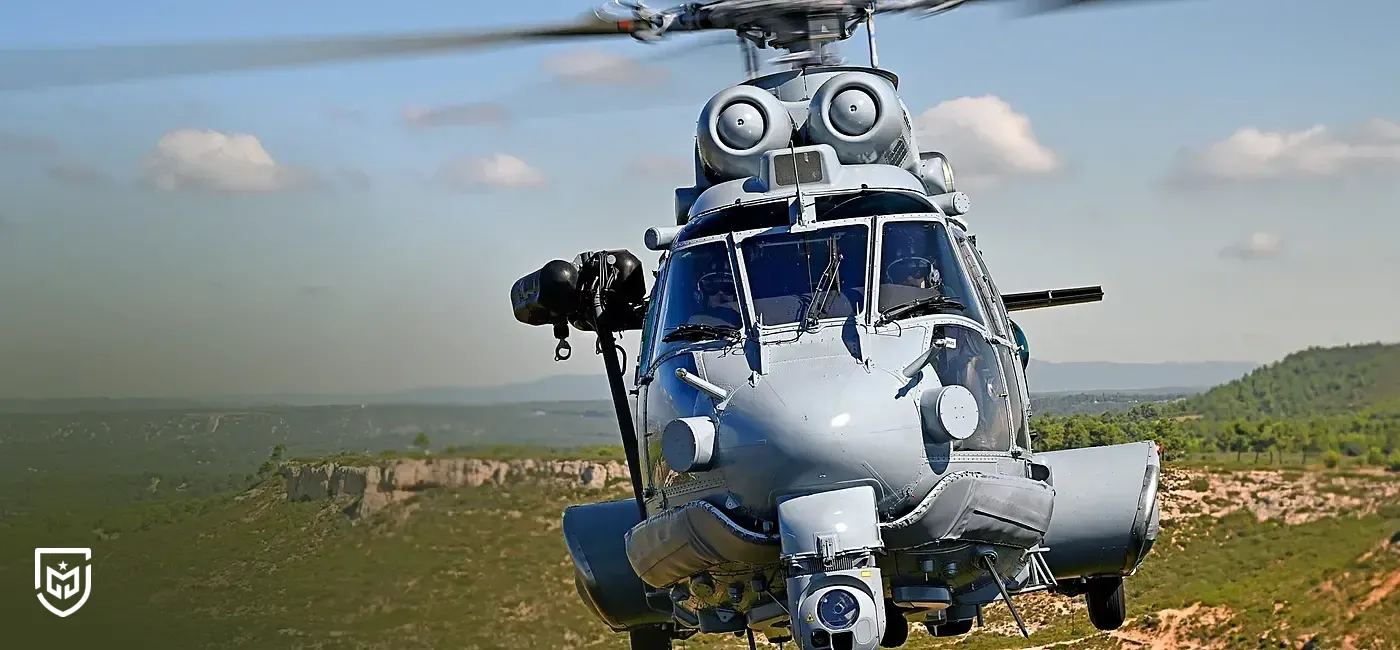
- Flight deck suitable for 15-ton class utility helicopters
- Hangar information not publicly disclosed
Sensors and Electronic Systems
- 3D search radar
- Navigation radar
- Laser warning system
- Electronic warfare warning system
Radar detection range, simultaneous tracking capacity, and fire control integration details are not publicly disclosed.
Command and Control
- Combat Management System by HAVELSAN
- Network-centric integration capability expected
- Specific tactical data link standards not publicly disclosed
Propulsion
- Main engine type: Not publicly disclosed
- Generators supplied by İŞBİR
Frequently Asked Questions
What is the primary role of this LST?
- It enables amphibious assault operations by transporting and deploying tanks, armored vehicles, troops, and logistics directly onto shorelines.
How many tanks can it carry?
- It has the capacity to transport up to 20 main battle tanks.
How many personnel can it accommodate?
- The vessel provides accommodation for up to 566 personnel.
Does it support helicopter operations?
- Yes. The flight deck supports helicopters up to the 15-ton class.
Is it a mobile offshore platform?
- Yes. It is a fully ocean-going military vessel capable of sustained operations in regional and international waters.
What defensive systems are installed?
- Publicly disclosed systems include a 3D radar, laser warning system, and electronic warfare warning systems. Detailed weapon configurations are not publicly available.
How does it compare to similar vessels?
- Comparable platforms include medium-displacement amphibious tank landing ships in the 4,000–8,000 ton class. Direct comparisons require official displacement and propulsion data.
Sources
- Anadolu Shipyard official announcements (2022)
- ASELSAN corporate disclosures
- HAVELSAN Combat Management System documentation
- İŞBİR corporate information
- Public Turkish Navy statements