


Air Forces News
Global Developments


BREAKING NEWS
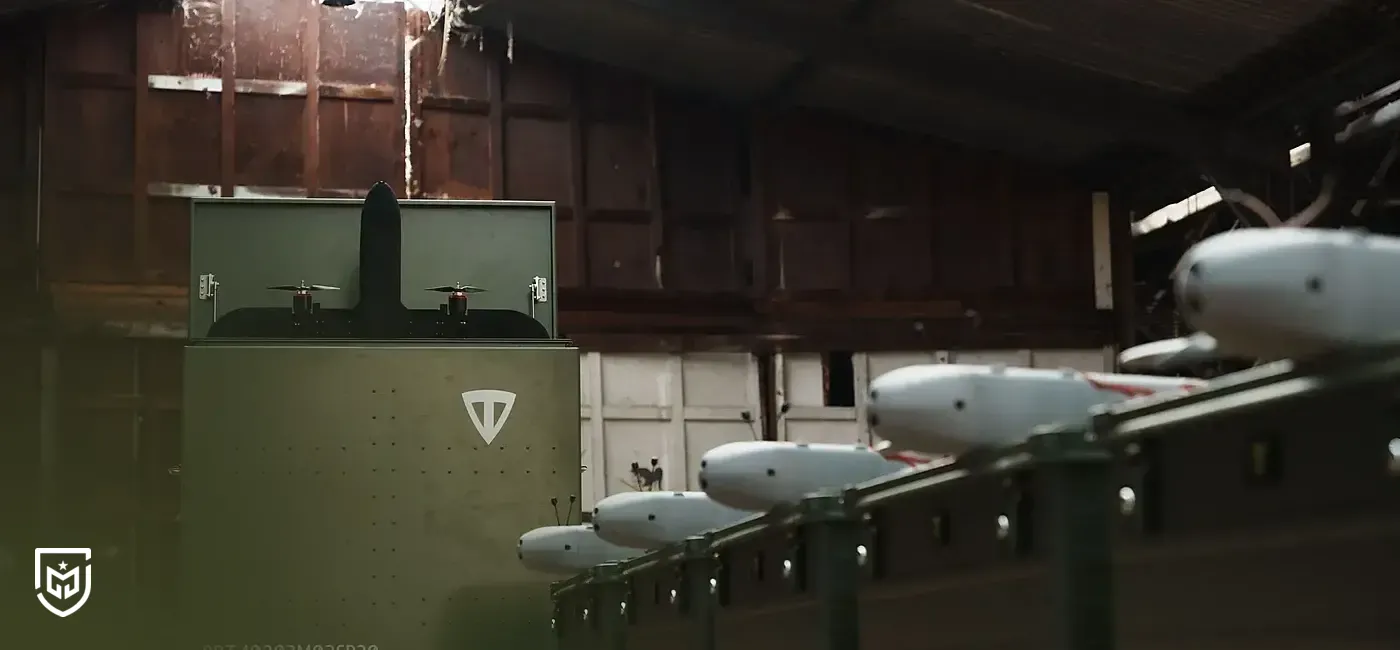
Tytan Technologies, headquartered in Munich, is a technology company specializing in autonomous anti-drone systems designed to counter unmanned aerial threats. The company manufactures interceptor drones engineered to neutralize hostile unmanned aircraft. The establishment of a new production facility in Germany reflects growing global demand for such systems, particularly following operational successes in Ukraine. The new factory is scheduled to commence operations in August 2026 and will be capable of producing 3,000 autonomous interceptor drones monthly.
Autonomous interceptor drones represent a new paradigm in cost-effectiveness against airborne threats. According to Balázs Nagy, CEO of Tytan Technologies, traditional air defense systems have proven inadequate in the Ukraine conflict. Nagy noted that inexpensive, small-scale drones have rendered multi-million-dollar conventional platforms ineffective. The company's solution provides air space protection at a cost 200 times lower than traditional systems. This transition reflects how artificial intelligence and advanced software technology can replace expensive, complex hardware with simpler, scalable solutions.
Tytan Technologies' product portfolio includes systems designed to counter different threat categories. The EOS model is a multi-rotor platform developed to counter NATO Class I drones, classified as small unmanned systems. METIS is a long-range, fixed-wing system targeting NATO Class II drones. Both platforms incorporate artificial intelligence-enabled autonomous capabilities. The Ukrainian Armed Forces regard these systems as effective, user-friendly, and economical solutions against aerial threats.
Within the global defense sector, the quantity and variety of unmanned aerial vehicles are expanding rapidly. Conventional air defense systems require substantial costs to counter these emerging threats. For instance, a missile system may cost millions of dollars, while commercial drones can be procured for thousands. This cost asymmetry has driven demand for more economical and scalable solutions. Tytan Technologies' autonomous interceptor drones are designed to address this capability gap.
Tytan Technologies is attracting growing interest from an increasing number of NATO allies, including Germany and Baltic states. The company is pursuing various projects to expand its production network into new markets. Potential new factory locations include Poland and Hungary. CEO Nagy stated that the opening of the new German facility has provided them with a model and infrastructure that can be utilized to increase production across different regions. This strategic expansion is part of broader European efforts to strengthen air defense capabilities.


The cookies used on our website are used to provide you with a better user experience and to improve our website. You can manage your cookie preferences from the options below.
 Tolga Demirel
Post Comment
Comments
No comments yet.
Related News
Altınay Defense Group Transitions to New Management Structure
KAAN Fighter Jet's New Prototype Begins Taxi Tests
KAAN Fighter Jet Completes Pre-Flight Taxi Test Successfully
BAE Systems and Lockheed Martin Unveil Blizzard Multi-Mission Unmanned Aircraft
Anduril's Ohio Facility Produces First YFQ-44A Fury Unmanned Combat Aircraft
BAE Systems Raises Outlook as Global Defense Demand Continues to Surge
South Korea's envoy highlights KAAN fighter jets as cornerstone of defense partnership with Türkiye
ASELSAN's Electro-Optical System Integrated into South Africa's Mwari Aircraft