


Air Forces News
Electronic Systems


BREAKING NEWS
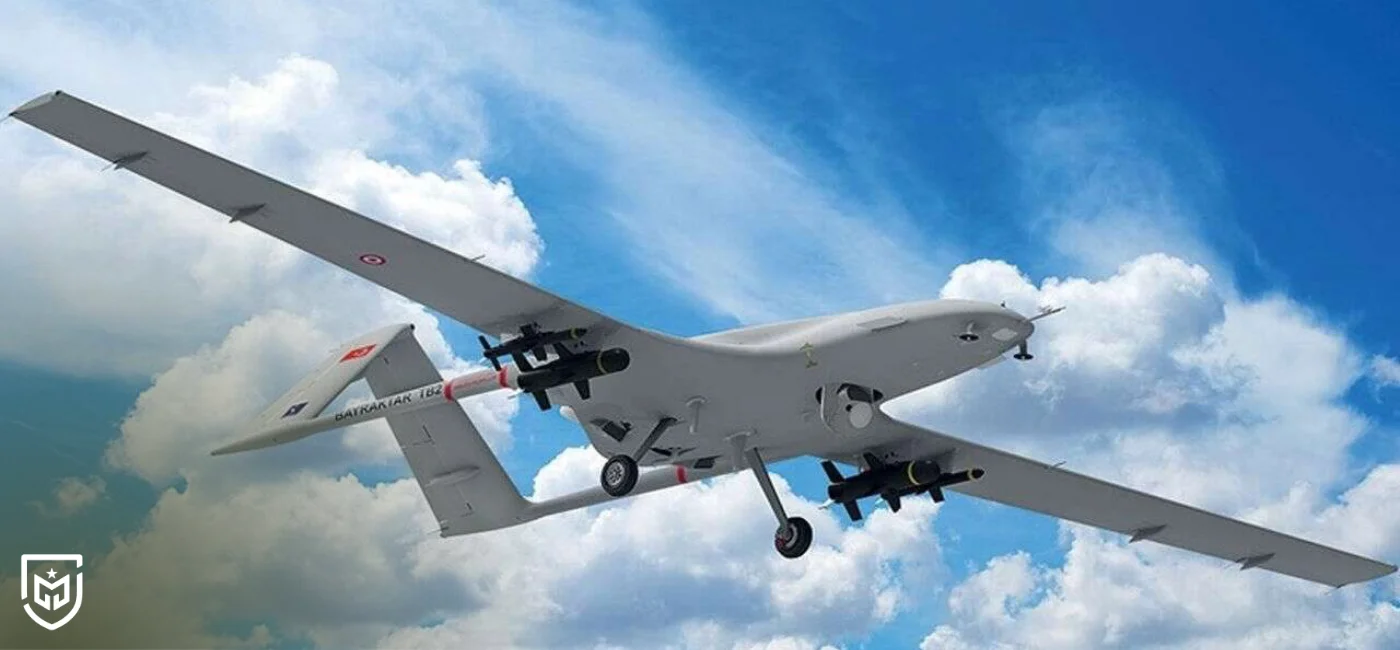
Türkiye’s unmanned aerial vehicle capabilities have reached a new stage during the Denizkurdu-II Exercise. As part of the exercise, Bayraktar TB3 UCAV deployed aboard TCG Anadolu carried out missions with ANTİDOT electronic warfare pods developed by ASELSAN. This development showed that Turkish UCAVs can now be used not only for reconnaissance, surveillance and precision strike missions, but also for advanced warfare roles such as electronic support and electronic attack.
The ANTİDOT 2-U/ES 100 pod used on Bayraktar TB3 was developed for electronic support missions. This pod provides the platform with electronic intelligence capability by detecting the location and critical emission data of hostile radars. ANTİDOT 2-U/EA 200, on the other hand, is used for electronic attack missions. This system not only identifies threat sources, but can also be used to suppress, jam and reduce the effectiveness of enemy radar and electronic systems.
The most notable aspect of this capability is that a UCAV taking off from a ship can perform an electronic attack mission. According to open-source assessments, the number of countries capable of demonstrating such a capability is extremely limited. Within NATO, it is stated that Türkiye and the United States are the only countries known to have demonstrated this type of capability by integrating electronic support or electronic warfare pods onto unmanned systems. For this reason, the TCG Anadolu-Bayraktar TB3-ANTİDOT combination stands out as a strategic model not only for Türkiye, but also for allied countries.
Conducting electronic warfare missions with unmanned platforms provides a significant advantage for the Turkish Navy. Previously, airborne electronic support and electronic attack missions were carried out by maritime patrol aircraft, anti-submarine warfare helicopters or special mission aircraft. However, these platforms involve higher risk due to the presence of crew members. Missions carried out by unmanned systems keep personnel away from danger zones while offering more flexible access to enemy radar and electronic systems.
The lightweight structure of ANTİDOT pods is also a critical factor for unmanned aerial vehicles such as Bayraktar TB3. As payload weight increases on UCAVs, range and endurance can be affected. Therefore, electronic warfare pods that provide high mission effectiveness with low weight increase the platform’s operational efficiency. TB3’s ability to operate from TCG Anadolu with these pods gives Türkiye a new operational advantage in shipborne unmanned air missions.
This new mission concept can be used not only against enemy ships at sea, but also for detecting critical targets on islands and islets, monitoring strategic assets deployed in coastal areas and suppressing air defense radars. While the electronic support pod identifies the location and emission characteristics of a target, the electronic attack pod can perform jamming or suppression missions against those targets. In this way, Turkish UCAVs become force multipliers capable of weakening enemy air defense and radar networks even without using munitions.
Türkiye’s ambitions in this field are not limited to Bayraktar TB3. Work also continues to integrate more advanced electronic warfare and electronic attack systems onto the AKINCI UCAV. As this capability matures, Türkiye may become one of the few countries able to conduct part of the missions traditionally performed by strategic electronic warfare aircraft such as HAVA SOJ with unmanned aerial vehicles. This picture shows that Ankara can develop UCAVs, munitions, sensors, cameras and electronic warfare pods within the same integrated ecosystem.
As a result, the combination of Bayraktar TB3 and ANTİDOT pods demonstrated during Denizkurdu-II Exercise marked the beginning of a new era for the Turkish defense industry. The preparation of a UCAV launched from TCG Anadolu for electronic support and electronic attack missions reveals the level reached by the Turkish Navy in network-centric warfare, unmanned systems and electronic superiority. This development increases Türkiye’s strategic value within NATO and may also create new export opportunities for Turkish UCAVs in global markets, especially in Europe.


The cookies used on our website are used to provide you with a better user experience and to improve our website. You can manage your cookie preferences from the options below.
 Süheyla Yıldız
Post Comment
Comments
No comments yet.
Related News
Skyfall II Exercise: U.S. Army Demonstrates UAV Defense Capabilities in Germany
IDA Turkey 2026 Defense and Aviation Industrial Cooperation Days Launched
SSB Chief: Transparent Licensing Will Strengthen Defense Cooperation
STM's Swarm UAV System Demonstrates Operational Success at Ateş Serbest-2026
TUSAŞ Kamikaze UAV Systems Achieve Success in Exercise Ateş Serbest-2026
ÇAKIR Cruise Missile Supply Contract Signed
Drone Shield Showcased at Marksman Competition
Fire Free-2026 Exercise Successfully Completed