

Naval Forces News
Global Developments


BREAKING NEWS
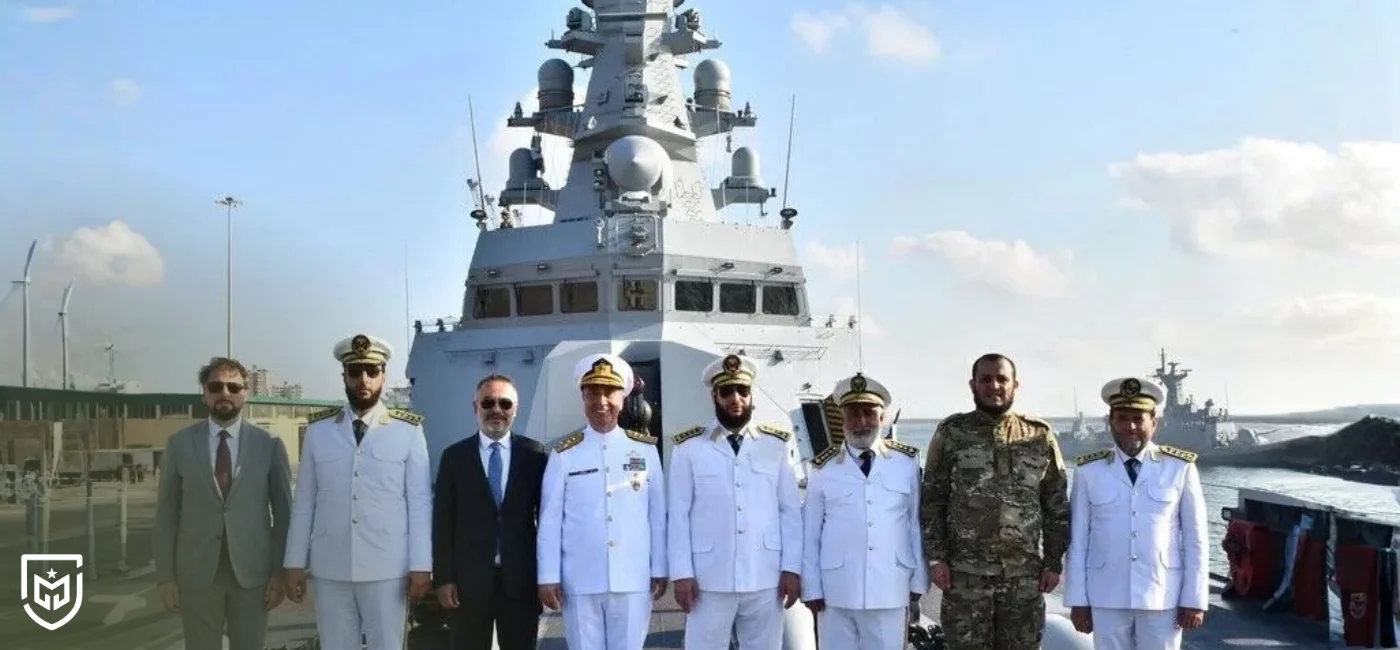
The Turkish Naval Forces’ visit to Latakia Port is considered an important threshold in the maritime dimension of the developing military cooperation between Türkiye and Syria. Commander of the Turkish Naval Forces Admiral Ercüment Tatlıoğlu and his accompanying delegation visited Latakia on July 13 and were welcomed by Syrian Naval Forces Commander Brigadier General Mohammed Al Saud. The participation of TCG İstanbul, one of Türkiye’s domestically produced modern frigates, showed that the visit was not merely a routine military contact but carried broader significance for Eastern Mediterranean security.
The visit stands out as a notable step within the framework of restructuring the Syrian Armed Forces and improving cooperation between the two countries. Türkiye’s strong navy, defense industry capabilities and maritime experience could play an important role in reshaping Syria’s maritime security architecture. In this context, there is broad cooperation potential in areas such as joint military training programs, coastal security, coast guard structuring, port security and maritime surveillance systems.
The choice of Latakia Port also increases the strategic importance of the visit. As one of the critical ports of the Eastern Mediterranean, Latakia stands out with its position east of Cyprus and its role in regional maritime geopolitics. A stronger Syrian naval structure, an effective naval base in Latakia and a secure commercial port system could have important consequences for energy, trade and security balances in the Eastern Mediterranean. In particular, the security of sea lines of communication, energy infrastructure and ports is among the key factors for attracting international investment to the region.
Syria’s goal of opening the energy potential off its Mediterranean coast to international investment makes maritime security even more critical. For energy projects to be implemented, ports must be secured, maritime jurisdiction areas must be protected, stability must be ensured in coastal regions and sea transport routes must be kept safe. Türkiye’s possible military and technical support in this field may not only strengthen Syria’s defense capacity, but also contribute to the formation of a more predictable economic and security environment in the Eastern Mediterranean.
The timing of the visit is also noteworthy in terms of regional diplomacy. The contacts, which took place shortly after the NATO Summit in Ankara, show that Türkiye is taking an active role in Syria’s process of repositioning within the international system. The reconstruction of Syria’s military capacity after the civil war is directly important for the balance of power in the region and the security architecture of the Eastern Mediterranean. In this framework, the Turkish Naval Forces’ visit to Latakia is seen not only as a step to strengthen bilateral military relations, but also as the maritime reflection of a search for a new regional order.
Türkiye’s Eastern Mediterranean policy in recent years points to a broader network of security and cooperation through relations developed with countries such as Libya, Egypt and Syria. When the Türkiye-Libya maritime jurisdiction agreement, developing maritime cooperation with Egypt and the newly opened channel of contact with Syria are evaluated together, Ankara appears to be trying to build a more inclusive, win-win-based security approach against exclusionary initiatives in the region. For this reason, the Latakia visit stands out as a strategic development supporting Türkiye’s maritime power vision and regional stability goals in the Eastern Mediterranean.


The cookies used on our website are used to provide you with a better user experience and to improve our website. You can manage your cookie preferences from the options below.
 Süheyla Yıldız
Post Comment
Comments
No comments yet.
Related News
Germany denies claims of MGCS tank project withdrawal
Thales Introduces HexaForce AI-Powered Command and Control System to Gulf Region
Romania Signs Contract for Airbus H225M Helicopter Procurement
Ari Arms begins OR-4 rifle production in Azerbaijan
Ireland selects Thales Ground Master radar for air surveillance capability
Greece reaches agreement with US for Stryker armored vehicles
German F125 Frigates to Receive IRIS-T SLM Air Defense System Integration
France successfully conducts first test of M51.3 submarine-launched ballistic missile