


Air Forces News
Global Developments


BREAKING NEWS
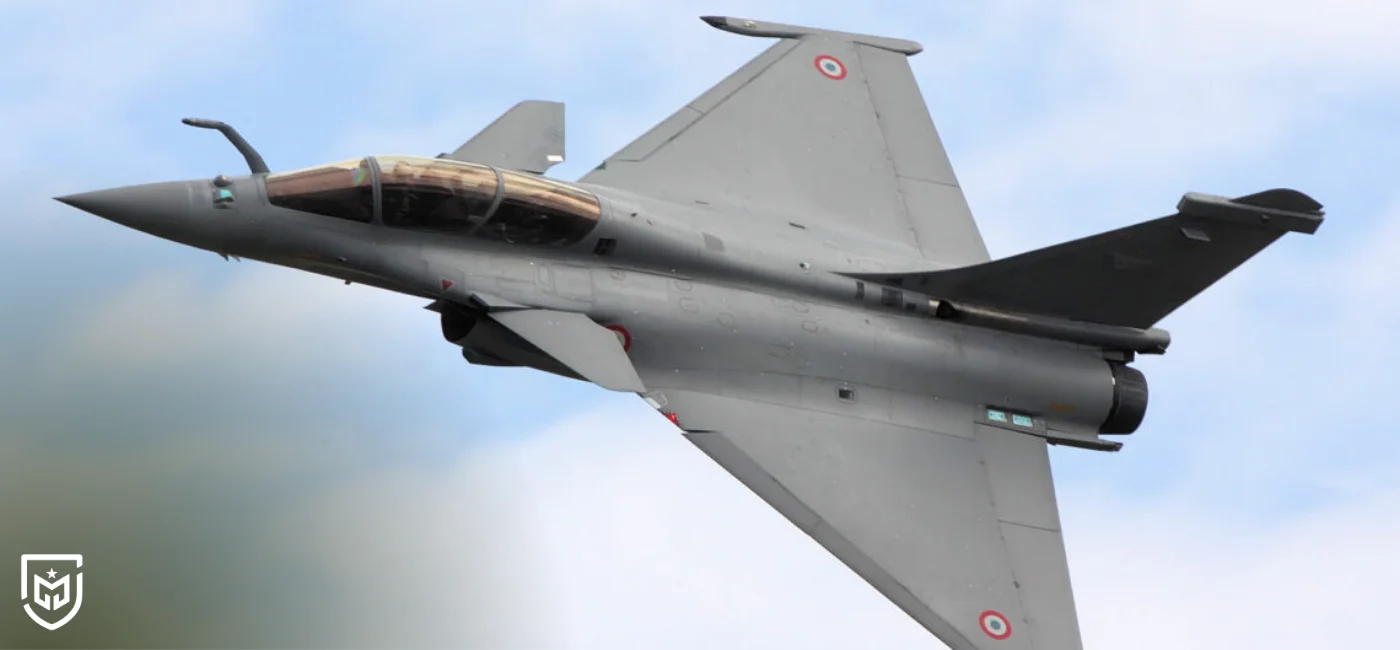
India has entered a new stage in its effort to strengthen the combat aircraft capacity of the Indian Air Force through the procurement of Rafale fighter jets from France. New Delhi is reportedly preparing to send a formal Letter of Request to France for the acquisition of 114 Rafale aircraft. The move is considered one of India’s largest fighter jet procurement initiatives in recent years.
Under the planned acquisition, around 90 of the 114 Rafale fighter jets are expected to be produced in India. This production is likely to be carried out through cooperation between France’s Dassault Aviation and an Indian company. The remaining aircraft are expected to be delivered directly from France. This structure shows that India aims not only to procure advanced combat aircraft but also to strengthen its domestic defence industry and aerospace manufacturing ecosystem.
The Letter of Request is one of the key formal documents in government-to-government defence procurement processes. It outlines the required capabilities, technical expectations, quantity and main procurement conditions. After India’s Defence Acquisition Council approval, the document is sent to the supplier country. France is then expected to respond with details covering price, delivery schedule, logistics support and maintenance terms, after which the formal request for proposal process can begin.
Final approval for the contract will require clearance from India’s Cabinet Committee on Security. For this reason, the Rafale procurement is expected to proceed as a long-term and multi-stage process. However, the preparation of the Letter of Request shows that New Delhi sees Rafale as a serious option for meeting the Indian Air Force’s short- and medium-term fighter aircraft requirements.
The Indian Air Force already operates 36 Rafale fighter jets. In addition, the Indian Navy is expected to induct 26 Rafale M aircraft for carrier-based operations. If the new 114-aircraft procurement is completed, the Rafale platform will gain a much larger role within the Indian Armed Forces. Using the same platform family across both the air force and navy could also offer advantages in training, maintenance, spare parts and logistics.
The new procurement package is expected to aim for an indigenous production share of around 50 percent. This target is part of India’s broader policy to reduce foreign dependence in defence procurement and increase technology transfer in major acquisitions. Producing Rafale aircraft in India could provide important gains in local workforce development, maintenance infrastructure, supplier networks and advanced aerospace manufacturing capacity.
India is also reportedly working on integrating domestic munitions into the Rafale platform. New Delhi is seeking access to technical interface documents that would allow the integration of systems such as the Astra air-to-air missile and BrahMos-NG. This step supports India’s goal of making imported platforms compatible with its own national weapons ecosystem.
One of the main reasons behind the Rafale procurement is the Indian Air Force’s current squadron shortfall. India’s combat aircraft fleet is reported to be around 29 squadrons, while the target strength is 42 squadrons. This gap is seen as a strategic challenge, especially given security risks linked to China and Pakistan. Rafale aircraft are expected to provide a critical bridge capability until India’s indigenous fighter projects, including LCA Mk1A, LCA Mk2 and AMCA, reach maturity.
India’s planned acquisition of 114 Rafale fighter jets is being closely watched in terms of the air power balance in South Asia. With its advanced sensors, multirole capability, long-range weapon integration and operational flexibility, Rafale could strengthen India’s air superiority, deep strike, maritime strike and strategic deterrence capabilities. If completed, the procurement will represent a major modernization step for the Indian Air Force in the coming years.


The cookies used on our website are used to provide you with a better user experience and to improve our website. You can manage your cookie preferences from the options below.
 Süheyla Yıldız
Post Comment
Comments
No comments yet.
Related News
SSB Sector Meeting: Focus on Supply Chain and Production Capabilities
Turkish defense industry signed 15 billion dollars in new contracts in 2026
SSB Hosts Second Supply Chain Strengthening Summit
Skyfall II Exercise: U.S. Army Demonstrates UAV Defense Capabilities in Germany
SSB Chief: Transparent Licensing Will Strengthen Defense Cooperation
STM's Swarm UAV System Demonstrates Operational Success at Ateş Serbest-2026
TUSAŞ Kamikaze UAV Systems Achieve Success in Exercise Ateş Serbest-2026
Fire Free-2026 Exercise Successfully Completed