



Land Forces News


BREAKING NEWS
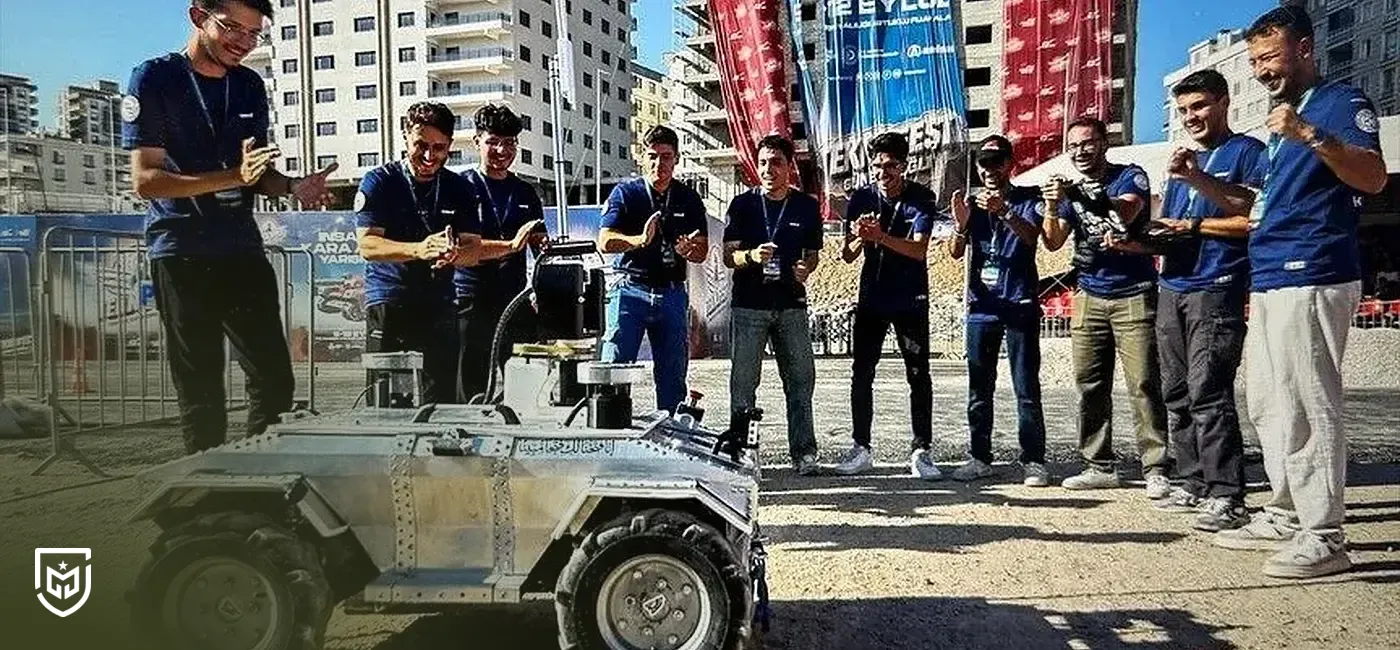
In the unmanned ground vehicle (UGV) sector, where domestic defense companies like ASELSAN and ROKETSAN lead development efforts, university students' contributions are gaining increasing significance. At the TEKNOFEST 2026 Unmanned Ground Vehicles Competition held in Mardin, the "F481" platform developed by Karadeniz Technical University's RACLAB ROVER team achieved the highest performance record in the autonomous track. The vehicle's recognition with the "Best Design Award" demonstrates tangible evidence of academic expertise transfer to the defense industry.
F481 is designed with a weight of 130 kilograms and features powerful motors and an advanced suspension system, enabling seamless movement on rough terrain and steep slopes. The vehicle's core capabilities include sensor fusion and real-time mapping technology, allowing it to navigate autonomously from point A to point B while overcoming obstacles. It can be equipped with laser systems or firearms; from 10 meters away, it can orient toward and engage targets based on their position. With a single charge, it can perform active duty operations for 3-4 hours under demanding field conditions.
In Turkish defense industry vision, unmanned ground vehicles play a critical role in reducing risks, transporting ammunition, and conducting reconnaissance missions in operational areas. Platforms like F481 aim to minimize human casualties, particularly in confined spaces and cave-like environments. The participation of academic institutions in indigenous design and development processes strengthens the defense industry ecosystem and reinforces the technology transfer chain. Such projects are regarded as foundational elements of the national technology initiative.
In global defense industry standards, unmanned ground vehicles are areas of intensive investment by countries including the United States, Israel, and China. Israel's Talon and Packbot platforms, the U.S. MULE (Mule Utility Logistics Equipment) system, and China's Jing-Ba series demonstrate the global development trajectory of this technology. Turkey's approach of connecting academic potential with defense industry requirements through competitions like TEKNOFEST enhances international competitiveness. F481's design philosophy and autonomous capabilities are comparable to these global standards.
Team members emphasize that F481 can be utilized not only in military applications but also in civilian sectors. Applications such as cargo transport, autonomous fertilization, and weeding in agricultural fields enable platform economy diversification. The students' pursuit of commercialization reflects the transformation of academic research into industrial products. Such initiatives create opportunities for new company formation and technology exports within the Turkish defense industry ecosystem.


The cookies used on our website are used to provide you with a better user experience and to improve our website. You can manage your cookie preferences from the options below.
 Murat Yılmaz
Post Comment
Comments
No comments yet.
Related News
MSPO 2026: Poland's Defense Strategy and South Korean Partnership
Turkish defense industry develops joint mission capability for unmanned systems
Poland's K2 Tanks Experiencing Technical Issues
FNSS Armored Vehicles Earn Trust of World Militaries
Germany denies claims of MGCS tank project withdrawal
Greece reaches agreement with US for Stryker armored vehicles
Katmerciler Delivers Next-Generation Hızır 4x4 Armored Vehicles
PARS Scout 8x8 Plays Critical Role in CBRN Operations