


Air Forces News
Electronic Systems


BREAKING NEWS
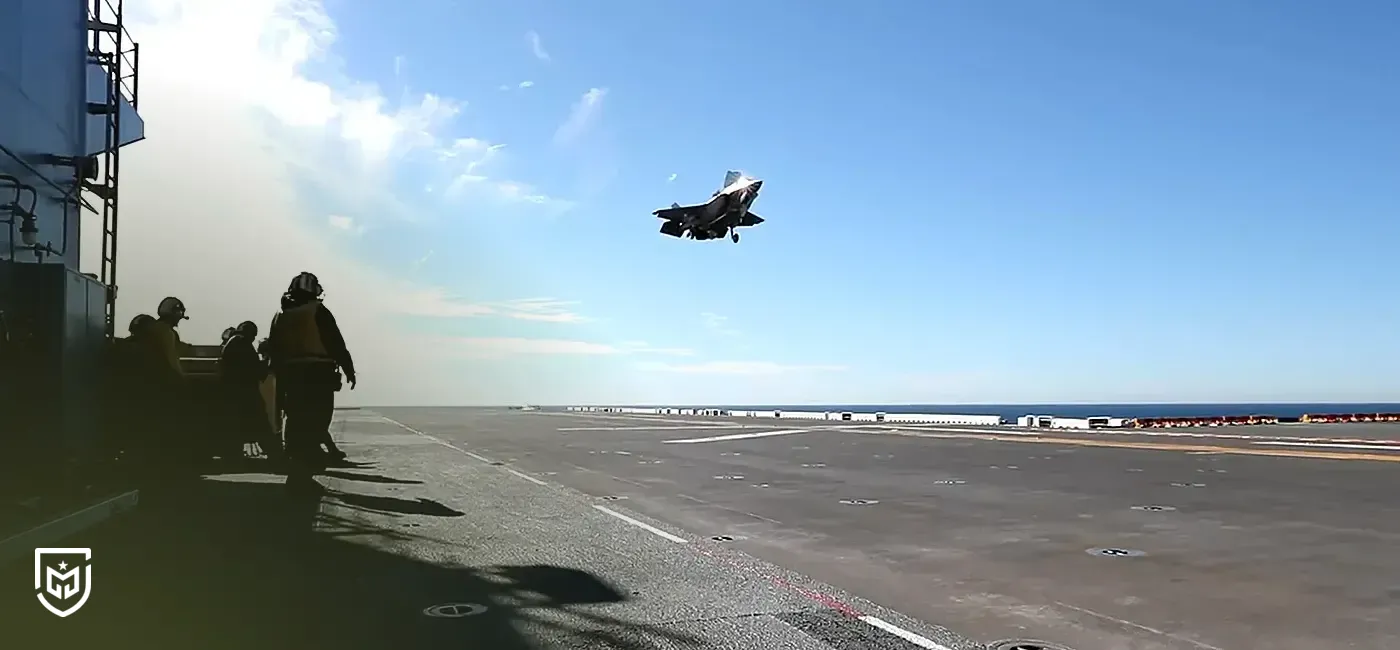
The U.S. Naval Air Systems Command Aircraft Division is urgently seeking solutions to address clutch sludge buildup in the F-35B's Lift Fan (LiftFan) system, which provides the aircraft's short takeoff and vertical landing capability. A request for sources issued on July 9 invites industry partners capable of developing portable cleaning systems to remove hardened deposits composed of carbon fiber dust and synthetic oil from the debriyaj cooling channels.
The F-35B is a specialized variant designed for the Marine Corps, capable of operating from short airfields and amphibious assault ships while performing helicopter-like vertical landings. These signature capabilities are provided by a Lift System featuring a massive vertically-oriented fan mounted behind the cockpit. The system generates approximately 20,000 pounds of upward thrust by drawing air inward and directing it downward, working in coordination with the engine nozzle to enable the aircraft to take off without requiring forward airspeed.
The clutch mechanism couples the Lift Fan to the engine drive shaft and engages only during vertical or short takeoff operations. However, the system has been problematic since 2011, when Pratt & Whitney disclosed that clutch plates were making unexpected contact during normal flight, generating more heat than designed. At that time, industry analysts questioned whether the entire F-35B design required revision. Lockheed Martin addressed the issue by adding thermal sensors and mandating that pilots descend below 10,000 feet when excessive heat conditions occurred.
The Navy's specified requirements are precise and demanding: the cleaning system must precisely control water temperature, pressure, and quality to remove hardened deposits without damaging surrounding aircraft components, capture and recover all wastewater and extracted contaminants to meet environmental compliance, and incorporate a custom-designed apparatus that safely interfaces with the F-35B's unique clutch assembly. Rather than developing entirely new technology, the Navy prefers existing commercial cleaning systems that can be adapted to the F-35B's specific debriyaj assembly.
The F-35 Joint Program Office's engine support team is approaching this cleaning capability gap with genuine urgency, characterizing the effort in the solicitation as "priority action to provide rapid support for evaluating debriyaj cooling system cleaning processes and equipment." The deadline for industry responses is July 16, and this compressed timeline underscores the criticality of the issue to fleet operational readiness.


The cookies used on our website are used to provide you with a better user experience and to improve our website. You can manage your cookie preferences from the options below.
 Tolga Demirel
Post Comment
Comments
No comments yet.
Related News
Skyfall II Exercise: U.S. Army Demonstrates UAV Defense Capabilities in Germany
IDA Turkey 2026 Defense and Aviation Industrial Cooperation Days Launched
SSB Chief: Transparent Licensing Will Strengthen Defense Cooperation
STM's Swarm UAV System Demonstrates Operational Success at Ateş Serbest-2026
TUSAŞ Kamikaze UAV Systems Achieve Success in Exercise Ateş Serbest-2026
ÇAKIR Cruise Missile Supply Contract Signed
Drone Shield Showcased at Marksman Competition
Fire Free-2026 Exercise Successfully Completed