


Air Forces News
Global Developments


BREAKING NEWS
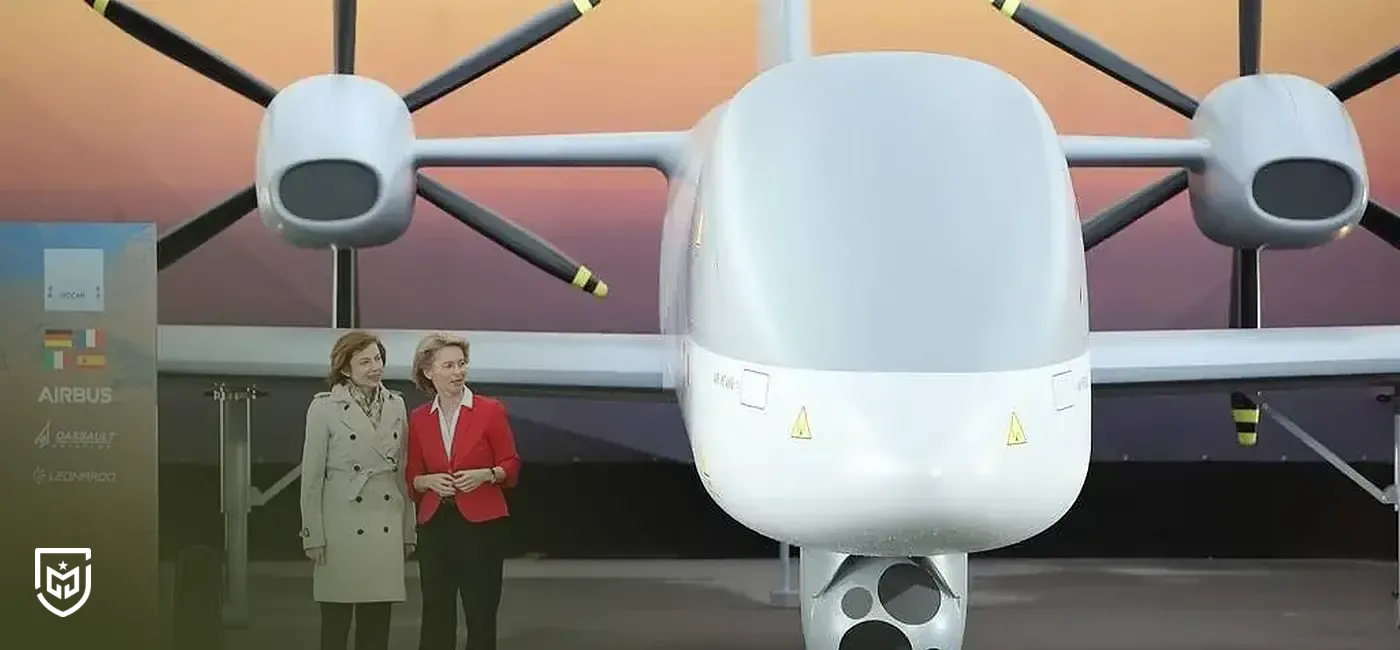
Dassault Aviation CEO Eric Trappier stated that Airbus Defence and Space is attempting to remove the company from the multinational Eurodrone surveillance UAV program. In remarks to a French Senate committee, Trappier said, "For us, the situation is straightforward. Airbus told us to exit the project," and added, "We do not agree, and therefore we are discussing why we are being excluded." The dispute stems from France's shift in approach toward the program. Following Paris' decision to suspend Eurodrone procurement, Dassault's anticipated work share has reportedly been reduced.
Airbus Defence and Space, serving as the prime contractor for the Eurodrone program, ranks among Europe's largest defense sector organizations. The company plays a central role in Europe's strategic defense initiatives through its extensive aerospace and space technology portfolio. Dassault Aviation is France's leading defense aviation company and developer of advanced platforms such as the Rafale combat aircraft. Leonardo participates as a significant Italian defense industry actor. The Eurodrone program, through collaboration among these three firms, aims to reduce Europe's dependence on the U.S.-manufactured MQ-9 Reaper system.
Eurodrone is designed to develop a fully European medium-altitude, long-endurance (MALE) class unmanned aerial system. The program's foundations were established in 2015 by France, Germany, and Italy, later expanding to include Spain. Under a contract valued at approximately 7 billion euros, the development of 20 complete systems and 60 air vehicles is planned. The system is designed to meet civil certification requirements, making it a more complex and comprehensive platform compared to existing MALE-class UAVs. The program is managed by OCCAR, the European Organization for Joint Armament Cooperation.
The Eurodrone project has faced significant delays since 2015. The COVID-19 pandemic delayed contract signature, and design work extended beyond initial schedules. First flight, originally planned for 2025, was subsequently postponed to 2027. According to recent developments, initial operational deliveries have slipped to the 2029-2030 timeframe. A primary cause of delays has been the program's multinational structure. Differing operational expectations among four nations, industrial work-share negotiations, and slow decision-making processes have adversely affected both schedule and costs.
Eurodrone holds strategic significance for European defense industry. The program seeks to establish European UAV technology independence and reduce technological reliance on the United States. Similarly, Turkey's BAYKAR-developed Bayraktar TB2 and TB3 platforms play important roles in regional defense industry ecosystems. Eurodrone's success would demonstrate Europe's capacity to develop indigenous unmanned aerial vehicle technology. However, current disputes risk further delaying program completion and operational deployment, potentially undermining Europe's strategic defense objectives.


The cookies used on our website are used to provide you with a better user experience and to improve our website. You can manage your cookie preferences from the options below.
 Tolga Demirel
Post Comment
Comments
No comments yet.
Related News
SSB Sector Meeting: Focus on Supply Chain and Production Capabilities
Turkish defense industry signed 15 billion dollars in new contracts in 2026
SSB Hosts Second Supply Chain Strengthening Summit
Skyfall II Exercise: U.S. Army Demonstrates UAV Defense Capabilities in Germany
SSB Chief: Transparent Licensing Will Strengthen Defense Cooperation
STM's Swarm UAV System Demonstrates Operational Success at Ateş Serbest-2026
TUSAŞ Kamikaze UAV Systems Achieve Success in Exercise Ateş Serbest-2026
Fire Free-2026 Exercise Successfully Completed