


Air Forces News
Global Developments


BREAKING NEWS
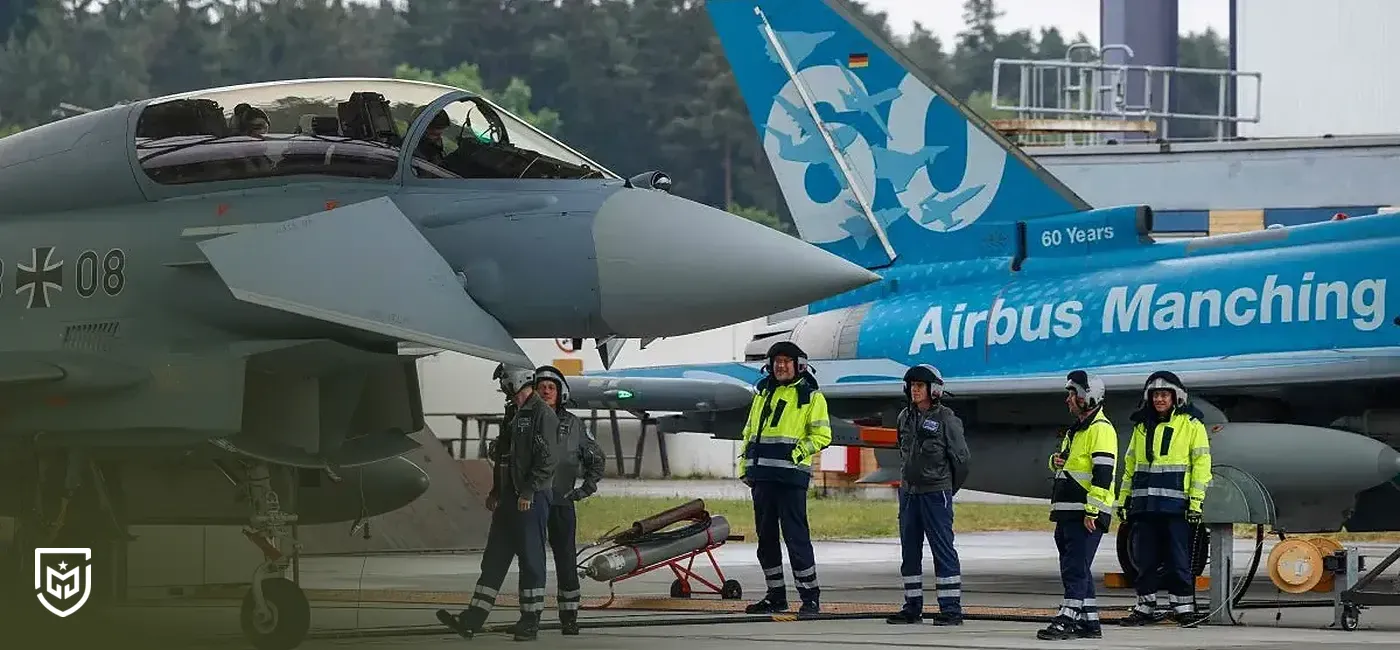
In the wake of French President Emmanuel Macron and German Chancellor Friedrich Merz canceling the Franco-German joint fighter aircraft program one day earlier, an industry group led by Airbus proposed an alternative path for next-generation combat aircraft development. The coalition, dubbed "Team Gen 6," comprises Airbus Defence and Space, Autoflug, Diehl Defence, Hensoldt, Liebherr, MBDA, MTU Aero Engines, and Rohde & Schwarz. The group announced it had prepared a joint position paper on the Future Combat Air System (FCAS) and the associated Next Generation Weapon System (NGWS).
Airbus Defence and Space stands as one of Europe's largest defense and aerospace companies, with extensive production capacity across Spain, France, Germany, and the Benelux nations. The company has played a leading role in major programs including the Eurofighter Typhoon, A400M military transport aircraft, and various missile systems. MBDA, meanwhile, represents Europe's foremost missile and air defense systems manufacturer. Alongside these two firms, specialists in advanced radar and sensor technology such as Hensoldt strengthen the coalition's technical depth.
Next-generation fighter aircraft systems aim to integrate artificial intelligence, autonomous decision-making, advanced sensor fusion, and network-centric warfare capabilities. The FCAS/NGWS concept extends beyond a single combat aircraft, designed as an ecosystem combining unmanned aerial vehicles, ground-based sensors, and satellite communications. Such systems are critical for ensuring NATO-standard interoperability and strengthening Europe's strategic autonomy.
The original Franco-German FCAS program was viewed as a cornerstone of European defense cooperation. However, disagreements between Dassault Aviation and Airbus over control and design authority had disrupted project management. Germany stated it did not require nuclear weapons-carrying capability or aircraft carrier launch capacity, while France deemed these features strategically necessary. These fundamental differences rendered compromise between the two nations impossible.
In the global fighter aircraft market, the United States' F-35 Lightning II program, Europe's Eurofighter Typhoon and Gripen, Russia's Su-57, and China's J-20 represent existing platforms. Next-generation systems differentiate themselves from these established platforms through artificial intelligence integration, greater autonomous capability, and advanced cyber defense. Team Gen 6's proposal could enable Europe to close this technological gap and develop an independent combat air system. Project details will be presented at the Berlin ILA Air Show on June 13.


The cookies used on our website are used to provide you with a better user experience and to improve our website. You can manage your cookie preferences from the options below.
 Tolga Demirel
Post Comment
Comments
No comments yet.
Related News
SSB Sector Meeting: Focus on Supply Chain and Production Capabilities
Turkish defense industry signed 15 billion dollars in new contracts in 2026
SSB Hosts Second Supply Chain Strengthening Summit
Skyfall II Exercise: U.S. Army Demonstrates UAV Defense Capabilities in Germany
SSB Chief: Transparent Licensing Will Strengthen Defense Cooperation
STM's Swarm UAV System Demonstrates Operational Success at Ateş Serbest-2026
TUSAŞ Kamikaze UAV Systems Achieve Success in Exercise Ateş Serbest-2026
Fire Free-2026 Exercise Successfully Completed