Air Forces News
Naval Forces News
Electronic Systems

AKSUNGUR achieves submarine detection milestone
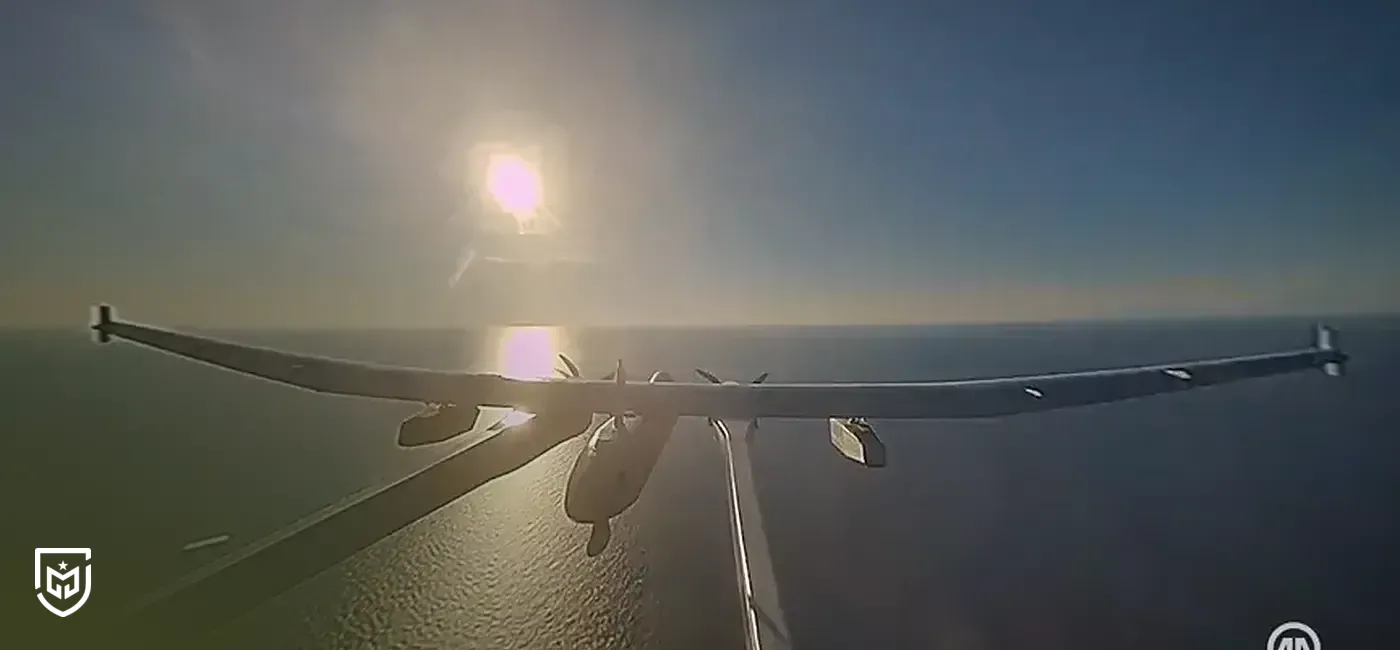
AKSUNGUR launched from Ankara and transited to its operational area off the Antalya coast under satellite control, successfully completing a significant phase in the integrated deployment of domestic systems for maritime missions. During the exercise, the platform carried three aselBUOY 100P Underwater Acoustic Monitoring Systems developed by ASELSAN and one Sonobuoy. Equipped with the domestic TEI-PD170 engine developed by TEI, AKSUNGUR descended to 1,000 feet off Antalya and deployed its systems via pod into the Mediterranean Sea. The platform then climbed to 6,000 feet and transitioned to signal monitoring phase. During approximately 4 hours of flight operations in the mission area, AKSUNGUR transmitted acoustic data received from the aselBUOY systems to the Ground Control Station in Ankara and its integrated acoustic data transmission center. Underwater target detection was accomplished through processing of the received data.
ASELSAN's aselBUOY system was deployed from an unmanned aerial vehicle for the first time during this exercise. The operation encompassed the transport of acoustic monitoring systems to the mission area, deployment into the sea, collection of underwater data, and evaluation of that data at the remote ground control station, completing the entire mission chain successfully. This achievement represents a significant advance in maritime surveillance and submarine detection capabilities for Turkish defense industry. The operational deployment of acoustic monitoring systems from UAV platforms marks an important step forward in maritime operations.
AKSUNGUR is designed as a maritime-capable platform featuring extended endurance, high payload capacity, and satellite control capability. Developed by BAYKAR, this UAV possesses approximately 24-hour mission duration and 50-kilogram payload capacity, making it suitable for maritime surveillance and intelligence gathering missions. The platform's satellite control system enables continuous operations across extensive maritime areas. These characteristics have enabled the successful integration of domestic systems for maritime missions.
UAV employment in maritime operations is increasingly adopted across global defense industries. NATO nations operationally employ UAV platforms for maritime surveillance and submarine detection missions. For example, high-capacity UAVs such as the MQ-9B Reaper are equipped with acoustic sensors and radar systems for maritime operations. Turkey's development of comparable capabilities with AKSUNGUR significantly enhances regional maritime security and surveillance capacity.
AKSUNGUR's capabilities for joint operations with maritime patrol aircraft have advanced to a new level through this successful integration with domestic acoustic monitoring systems. The exercise demonstrated the success of integrating domestic components such as ASELSAN's aselBUOY system and TEI's TEI-PD170 engine. The collaborative operation of domestic systems in maritime missions contributes to Turkish defense industry's localization objectives. Future expansion of such integrated operations is anticipated for maritime surveillance, submarine detection, and maritime security missions.




 Murat Yılmaz


Post Comment
Comments
No comments yet.
Related News
Turkey Awaits Qatar's Eurofighter Typhoon Sale Contract
Canada and Turkey to Deepen Defense and Energy Cooperation
Turkish Air Force Prepares for Eurofighter Typhoon Acquisition from Qatar
KORKUT air defense system operational in 9 countries
HAVELSAN Instills Technology Passion in Children
STM Launches Second Logistics Support Ship for Portuguese Navy
MERKÜT Magazine: FPV Drones Ready for Deployment
MEBS School Transforms Communications Training with AI and Cyber Defense Technology