

Naval Forces News
Global Developments


BREAKING NEWS
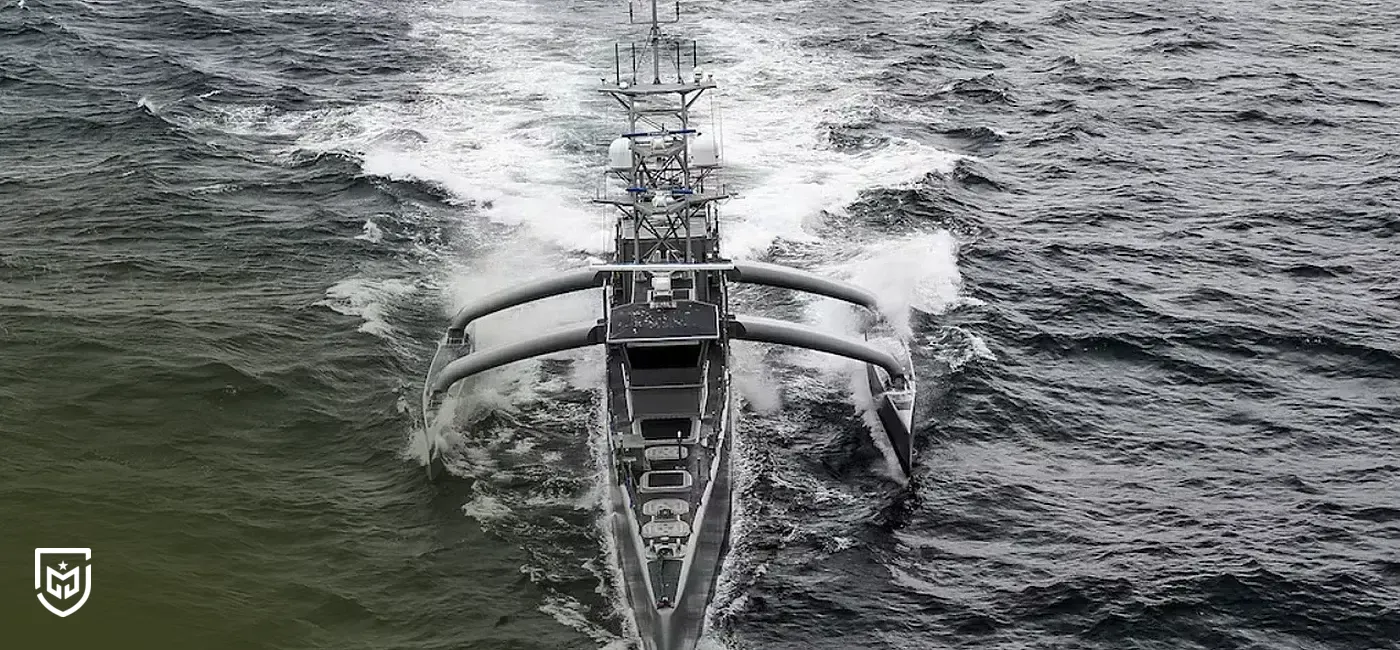
Two defense firms excluded from the U.S. Navy's Medium-sized Unmanned Surface Vessel (MUSV) procurement initiative have pursued legal action in federal court. Blue Water Autonomy and Saildrone filed complaints with the U.S. Court of Federal Claims, asserting that the decision was based on "excessively restrictive evaluation criteria, misreading of company proposals, and conclusions inconsistent with the Prototype Request for Proposal and legal requirements."
Following the cancellation of the Modular Assault Craft program (MASC), the U.S. Navy launched the MUSV initiative on March 26. This new platform class targets the development of unmanned surface vessels capable of carrying payloads comparable to the Mark 70 Mod 1 system and containerized heavy loads. The termination of MASC indicated the Navy's shift from specialized mission requirements toward a broader operational scope. The procurement process, which concluded on April 17, involved detailed evaluation of companies' business plans, production schedules, test protocols, and technical designs.
Blue Water Autonomy was initially selected to participate in the MASC program before the MUSV initiative began. The company had already commenced development of its "Liberty" platform and invested substantial resources in production. Following MASC's cancellation, Blue Water Autonomy officials contend that the company was prevented from continuing MUSV competition without participating in water-based testing with a prototype vessel. This situation suggests that the firm's prior investments and development efforts were disregarded.
On June 1, the U.S. Navy announced the selection of seven companies for participation in sea trials. The selected firms include Sea Machines, Leidos, Saronic Technologies, Galliano Marine Services, PacMar Technologies, Birdon, and Huntington Ingalls Industries. Neither Blue Water Autonomy nor Saildrone appeared on the list. According to Defense News reporting, significant portions of both companies' legal filings remain redacted, preventing clear disclosure of the Navy's specific deficiencies identified in the MUSV proposals.
Unmanned surface vessels have become an increasingly critical component of modern naval defense strategy. These platforms enable extended operational periods for surveillance, reconnaissance, and potential strike missions without exposing human operators to risk. The MUSV program reflects the U.S. Navy's growing commitment to autonomous systems and its strategy to expand the role of unmanned platforms in maritime operations. As litigation proceeds, the Navy has stated it cannot comment on ongoing legal proceedings.


The cookies used on our website are used to provide you with a better user experience and to improve our website. You can manage your cookie preferences from the options below.
 Tolga Demirel
Post Comment
Comments
No comments yet.
Related News
Germany denies claims of MGCS tank project withdrawal
Thales Introduces HexaForce AI-Powered Command and Control System to Gulf Region
Romania Signs Contract for Airbus H225M Helicopter Procurement
Ari Arms begins OR-4 rifle production in Azerbaijan
Ireland selects Thales Ground Master radar for air surveillance capability
Greece reaches agreement with US for Stryker armored vehicles
German F125 Frigates to Receive IRIS-T SLM Air Defense System Integration
France successfully conducts first test of M51.3 submarine-launched ballistic missile