


Naval Forces News
Global Developments


BREAKING NEWS
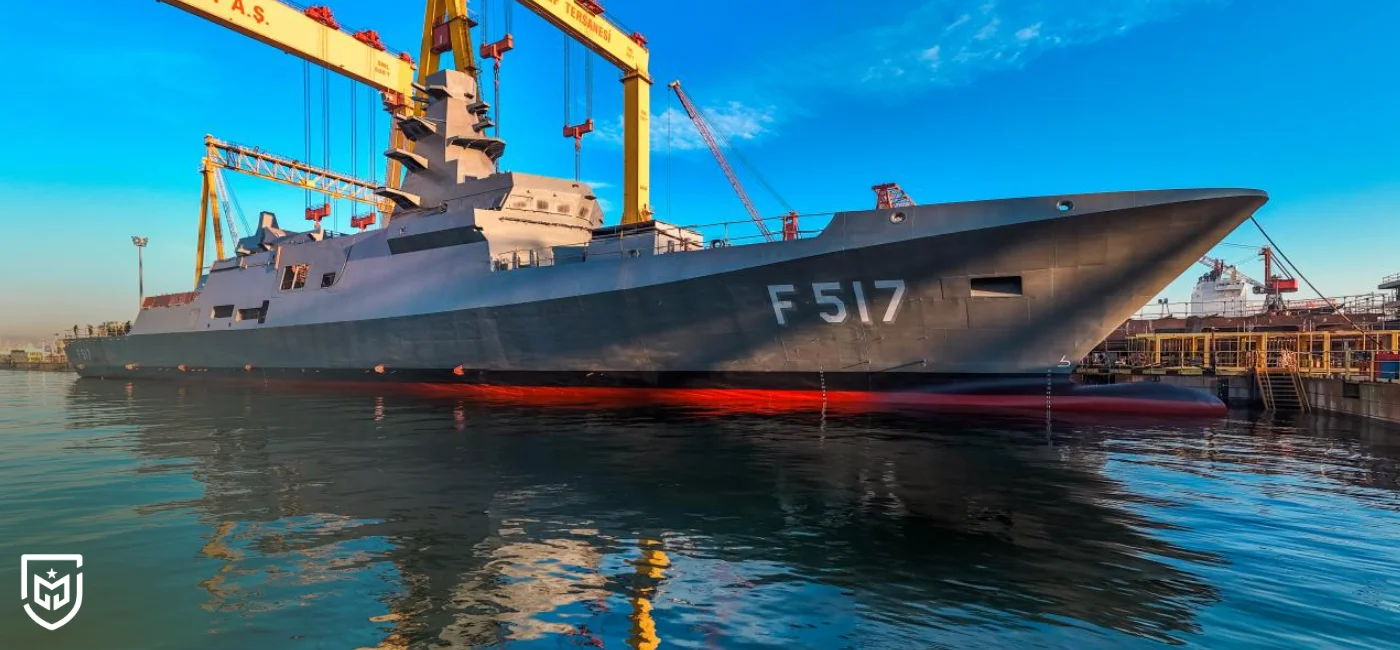
Naval platforms could become one of the key areas of a new era in defense industry cooperation between Türkiye and the United States. During bilateral contacts held as part of the NATO Summit in Ankara, the possibility of cooperation on naval assets such as warships, corvettes, frigates and submarines came to the agenda. Türkiye’s advanced shipyard infrastructure and its ability to build numerous military vessels simultaneously stand out as a notable option for the needs of the United States in the field of naval platforms.
Current U.S. laws presently provide a framework that limits the construction of warships outside the country. However, it is assessed that Washington has fallen behind the high military shipbuilding capacity it once possessed and may make greater use of allied countries’ capabilities to rebuild this capacity. The fact that the United States is already cooperating with allies such as Japan and South Korea in the field of naval platforms strengthens assessments that Türkiye could also become part of a similar equation.
Türkiye has gained significant momentum in military shipbuilding in recent years. Turkish shipyards, capable of building many military vessels at the same time, have reached a capacity that attracts attention across Europe and within NATO. This capability is not limited to the production of new ships; it also offers important infrastructure for maintenance, repair, modernization and sustainment activities. Considering the maintenance and repair needs of U.S. naval assets operating in the Mediterranean, Turkish shipyards could become a strong alternative thanks to their geographic location, technical competence and ability to provide rapid solutions.
Maintenance and sustainment processes are critically important for the effective use of naval platforms in long-duration missions. The intensive global deployment of the U.S. Navy makes regional shipyard access a strategic necessity. As activities in the Mediterranean increase, the importance of shipyards located near the region, equipped with advanced infrastructure and capable of providing services in line with NATO standards also grows. Türkiye’s production and maintenance capacity in Istanbul, Yalova, Tuzla and other maritime centers stands out among the key advantages in this regard.
If Turkish shipyards take part in maintenance, repair or modernization services for U.S. ships, this could add a new dimension to bilateral defense relations. Such cooperation would increase Türkiye’s export potential in naval platforms while also providing the United States with faster and more cost-effective support for regional operations. These types of projects could also demonstrate that the Turkish defense industry has reached a level where it can provide reliable solutions not only for its own navy, but also for the naval assets of allied countries.
As a result, the possibility of Turkish shipyards becoming an option for U.S. vessels could create a new and strategic area of cooperation in Ankara-Washington defense relations. Although legal regulations will continue to be decisive in the construction of new warships, maintenance, repair, modernization and sustainment activities stand out as more feasible areas in the short term. Considering Türkiye’s military shipbuilding capacity, its position within NATO and its proximity to the Mediterranean, Turkish shipyards could become a strong option for U.S. naval platforms.


The cookies used on our website are used to provide you with a better user experience and to improve our website. You can manage your cookie preferences from the options below.
 Süheyla Yıldız
Post Comment
Comments
No comments yet.
Related News
Germany denies claims of MGCS tank project withdrawal
Thales Introduces HexaForce AI-Powered Command and Control System to Gulf Region
Romania Signs Contract for Airbus H225M Helicopter Procurement
Ari Arms begins OR-4 rifle production in Azerbaijan
Ireland selects Thales Ground Master radar for air surveillance capability
Greece reaches agreement with US for Stryker armored vehicles
German F125 Frigates to Receive IRIS-T SLM Air Defense System Integration
France successfully conducts first test of M51.3 submarine-launched ballistic missile