


Air Forces News
Electronic Systems


BREAKING NEWS
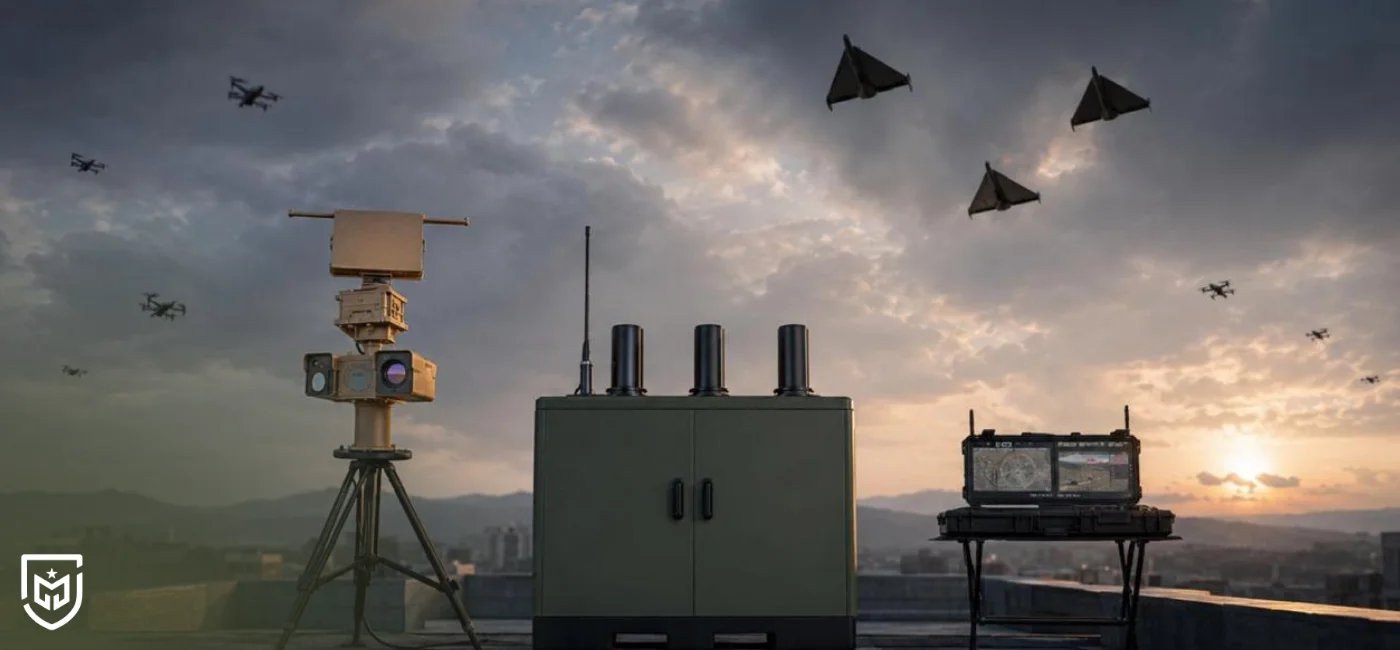
One of the most critical security measures during the NATO Summit hosted by Türkiye was protection against drone threats. Drones, which can be used for reconnaissance, surveillance, attack and sabotage in the modern battlespace, now pose a serious security risk not only on the front line but also for strategic facilities and high-profile international events. In this context, national anti-drone systems developed under the coordination of the Presidency of Defense Industries became important assets for security forces in ensuring airspace security throughout the summit.
The NATO Drone Edge initiative announced during the summit also showed how much priority this threat has gained at the Alliance level. Under the initiative, the goal is to establish a stronger defense architecture to detect, identify and neutralize drones. The expectation that allies will invest more than $40 billion in counter-drone defense capabilities over the next five years demonstrates that anti-UAV systems have moved to a central position in NATO’s new security vision.
Counter-drone defense architecture is built on a multi-layered structure consisting of radars, RF detection systems, electro-optical sensors, electronic jamming, GPS spoofing, laser and kinetic defeat systems, and command-control software. These systems operate across a wide range of missions, from passive detection and identification capabilities to active neutralization methods. Active measures are generally classified as “soft kill” solutions that disable the target without physical destruction and “hard kill” solutions that physically destroy it.
The Turkish defense industry has developed a strong product family in recent years with national solutions designed to meet these needs. During the NATO Summit, systems from the İLTER family developed by Boğaziçi Savunma Teknolojileri were deployed at critical points and contributed to air security. Combining RF detection, radar, electro-optical tracking, electronic jamming and coordinate spoofing capabilities, these systems provided uninterrupted protection against drone-origin threats throughout the summit.
During the operation, the İLTER J400, with long-range electronic jamming capability; İLTER HSPAR, developed with hybrid active phased array radar technology; and an artificial intelligence-supported electro-optical tracking system operated together. In addition, İLTER MRKAS, delivered to the inventory of the Gendarmerie General Command under the project carried out by the Presidency of Defense Industries and Boğaziçi Savunma Teknolojileri, was also actively used at the summit. This structure combined different capabilities, from target detection and identification to tracking and electronic neutralization, under a single command-control architecture.
The successful use of national anti-drone systems at a high-visibility international event such as the NATO Summit once again demonstrated the level Türkiye has reached in critical security technologies. These solutions, previously used for critical infrastructure, strategic facilities and events requiring special security measures, added another operational success by showing high performance throughout the summit. This development shows that the Turkish defense industry has the capability to contribute not only to national needs in the counter-UAV field, but also to NATO’s future collective security architecture.


The cookies used on our website are used to provide you with a better user experience and to improve our website. You can manage your cookie preferences from the options below.
 Süheyla Yıldız
Post Comment
Comments
No comments yet.
Related News
KAAN Fighter Jet's New Prototype Begins Taxi Tests
KAAN Fighter Jet Completes Pre-Flight Taxi Test Successfully
BAE Systems and Lockheed Martin Unveil Blizzard Multi-Mission Unmanned Aircraft
Anduril's Ohio Facility Produces First YFQ-44A Fury Unmanned Combat Aircraft
South Korea's envoy highlights KAAN fighter jets as cornerstone of defense partnership with Türkiye
ASELSAN's Electro-Optical System Integrated into South Africa's Mwari Aircraft
TAI Chief: Turkey Shaping NATO's Future Security Architecture
Anduril Thunder: Autonomous Attack Helicopter with Level 5 Autonomy Capabilities