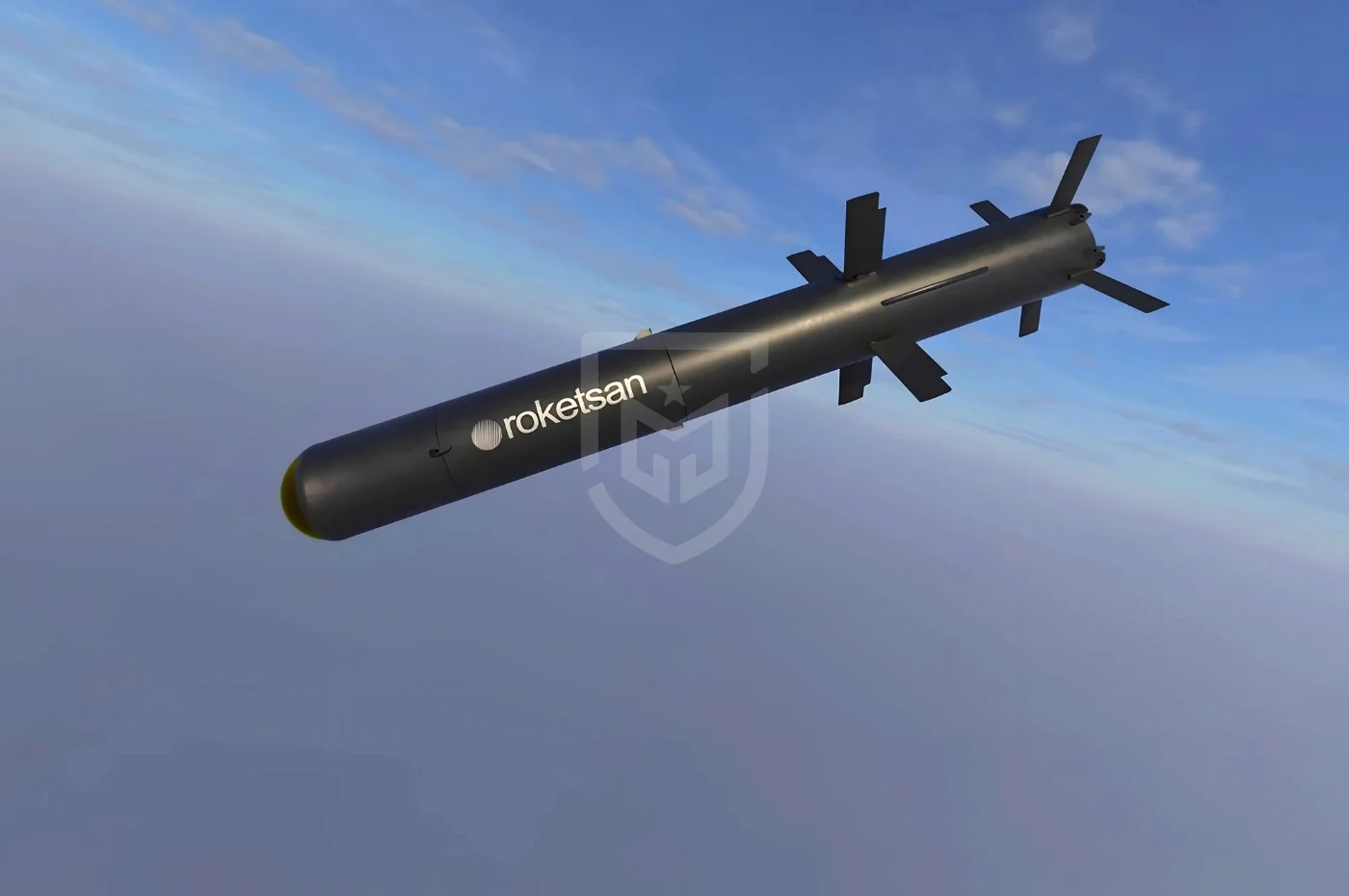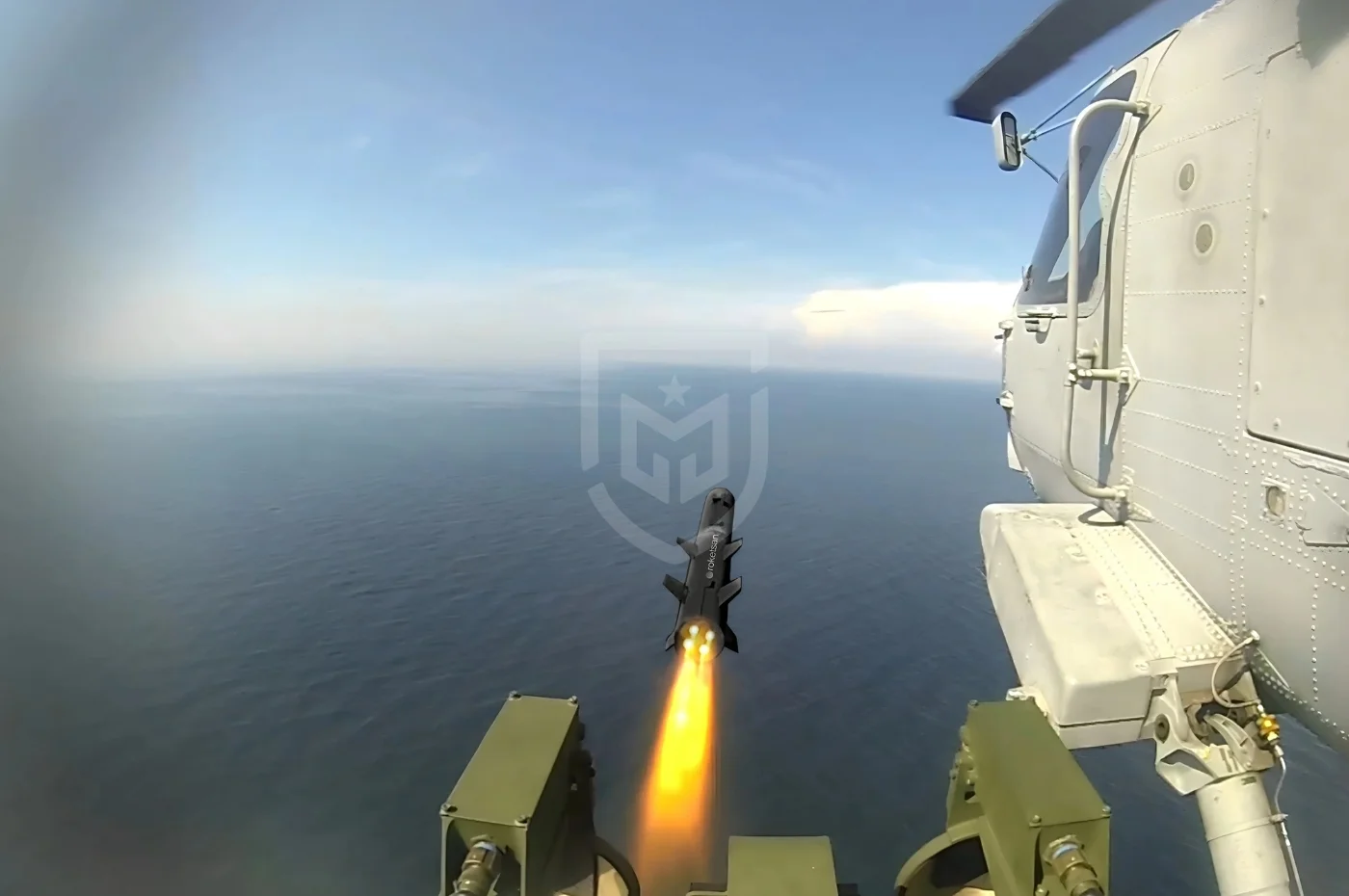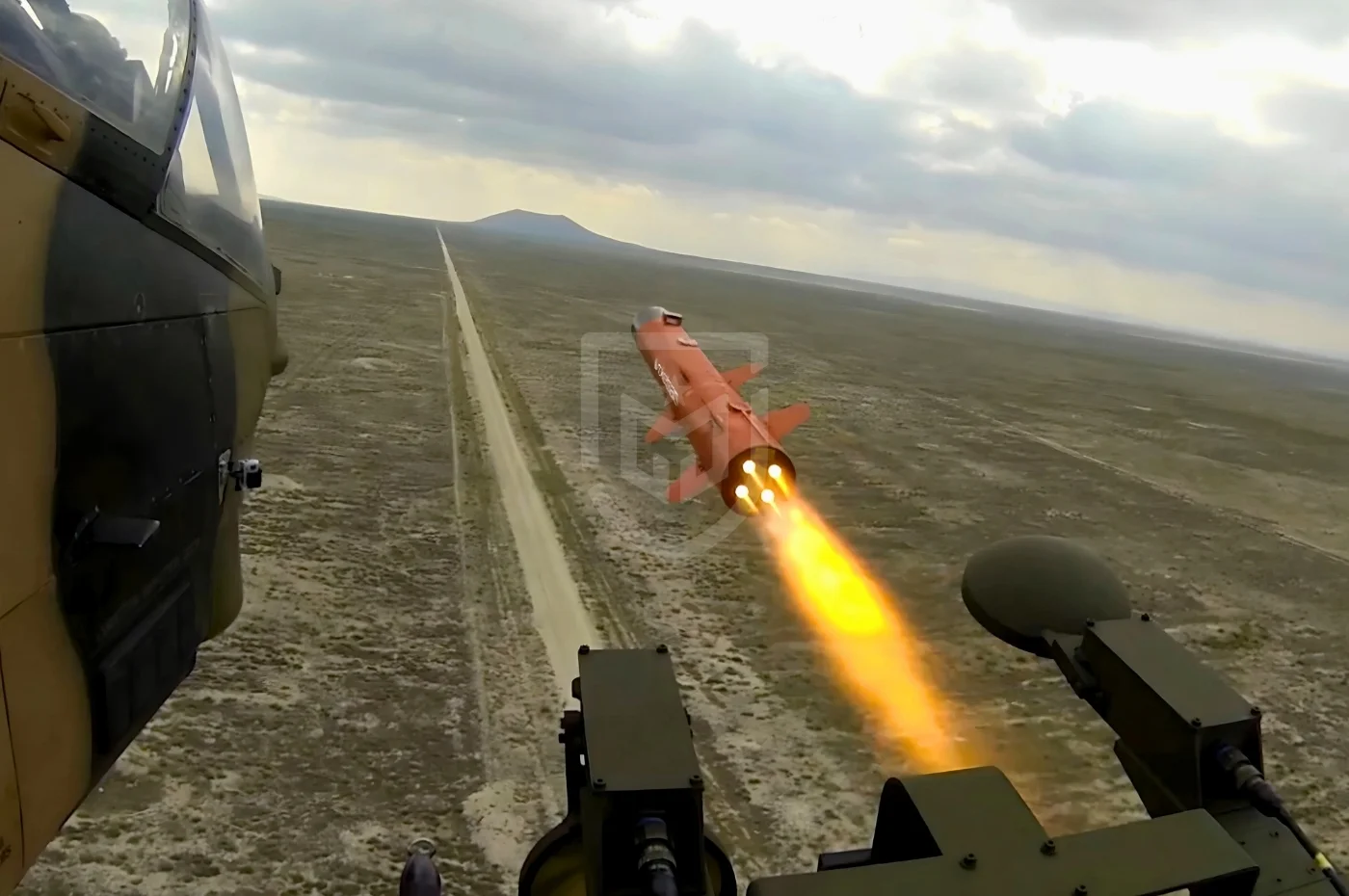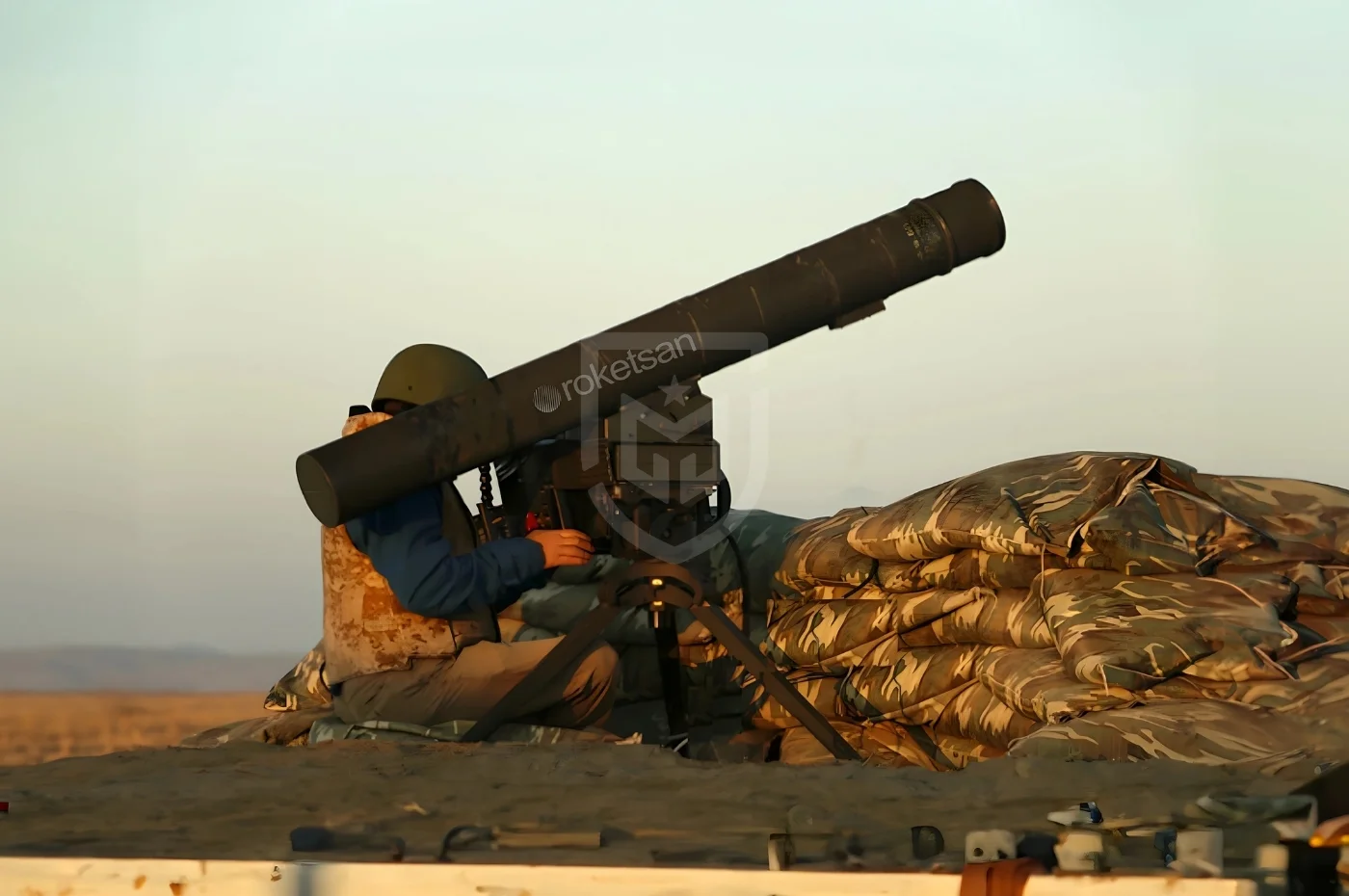
KARAOK was developed to meet the increasing demand for lightweight, highly mobile, and autonomous anti-armor solutions at the infantry level. Modern battlefields require decentralized, rapidly deployable systems capable of countering mechanized and armored units without reliance on heavy platforms. KARAOK addresses this requirement by delivering precision-guided lethality in a compact and soldier-portable configuration.
Operational Purpose and Role
KARAOK is designed to engage:
- Main Battle Tanks (MBTs)
- Armored Fighting Vehicles (AFVs)
- Armored Personnel Carriers (APCs)
- Light armored vehicles
- Fortified positions
It serves as a force multiplier for light infantry units, enabling them to neutralize armored threats in urban, mountainous, forested, and littoral environments.
Doctrine and Concept of Employment
KARAOK follows a fire-and-forget operational concept:
- The operator detects the target using the thermal sight.
- The seeker locks onto the target.
- The missile is fired.
- The operator immediately relocates.
This significantly enhances survivability, especially in high-intensity environments where counter-fire and detection risks are substantial.
The system offers two engagement modes:
- Top Attack Mode – Targets the relatively thinner top armor of tanks.
- Direct Attack Mode – Used against lighter armored vehicles and fortifications.
Top-attack capability is particularly important against modern tanks equipped with heavy frontal composite and reactive armor protection.
System Architecture
The KARAOK system consists of:
- Missile
- Launch tube
- Fire control unit with integrated thermal sight
Guidance System
KARAOK employs an Imaging Infrared (IIR) seeker head. Once locked onto a thermal signature, the missile autonomously tracks the target without further operator input.
This eliminates the need for wire guidance or laser designation, providing higher tactical flexibility and reduced exposure time.
Survivability and Protection
- Fire-and-forget capability reduces operator exposure.
- Compact and lightweight configuration supports rapid displacement.
- Designed for use in confined and complex terrain (exact backblast specifications are not publicly disclosed).
Engagement Process
- Target detection via thermal imaging
- Automatic seeker lock
- Missile launch
- Autonomous terminal guidance
- Top or direct impact
Publicly available sources do not disclose detailed ECCM performance or resistance against advanced active protection systems.
Advantages Against Modern Threats
Strengths:
- Tandem HEAT warhead capable of defeating ERA
- Top-attack mode
- Lightweight and single-operator deployment
- Day/night capability
Limitations:
- Maximum range limited to 2.5 km
- Public data on network-enabled operations is unavailable
- Effectiveness against advanced Active Protection Systems (APS) is not publicly disclosed
Detailed Technical Specifications
Dimensions and Weight
- Missile diameter: 125 mm
- Missile + launch tube weight: Below 16 kg
- Total system weight including fire control unit: Not publicly disclosed
Range
- Maximum effective range: 2,500 meters
- Minimum range: Not publicly disclosed
Warhead
- Type: Tandem High-Explosive Anti-Tank (HEAT)
- Purpose: Neutralize Explosive Reactive Armor (ERA) and penetrate main armor
- Exact penetration performance: Not publicly disclosed
Guidance System
- Type: Imaging Infrared (IIR) seeker
- Mode: Fire-and-Forget
- Engagement modes:
Sighting System
- Integrated thermal imaging sight
- Day and night operational capability
- Detailed detection range figures: Not publicly disclosed
Mobility and Deployment
- Shoulder-launched
- Single-operator portable
- Suitable for airborne and amphibious operations
- Rapid deployment capability
Personnel and Operation
- Operated by one soldier
- Requires trained anti-tank operator
Frequently Asked Questions
What is KARAOK used for?
- KARAOK is a short-range anti-tank guided missile system designed to provide infantry units with the capability to defeat armored vehicles and fortified targets.
What is the range of KARAOK?
- The maximum effective range is 2.5 kilometers.
What types of targets can it engage?
- It can engage main battle tanks, armored vehicles, light armored platforms, and fortified positions.
Why is top-attack mode important?
- Modern tanks have their strongest armor on the front. The top armor is generally thinner. Top-attack mode exploits this vulnerability for higher kill probability.
Does it work at night?
- Yes. The integrated thermal imaging system allows effective operation in darkness and low-visibility conditions.
How does it compare to similar systems?
Comparable short-range systems include:
KARAOK competes in the same lightweight, fire-and-forget category, offering similar operational philosophy within its 2.5 km range envelope.
Sources

- Official product page of Roketsan
- Roketsan technical brochures
- Public announcements by Turkish defense authorities
- International defense publications (e.g., Jane’s, Army Recognition)