


Air Forces News
Electronic Systems


BREAKING NEWS
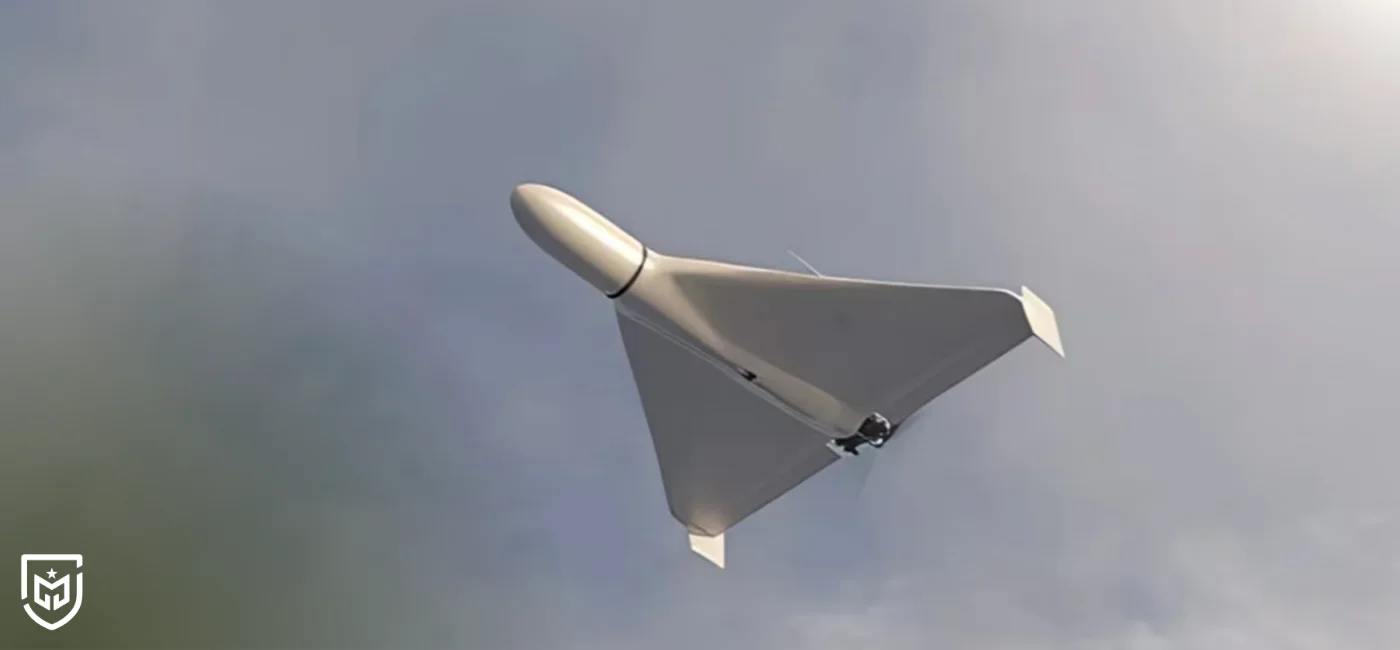
Ukrainian Defence Intelligence has released notable technical findings on Russia’s new jet-powered Geran-4 kamikaze unmanned aerial vehicle. According to analysis published through the War&Sanctions platform, the Geran-4 UAV reportedly contains numerous electronic components originating from China, the United States, Germany, the United Kingdom, Switzerland, Japan and Taiwan. The findings show that, despite sanctions, components from global supply chains continue to appear in modern UAV systems.
The report states that a large portion of the components found in Geran-4 are of Chinese origin. The UAV’s power unit is reportedly based on the LX-WP-160 jet engine produced by China-based Telefly Telecommunications Equipment Co., Limited. This engine is said to significantly increase the platform’s speed and range compared to earlier models, turning Geran-4 into a faster and longer-range strike platform than conventional propeller-driven kamikaze UAVs.
The analysis also identified notable components in the UAV’s navigation and communication systems. The 16-element CRP antenna system used in Geran-4 reportedly consists mostly of Chinese-made parts. The system is said to include a UC9810 GNSS receiver produced by China’s Unicore Communications, dated October 2025. Such GNSS receivers play a critical role in route tracking, target guidance and navigation under electronic jamming conditions.
Researchers also found two different transceiver modules on the platform. One was identified as the SIT3232E model produced by China-based Hunan Silicon Internet of Things Technology Co., Ltd, while the other was identified as the 55ASLHK G4 LVC16T245 model produced by U.S.-based Texas Instruments. A memory chip produced by U.S. company Micron Technology and two unidentified microchips were also reportedly found on the Geran-4.
The UAV also reportedly includes transistors produced by Germany-based Infineon Technologies, as well as operational amplifiers, voltage converters and digital signal processors manufactured by Texas Instruments. Electrolytic capacitors made by Japan’s Nichicon were also identified. These findings show that modern UAVs require not only airframe and propulsion engineering but also a broad range of critical components for navigation, data processing, power management and electronic control.
Ukraine stated that Russian forces first used Geran-4 jet-powered attack UAVs in early May 2026. During the same attack, Ukraine’s 1020th Anti-Aircraft Missile Regiment reportedly downed a Geran-4 using a STING interceptor drone. This incident highlights the growing importance of not only attack drones but also drone-hunting interceptor systems on the modern battlefield.
According to available data, Geran-4 has a wingspan of around 3 meters and a length of 3.5 meters. Compared to earlier versions, its takeoff weight reportedly increased from 350 kilograms to 450 kilograms. Thanks to the LX-WP-160 jet engine, its cruising speed increased from around 280-330 kilometers per hour to 350-500 kilometers per hour, while its range reportedly rose from 600 kilometers to 850 kilometers. These figures indicate that Geran-4 is designed as a faster, heavier and longer-range kamikaze UAV.
The foreign components identified inside Geran-4 suggest that Russia continues to use different supply channels for UAV production despite sanctions. The findings also raise renewed questions about how civilian or dual-use electronic parts from Western and Asian manufacturers can end up inside military systems. Ukraine’s analysis shows that supply chain security, export controls and electronic component tracking have become as critical as military technology itself in modern warfare.


The cookies used on our website are used to provide you with a better user experience and to improve our website. You can manage your cookie preferences from the options below.
 Süheyla Yıldız
Post Comment
Comments
No comments yet.
Related News
Skyfall II Exercise: U.S. Army Demonstrates UAV Defense Capabilities in Germany
IDA Turkey 2026 Defense and Aviation Industrial Cooperation Days Launched
SSB Chief: Transparent Licensing Will Strengthen Defense Cooperation
STM's Swarm UAV System Demonstrates Operational Success at Ateş Serbest-2026
TUSAŞ Kamikaze UAV Systems Achieve Success in Exercise Ateş Serbest-2026
ÇAKIR Cruise Missile Supply Contract Signed
Drone Shield Showcased at Marksman Competition
Fire Free-2026 Exercise Successfully Completed