


Air Forces News
Weapons and Ammunition


BREAKING NEWS
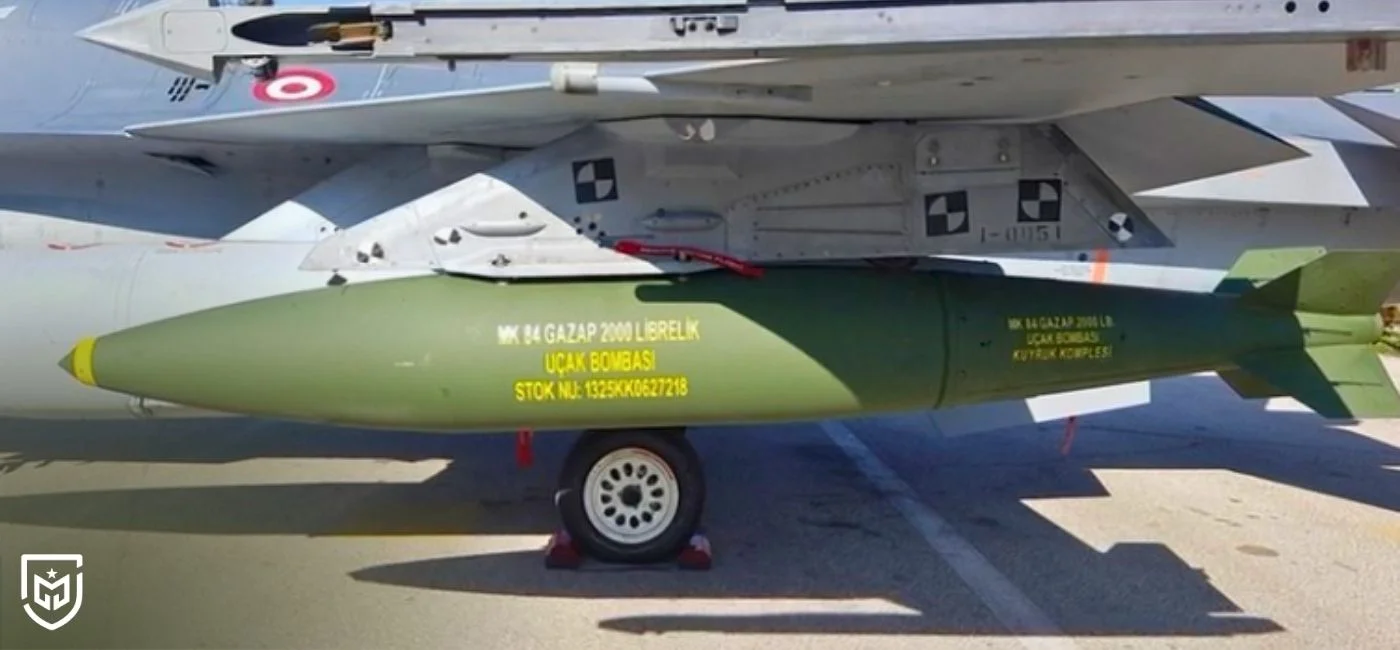
The Ministry of National Defense’s (MSB) R&D Center has unveiled MK-84 GAZAP, described as Türkiye’s most destructive aircraft-delivered conventional bomb to date. Designed for use on platforms such as F-16 and F-4 aircraft, GAZAP combines a thermobaric effect with a dense fragmentation package: on detonation roughly 10,000 particles are scattered, producing lethal effects across a one-kilometre radius. According to public descriptions, the weapon generates a notably higher overpressure and blast effect than comparable conventional loads.
GAZAP’s structural and energetic design yields a substantially amplified area effect compared with standard MK-84 class bombs. Officials and press coverage characterize the munition as approximately three times more powerful than typical equivalents, largely due to its fragment count, dispersal pattern and thermobaric energy release that intensifies both heat and pressure in the target volume. Visual reports from demonstrations highlight a pronounced shockwave and a wide smoke column, underscoring the weapon’s area-denial and destructive capabilities.
Operationally, integrating GAZAP onto widely fielded combat aircraft like the F-16 and F-4 gives Türkiye flexible aerial strike options against dispersed or hardened targets. The combination of blast, overpressure and fragmentation makes the munition suitable for neutralizing concentrations of equipment, soft-skinned targets, sensor arrays and exposed personnel over a broad area. From a doctrinal perspective, GAZAP expands strike planners’ options where large-scale effect and standoff lethality are required.
Beyond tactical utility, GAZAP’s unveiling signals a broader trend in Türkiye’s defense industrial base: the domestic development of high-end, high-impact munitions that previously would have been procured from foreign suppliers. As such systems enter service, they not only increase indigenous strike capacity but also reduce dependency risks and bolster export potential. The MSB’s publicization of GAZAP at IDEF 2025 underscores Ankara’s intent to pair technological maturity with strategic messaging on deterrence and regional capability.


The cookies used on our website are used to provide you with a better user experience and to improve our website. You can manage your cookie preferences from the options below.
 Rabia Kılıç
Post Comment
Comments
No comments yet.
Related News
Skyfall II Exercise: U.S. Army Demonstrates UAV Defense Capabilities in Germany
STM's Swarm UAV System Demonstrates Operational Success at Ateş Serbest-2026
TUSAŞ Kamikaze UAV Systems Achieve Success in Exercise Ateş Serbest-2026
Fire Free-2026 Exercise Successfully Completed
Spain Plans to Purchase 15 Additional Hürjet Advanced Trainers
Baykar platforms demonstrated capabilities at Ateş Serbest-2026 exercise
Turkey and Spain to Develop Joint Version of Hürjet Aircraft
Unmanned Naval and Aerial Vehicles Demonstrated Integrated Command Control Coordination