


Land Forces News
Air Forces News


BREAKING NEWS
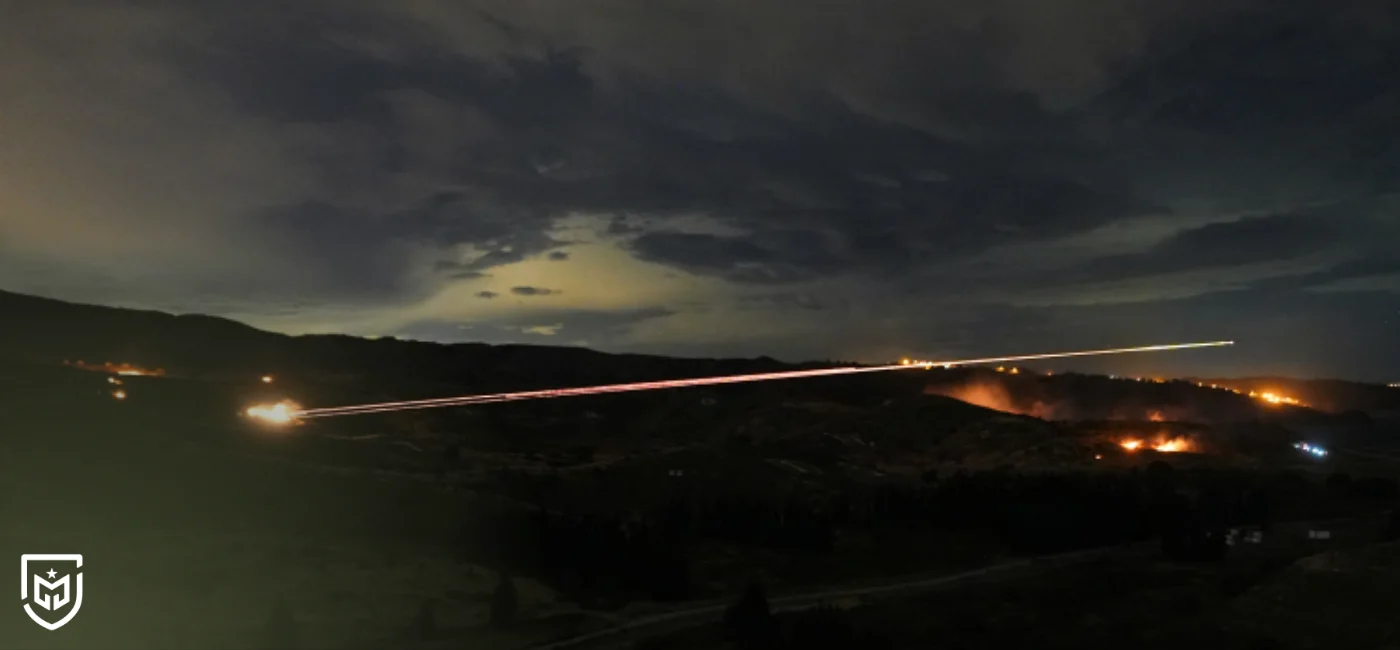
The night phase of the Distinguished Observer Day at EFES-2026, one of the Turkish Armed Forces’ most comprehensive joint exercises, was conducted at the Doğanbey Live-Fire Exercise Area in Seferihisar, İzmir. The activity was attended by Minister of National Defence Yaşar Güler, Chief of General Staff General Selçuk Bayraktaroğlu, the Turkish Armed Forces command echelon, and defence ministers and chiefs of general staff from friendly and allied countries.
The exercise was carried out with the participation of more than 10,000 personnel from 50 countries. The night phase was based on a scenario close to real operational conditions and demonstrated the Turkish Armed Forces’ ability to conduct coordinated operations in darkness and challenging environments.
During the activity, kamikaze swarm drones neutralized a mobile communication center belonging to the opposing force, which included an electronic warfare system. This demonstrated how swarm drone technologies can be used against electronic warfare assets on the modern battlefield. It also showed that unmanned systems are no longer limited to reconnaissance and surveillance missions but are increasingly taking on direct attack roles.
In the next stage of the exercise, combined special forces teams, including elements from participating countries, carried out infiltration operations from the sea and air. Within the scope of the advance force operation, SAT teams moved to the area with ATAK boats, while SAS teams used speedboats. These teams destroyed target radars and completed critical preparatory tasks for amphibious and air assault operations.
The coordinated support of amphibious operations and air assault activities was another key part of the night phase. Targets detected by reconnaissance, surveillance and fire support elements were engaged simultaneously and in coordination by attack helicopters. Later, a ship believed to be carrying support to the enemy was seized, underwater mines were detected and destroyed by SAT and SAS teams, and a critical infrastructure facility on the enemy shore was rendered unusable.
As the operation continued, amphibious units began loading and embarkation activities. Supported by tactical deception and reconnaissance operations, planned targets were engaged by air power. Attack helicopters fired on targets identified in the landing zone. When opposing forces attempted to interfere with friendly troops establishing an airhead, enemy elements were suppressed with artillery fire.
After amphibious units conducted the landing, target positions were heavily engaged with artillery and mortar fire. Special forces also carried out search and rescue activities in the landing area with ATAK helicopters. The night phase was completed with the KORKUT Air Defence System providing protection to amphibious elements exposed to an air attack. This scenario demonstrated the Turkish Armed Forces’ ability to combine night operations, air defence, special forces missions, amphibious assault and fire support in a single operational framework.
EFES-2026 also stood out from previous exercises with digital command-control and artificial intelligence-supported analysis applications. Systems such as the Ağ-Kara KOCATEPE Operational Management System, AI-supported analysis applications in the military decision-making process and the JTLS-GO Simulation System were used. The Simulation-Supported Command Post Phase was conducted on a 24-hour basis, while the training phase continued for two weeks.
Many domestic and national systems were also used in the field during the exercise. These included the GÖKBEY helicopter, M-60 T1 tank, Panter and BORAN howitzers, TRLG-230 and SUNGUR missiles, TAYFUN, HİSAR-A and HİSAR-O air defence missile systems, KORKUT air defence weapon system, KALKAN Air Defence Radar, İHTAR Counter-UAV System, KARAOK anti-tank weapon, UMTAS anti-tank missile, MEMATT, ASLAN unmanned ground vehicle, Dragoneye-2 and DORUK-2 electro-optical systems.
Systems planned to enter the inventory were also tested in the field. These included the MİLKAR-A Portable Electronic Attack System, ALKA Laser Weapon System, TOLGA Close Air Defence System, GÖKBERK Laser Weapon System and kamikaze swarm drones. Their use during the exercise demonstrated the progress of the Turkish defence industry in emerging technologies such as electronic warfare, laser weapons, counter-UAV systems and autonomous strike platforms.
The night phase of EFES-2026 became an important demonstration of the Turkish Armed Forces’ ability to conduct joint operations under dark and demanding conditions. The coordinated use of special forces, amphibious units, attack helicopters, artillery elements, swarm drones and air defence systems showed Türkiye’s multi-layered combat capability. The exercise strengthened the deterrence of the Turkish Armed Forces while also showcasing the operational maturity of Turkish defence industry technologies to international delegations.


The cookies used on our website are used to provide you with a better user experience and to improve our website. You can manage your cookie preferences from the options below.
 Süheyla Yıldız
Post Comment
Comments
No comments yet.
Related News
Skyfall II Exercise: U.S. Army Demonstrates UAV Defense Capabilities in Germany
STM's Swarm UAV System Demonstrates Operational Success at Ateş Serbest-2026
TUSAŞ Kamikaze UAV Systems Achieve Success in Exercise Ateş Serbest-2026
Fire Free-2026 Exercise Successfully Completed
Spain Plans to Purchase 15 Additional Hürjet Advanced Trainers
Baykar platforms demonstrated capabilities at Ateş Serbest-2026 exercise
Turkey and Spain to Develop Joint Version of Hürjet Aircraft
Unmanned Naval and Aerial Vehicles Demonstrated Integrated Command Control Coordination