



Air Forces News
Weapons and Ammunition


BREAKING NEWS
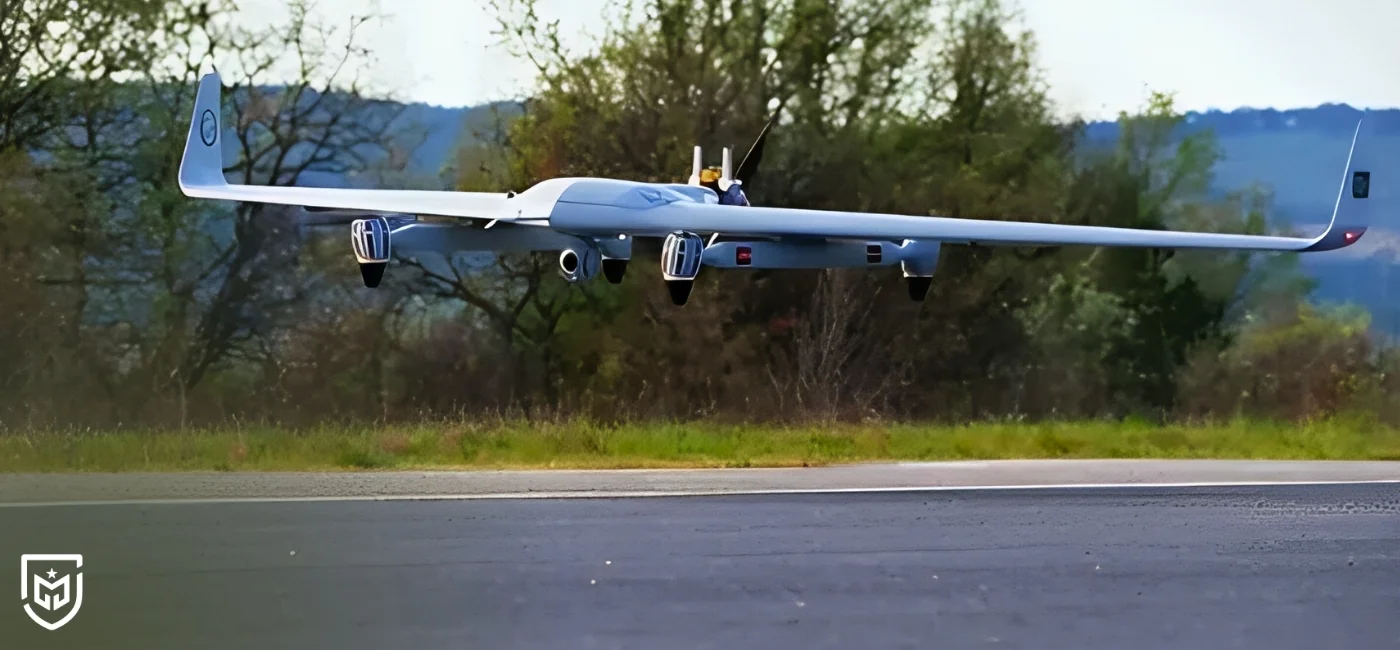
A new milestone has been achieved in Türkiye’s unmanned aerial systems ecosystem. According to footage shared by Selçuk Bayraktar, a coordinated firing test involving the Bayraktar KALKAN UCAV and Bayraktar TB3 was successfully completed. During the test, KALKAN used its BG180 Electro-Optical Reconnaissance, Surveillance, and Targeting System to detect and designate the target, after which Bayraktar TB3 carried out a direct and precise strike. The test stood out as a strong demonstration of how far inter-platform coordination and joint engagement capability have advanced within Türkiye’s UAV architecture.
One of the most important aspects of the test was the clear division of roles between the two unmanned systems. While KALKAN assumed the reconnaissance, surveillance, and target designation mission, Bayraktar TB3 acted as the strike element. This kind of mission-sharing reflects the growing maturity of network-enabled operations, where separate platforms can perform different tasks within the same engagement chain. Such an approach can provide operational advantages by allowing the strike platform to engage a target without having to conduct the full detection and targeting process on its own.
The test also highlighted the increasing importance of integration between sensors, communication links, and precision-guided munitions. The ability of one unmanned platform to identify and mark a target for another to destroy shows that Turkish defense industry solutions are evolving beyond single-platform performance and toward a more connected and layered operational structure. In practical terms, this capability could become especially valuable in complex combat environments where timing, coordination, and distributed operations are critical.
For Bayraktar KALKAN, the test reinforced its role as more than just a surveillance platform. Its use in the target designation phase suggests that it can serve as a forward sensor and support asset for larger strike-capable platforms. Bayraktar TB3, meanwhile, demonstrated that it can effectively operate within a multi-UAV engagement framework, not only as a standalone strike platform but also as part of a broader unmanned combat network. This opens the door to more advanced mission concepts, including distributed air operations and coordinated attacks involving multiple UAVs.
Overall, the successful test shows that Türkiye is now moving toward an operational model in which unmanned systems do not simply fly independently, but communicate, share roles, and create joint battlefield effects together. The coordinated action between Bayraktar KALKAN and Bayraktar TB3 reflects an important stage in the development of a more integrated unmanned warfare concept. As these capabilities continue to mature, they could significantly expand the effectiveness of Turkish UAVs in both national and international operational scenarios.


The cookies used on our website are used to provide you with a better user experience and to improve our website. You can manage your cookie preferences from the options below.
 Süheyla Yıldız
Post Comment
Comments
No comments yet.
Related News
Skyfall II Exercise: U.S. Army Demonstrates UAV Defense Capabilities in Germany
STM's Swarm UAV System Demonstrates Operational Success at Ateş Serbest-2026
TUSAŞ Kamikaze UAV Systems Achieve Success in Exercise Ateş Serbest-2026
Fire Free-2026 Exercise Successfully Completed
Spain Plans to Purchase 15 Additional Hürjet Advanced Trainers
Baykar platforms demonstrated capabilities at Ateş Serbest-2026 exercise
Turkey and Spain to Develop Joint Version of Hürjet Aircraft
Unmanned Naval and Aerial Vehicles Demonstrated Integrated Command Control Coordination